Showing posts with label semiconductors. Show all posts

12.28.2022

TSMC celebrated the launch of 3nm chip production in Taiwan

TSMC celebrated the launch of 3nm chip production in Taiwan

TSMC celebrated the launch of 3nm chip production in Taiwan

Earlier this month, TSMC held an event to mark the start of construction of a semiconductor plant in Arizona, and today in Taiwan the company celebrated the start of mass production of chips on the island.
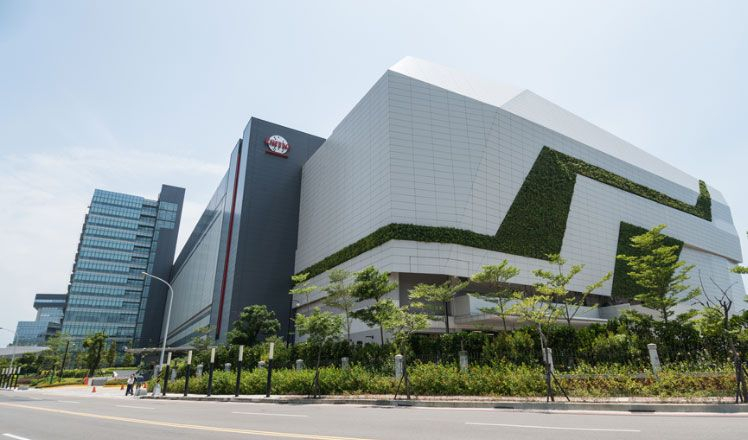
Notably, such ceremonies are quite unusual for TSMC.According to the publication Focus Taiwan, Taiwan's TSMC today celebrates the beginning of mass production of chips in accordance with the 3-nm process technology.
The Fab 18 plant will start producing the latest and most advanced chips on the territory of South Taiwan Science Park in Tainan.It is very important that such celebratory ceremonies are not typical for TSMC.
Analysts do not rule out that the manufacturer demonstrates loyalty to its native island amid large-scale investments in the United States.
Industry experts say the company is holding the ceremony to show it intends to keep Taiwan as a major hub for chip research, development and manufacturing despite the fact that it is now investing heavily at the other end of the world.Note that Apple will be among the first to receive 3-nm chips.
Although Apple is now claiming the A16 chipset is produced according to the 4nm process, in fact TSMC is treating it as a 5nm variant with some refinements.
The first 3nm chipsets that will be available in Apple products will be the M2 Pro and M2 Max, which will be shipped to Macs in 2023.TSMC factories in Arizona will produce 4nm chips first and only later will produce 3nm chips.
The company's Taiwanese plants will begin producing advanced 3nm products first, with 2nm chipsets due to begin production in 2025.

12.09.2022

TSMC feels no downturn in the market - November revenue soared 50.2 percent

TSMC feels no downturn in the market - November revenue soared 50.2 percent

TSMC feels no downturn in the market - November revenue soared 50.2 percent

TSMC management was optimistic this week about its prospects for contract manufacturing of semiconductor components for US customers, as its budget for building two facilities in Arizona reached $40 billion and its design capacity was tripled.
On a global scale the company also feels good because its November revenue grew by 50.2% compared to the previous year.Image source: TSMCIn accordance with the statistics published by TSMC in November the company made about $7.3 billion in current exchange rates, and this corresponds to the sequential growth of 5.9%, and in annual terms the revenue jumped by 50.2%.
We can not hesitate to call this year a period of significant growth for TSMC, because from January to November the company's revenue grew by 44.6% to $67.6 billion.
For not the easiest year in terms of geopolitics the dynamics is very decent.Let us not forget, however, that not everything is cloudy in TSMC activities.
The amount of capital spending for the current year, it still had to reduce from $40 to $36 billion.
At the last quarterly event the company representatives also complained about the decline in demand for products used in the PC and smartphone segments, some of which are produced on an advanced 7-nm process.
By the middle of next year, the company expects to regain the utilization rate of the respective production lines.
The company also has to postpone the modernization of its facilities due to delays in the supply of lithographic equipment.

11.29.2022

Intel hasn't changed its mind about building plants in Ohio and Germany despite the downturn in the industry - but it may cut its project budget

Intel hasn't changed its mind about building plants in Ohio and Germany despite the downturn in the industry - but it may cut its project budget

Intel hasn't changed its mind about building plants in Ohio and Germany despite the downturn in the industry - but it may cut its project budget

This week the pages of the Intel corporate blog featured a post by Keyvan Esfarjani, executive vice president in charge of manufacturing operations for the corporation around the world.
He tried to reassure investors that deteriorating macroeconomic conditions would not force Intel to abandon its plans to build new facilities in the U.S.
and Europe, although he acknowledged that funding for these projects should be carried out in proportion to projected demand.Source image: IntelThe main idea of the message of the Intel representative was that the company should already prepare for the future growth in demand for semiconductor products.
It takes three to five years to build a plant and equip it with the necessary equipment, and the company simply cannot afford to ignore future market demands.
Intel's management shares the experts' optimism, predicting an average semiconductor market turnover growth rate of 5 percent a year by the end of the decade.
By the end of the forecast period, the market capacity should double to $1 trillion, so the company considers it necessary to invest in the construction of new enterprises, even now, when the current situation is not favorable to it.The second important idea, which broadcasts the executive vice president of Intel - the need for geographical diversification of chip production.
With 80% of capacity concentrated in one tiny region (meaning Taiwan), semiconductor manufacturing is very vulnerable, according to Intel.
Reportedly, this week the company acquired ownership of a piece of land in Magdeburg where a chip packaging and testing facility will be built, and eventually a second one will appear.
The company has also signed a contract with Bechtel, a construction contractor that will start building new Intel facilities in Ohio.
Here, the corporation expects to master mass production of chips using Intel 18A technology by 2025, with the U.S.
Defense Department mentioned among the first customers.
At the first stage, Intel expects to invest at least $20 billion at this site.
A management representative made it clear that the company will work closely with German and Ohio state authorities to determine when and how much funding is needed for the relevant projects.
Intel in this regard is going to be guided by the needs of the market and plan its major expenditures wisely.

If the chip production in Taiwan stops completely, the industry will need at least 5 years to recover

If the chip production in Taiwan stops completely, the industry will need at least 5 years to recover

If the chip production in Taiwan stops completely, the industry will need at least 5 years to recover

The meeting of top political leaders of China and the US was designed to ease tensions in the Taiwan issue.
A significant portion of semiconductor components are manufactured in Taiwan, and stability in the region is extremely important for the entire global economy.
Some experts believe that in the case of a complete shutdown of Taiwan enterprises, the semiconductor industry will be able to recover only in five years.Image source: TSМSimilar estimates in his interview with Barron's shares the author of the book \"War for chips: the battle for the most important technology in the world\" Chris Miller - Tufts University professor from the United States.
In his opinion, the U.S.
authorities underestimate the possible consequences of a regional conflict that could put Taiwan`s enterprises out of business.
Not only do the island produces up to 90% of advanced semiconductor components, but also the local production volume of chips is so large that no other region in the world can compete with it so far.
Up to a third of the annual increase in computing power in the world is provided by Taiwanese enterprises, according to expert estimates.
In the professor's opinion, the semiconductor crisis of 2020 and 2021, which paralyzed the work of the global automobile industry, is only a pale shadow of the likely problems that an armed conflict involving Taiwan would cause.
Even the PRC's \"nonviolent\" methods of influencing the island's economy can have a significant impact on the determination of Taiwan's leadership to remain independent.By the way, Chris Miller highlights the role of qualified personnel in the formation of the modern semiconductor industry.
The same founder of TSMC, Morris Chang, according to the author of the book, is the man to whom the whole world should be grateful for the technology we now have at our disposal.
For the United States, however, it is important to maintain a sensible immigration policy, since many of the leaders of major technology corporations are migrant workers or their direct descendants, and their role in shaping U.S.
industry and the economy is hard to dispute.

11.11.2022

Sony, NEC and other Japanese companies will work together to restore the country's position in the chip market

Sony, NEC and other Japanese companies will work together to restore the country's position in the chip market

Sony, NEC and other Japanese companies will work together to restore the country's position in the chip market

Japan was one of the leaders in the semiconductor industry a couple of decades ago, but over time it has long lost its leading position in the relevant market.
To remedy the situation, Japanese tech giants including Sony and NEC will spend about $500 million on a new company designed to restore Japan's leading role in microchip manufacturing.Image source: Moughit Fawzi/unsplash.com \"Semiconductors should be a critical component in the development of new advanced technologies like AI, digital industries and healthcare,\" Economy, Trade and Industry Minister Yasutoshi Nishimura said during a recent briefing.
According to the Nikkei Asian Review, Rapidus, which is being established, will develop a new generation of semiconductors that will use sub-2nm process technology.
Contract manufacturing could start around 2030.As the trade war between the U.S.
and China picks up steam and Washington has limited China's access to semiconductor technology, Japan is rushing to revive its semiconductor industry, which has stagnated in recent years, to provide its own automakers and IT companies with advanced solutions in the field.
Japan does not rule out that China will try to take Taiwan under its control, which is currently the largest center for the production of advanced semiconductors.Under the new strategy, Japan will encourage foreign semiconductor manufacturers to build factories in the country, in particular, funds of over $2.7 billion to build a plant in Kumamoto prefecture will be allocated to TSMC - the plant will supply semiconductors to Sony and car parts manufacturer Denso Corp.In July Japan pledged $635.5 million in subsidies to help manufacturers The funds will also be allocated to U.S.
Micron Technology to expand production in Hiroshima.Image source: Jezael Melgoza/unsplash.comThe establishment of the new company signals the beginning of a new phase of Japan's semiconductor strategy.
In addition, the country continues to deepen technological cooperation in the relevant field with the U.S.
- in July, Japan and the United States agreed to establish a joint research center for the development of fast and energy-efficient semiconductors to 2 nm.
The center is expected to be ready by the end of this year.Japan has a lot of catching up to do.
The country's most advanced production lines are capable of producing 40-nm chips - it has not had the opportunity to invest in the industry comparable to rival states, which those states have been actively spending on industry development since the 2010s.Rapidus has already secured funds from the Organization for the Development of New Energy and Industrial Technology, Japan's national research center.
Businesses like Toyota, Nippon Telegraph and Telephone Corp, as well as Kioxia Holdings, for example, are also investing in the company.

Chip imports to China fell markedly in 2022 amid US sanctions, especially in October

Chip imports to China fell markedly in 2022 amid US sanctions, especially in October

Chip imports to China fell markedly in 2022 amid US sanctions, especially in October

Chip imports to China fell by more than 13% from January to October, according to Chinese customs, as the world's largest semiconductor market is affected by the growing trade standoff between the US and the Middle Kingdom as well as a general economic slowdown.
Source image: TSMSZThe first 10 months of the year, China imported 458 billion integrated circuits, which is 13.2% less than the 527.9 billion chips imported into the country in the same period last year.
In October the decline in imports markedly accelerated - during the first 9 months of decline was an average of only 12.8%.Decrease in supply volumes is also due to the fact that in 2021 the import of integrated circuits took off - during the first 10 months of growth then was 21.2% year-on-year, so it is difficult to keep up with these figures now.
But despite the decline in the volume of imports, higher prices for chips led to an increase in the value of supplies during this period by 1.3%, leaving $351.2 billion.
In general, chips have long been a major item of imports to China, at one time by the value of purchases such imports overtook crude oil and consumer goods.
Nevertheless, it began to decline at the beginning of this year, the first year-on-year decline since 2020.
The drop in imports in October was 13.7% (to 41.1 billion) compared to October 2021.
By comparison, 47.6 billion chips were imported in September.
The accelerated decline in purchases comes amid Washington's strengthening of export controls and coincides with a global decline in demand for semiconductors as a whole.Source image: TSMC7 October, the Bureau of Industry and Security - a unit of the U.S.
Department of Commerce announced a series of measures to control technology exports to China aimed at weakening the Chinese high-performance semiconductor sector - not only exports to the Middle Kingdom chips themselves, but also equipment for their manufacture, special permits for the production of semiconductors, and a number of other measures.
At the same time, the value of sold year-on-year increased by 6.2%.
The problem may be partly related to the outbreak of coronavirus in the country - due to sanitary restrictions, the ability to fulfill orders was also affected.

11.10.2022

TSMC will build another plant in Arizona for $12 billion - 3-nm chips will be produced there

TSMC will build another plant in Arizona for $12 billion - 3-nm chips will be produced there

TSMC will build another plant in Arizona for $12 billion - 3-nm chips will be produced there

Taiwan's TSMC is preparing to implement another project with multi-billion dollar investments - the company intends to expand the chip factory under construction in Arizona (USA).
In the coming months, the chipmaker plans to announce the construction of an advanced factory north of Phoenix, next to the already under construction facilities that were announced in 2020.
The volume of investments, according to some reports, will be the same as 2 years ago - $ 12 billion.Image source: Maxence Pira/unsplash.comThe company began to actively develop chip production in the U.S.
after Washington has promised semiconductor manufacturers all sorts of grants and incentives for the construction of enterprises on American soil.
Future plant TSMC will produce chips in accordance with the 3-nm process, one of the most advanced to date.In TSMC said that the official ceremony of installation of the first batch of equipment for the manufacture of chips at the first plant in Arizona will be held in December - the beginning of construction was announced two years ago and the beginning of production is scheduled for 2024.
While previously the company was going to produce 5-nm chips in Arizona, now we are talking about more advanced 4-nm variants.
Mass production should begin in 2024.
The timing of commissioning of the second plant is still unknown.The expansion indirectly indicates the manufacturers' optimism about the demand for semiconductors in the long term, even against the backdrop of disappointing market indicators for the current year.
Demand for some chips collapsed after two years of rapid growth during the pandemic, during which demand for computer hardware and electronics skyrocketed.
Many companies, including TSMC, had to go into savings mode and cut capital spending in the short term.Despite the downturn in the industry, semiconductor company executives still expect that in the next decade, global sales will exceed $1 trillion, so intensive investment in manufacturing infrastructure continues, especially since such plans in recent years are actively supported by the United States and Europe, hoping to move the \"center of power\" semiconductor industry from Asia.
Intel and Micron are also trying to save money in the short term, while investing heavily in future projects based on strong demand.This year, the U.S.
has distributed grants for chip production in the amount of $39 billion; the funds themselves will be allocated from next year.
In addition, it also provides tax incentives for equipment for the production of semiconductors.
Europe also intends to increase its production share in the global market of semiconductors up to 20% by 2030.
Large plants typically take several years to build and equip, so companies must make investment decisions in advance.Image source: Robert Murray/unsplash.comThe enormous subsidies in the US and Europe for chip production are a reflection of political leaders realizing their critical importance in the military and civilian sectors.
The active development of the relevant industry in China has caused deep concern in the West, after which the U.S.
stopped promoting the idea of freedom of market relations and imposed tough sanctions on Chinese companies, which include a ban on both exports to the country of advanced chips and equipment for their production.In addition, the United States and its allies are concerned that the most advanced technologies of semiconductors are concentrated in Taiwan, an island that China considers part of its territory.
It is known that in addition to the U.S., TSMC is considering expanding production in Japan and allows the construction of a multibillion-dollar plant in Singapore.

11.04.2022

Experts explained why electronics manufacturers are \"swimming\" in chips, while automakers suffer from chip shortages

Experts explained why electronics manufacturers are \"swimming\" in chips, while automakers suffer from chip shortages

Experts explained why electronics manufacturers are \

Recently, news about a total chip shortage has been replaced by information about a mitigation of the situation.
What's more, some reports suggest that TSMC is asking its employees to take a leave of absence as computer makers have noticeably reduced orders, and orders from smartphone makers have declined even further, a trend that will continue into 2023.
Meanwhile, while some manufacturers are not experiencing any shortage of semiconductors, many companies are still suffering from acute shortages.Image source: МicronAs Forbes reports, while TSMC's leading customers - Apple, AMD, Intel, MediaTek, NVIDIA, and Qualcomm are constantly developing more and more advanced processors, they are currently very \"conservative\" about sales forecasts and, therefore, production orders.
In other words, the leading electronics component vendors do not need many chips yet.This is not surprising, because in this sector demand is largely determined by demand for PCs, which, according to Gartner, in April 2021 rose to record levels, sales of the top six PC manufacturers grew at a double-digit percentage rate, and for some time, even triple-digit sales of Chromebooks.
This trend could not last forever, and figures have already appeared on the sale of certain models of Chromebooks for literally $79 (in the US) - even components for them cost more, but the market is already crowded, and demand is satisfied for almost years to come.
At the same time for the release of new models manufacturers have to free up their warehouses from old and expect high demand for components in this segment in the foreseeable future is not necessary.
For example, in its latest earnings report Micron Tecnology reported that demand in the calendar year 2022 will on average be lower than supply, which will lead to a build-up of large stocks in the warehouses of suppliers.
Scarcity typically initiates massive investments in building new capacity and mastering new process technologies, resulting in the occasional oversupply crisis.
Surplus is observed in many industries-but not in all.
In particular, there is no abundance on the market of chips for cars.
The point is that most of the semiconductors for cars are produced according to the so-called \"mature\" process technologies, and most of the demand is for 90-nm semiconductors.
These were considered the most advanced solution around 2002, 20 years ago.
Nevertheless, they are quite in demand, since many components simply do not need ultra-modern technology, and the process of transition to it is costly and long.Image source: BMWFactories continue to use the old tools for production and, since this segment is not the most profitable, for most manufacturers there was no need to invest in new capacity.
Such semiconductors weren't quite enough already by the beginning of the pandemic, and 2020 recorded about an eight-week period in which most auto factories had to partially or completely suspend operations due to sanitary restrictions, after which they withdrew their semiconductor orders.Meanwhile, explosive growth in other sectors requiring chips has put \"obsolete\" production capacity to full use, and as Forbes reports, when automakers tried to restart orders, delivery times for them catast

11.02.2022

TSMC denied rumors: it has not yet chosen a location for the 1-nm fab

TSMC denied rumors: it has not yet chosen a location for the 1-nm fab

TSMC denied rumors: it has not yet chosen a location for the 1-nm fab

The day before the Taiwanese media reported that TSMC, the largest contract manufacturer of semiconductor components in the world, had already decided on the location for its most advanced facility, which will master the 1N technology production in a few years.
As explained by TSMC representatives, no decisions have been made yet.Image source: TSMC According to Focus Taiwan, the original publication of the Commercial Times, citing an anonymous source, mentioned the intention of TSMC to place the new venture in the technology park Xinzhu in northwestern Taiwan.
According to official reports, TSMC is undecided on the site and is still in the process of finding a suitable location on the island.
As soon as the choice is made, the company promises to make the appropriate announcement.Deputy director of the technology park Xinzhu not commented on rumors about the plans of TSMC, but explained that the resident companies can choose the site in the third area of the park for the construction of production facilities, because the first place is all taken, and the second reserved for recreational areas.It is expected that the company will begin mass production of 3-nm products in the current quarter, and next year revenue from their sales will be as follows Mass production of 2-nm products TSMC will begin in 2025.
The company's management did not speak about terms of mastering more advanced lithography at the last quarterly report conference, but in May there was already information about TSMC's readiness to start development of 1.4nm process.

10.31.2022

Intel has returned to profitability despite falling revenue

Intel has returned to profitability despite falling revenue

Intel has returned to profitability despite falling revenue

Intel Corp.'s third-quarter revenue fell 15% to $15.3 billion, in full compliance with its management's projections.
By the middle of the decade, Intel hopes to cut annual expenses by $8-10 billion, with savings reaching $3 billion as early as next year.According to the head of the company, staff cuts will not be a significant factor in savings, although they will start already in the current quarter.Image source: Intel Net income at Intel in the past quarter fell by 59% from $5.9 to $2.4 billion using Non-GAAP method and operating profit margin fell from 31.8 to 10.8 %.
Profit margin fell from 58.3% to 45.9% year over year.
At the same time, the company managed to increase spending on research and development by 12% to $5.4 billion.
Intel was forced to end the quarter with operating losses, but due to the tax refunds it showed a net profit.
The period ended with an operating loss of $175 million, but a net profit of $1.02 billion.In the client computing area, which is most dependent on PC market conditions, Intel's revenues fell 17% year over year to $8.1 billion, but grew sequentially by 6% due to an increase in average selling price.
Intel expects PC sales to dip 15 to 19 percent this year, primarily in the consumer and education sectors, as well as inventory adjustments in the OEM segment, but year-over-year sales should remain above pre-pandemic levels for the foreseeable future.
At the end of next year, PC sales should either remain at current levels or decline slightly.
According to the Intel representatives, from 270 to 295 million computers will be sold next year.
The head of the corporation even said that Intel was able to significantly strengthen its position in the PC segment in the third quarter.Image source: IntelIn the server segment last quarter, revenue at Intel dropped by an impressive 27% to $4.2 billion, but in the reporting documents the company proudly announced that it had started production of those models of processors Sapphire Rapids family, which were aimed at mass consumption, and also expects to slightly increase its market share in this segment by the end of the year.
In the past quarter, Intel's server revenue was undermined by weak demand in the Chinese corporate sector.Image source: IntelThe immediate issue of the upcoming staff reductions at the quarterly event Intel management spoke reluctantly, only noting its inevitability.
Intel's freelancers and contractors will be the first to suffer, they will feel Intel's desire to save money as early as this quarter.
Marketing and advertising costs will be cut.
Quantitative figures for staff reductions are not specified, but CFO Davis Zinsner let it slip that they will be significant.
CEO Patrick Gelsinger added that production costs would be prioritized over payroll in the search for cost savings.
By early October, the company had 131,500 employees.According to Intel's management, the company is on track to implement a plan to master five new process technologies in four years.
There were no delays in learning Intel 4 and Intel 3 technologies, the first prototypes of chips made with the Intel 20A and Intel 18A technologies were already running in the company's labs, and this also applies to products for a large third-party customer - at least the digital design of the respective product is ready and the first working samples exist.
In the customer segment, the company is going to introduce Meteor Lake processors (Intel 4) next year, at the same time Emerald Rapids servers will appear.
On schedule, the company is preparing to launch server processors in 2024.
The Meteor Lake series stepping design should be completed this quarter, and Intel's server segment managed to get the first Intel 3 Granite Rapids processor components last quarter, systems based on their samples are already working in Intel labs.
For the first time, the company will use ultra-hard ultraviolet (EUV) lithography as part of its Intel 4 and Intel 3 processors.
This will endow the respective products with breakthrough performance in terms of performance per watt of power consumption and density, according to Intel.Image source: IntelSome of Intel's business areas showed positive revenue growth in the third quarter.
Among them were networking and edge computing solutions, which grew revenue 14% to $2.3 billion and kept operating income at $75 million, despite an 85% decline from the same period last year.

Arm has separated automotive chip development into a separate division

Arm has separated automotive chip development into a separate division

Arm has separated automotive chip development into a separate division

In late September, the British holding Arm appointed a new CFO and added two members to the board of directors, which can be taken as a sign of preparation for a public offering, but the changes did not stop there.
The division that developed solutions for the automotive industry has been separated, and there was rotation among the heads of all major divisions.Source image: Getty ImagesAbout this on the pages of the corporate blog said Arm CEO Rene Haas.
According to him, so far the solutions for the automotive industry and the Internet of Things have been developed by one unit, but progress in both areas pushes the company to separate them.
In total, Arm will now have four main areas of activity: automotive, customer (responsible for technology for the consumer market), infrastructure and the Internet of Things.From the previously unified division of automotive solutions and the Internet of Things is Dipti Vachani (Dipti Vachani), he will now oversee the automotive business Arm in the post of senior vice president.
Paul Williamson, who previously headed the customer division, will move to head the IoT business, also taking the position of senior vice president.
The client business will be led by Chris Bergey, who was previously in charge of Arm's infrastructure solutions.
Finally, Mohamed Awad, who held the top IoT position, will head the infrastructure business, also as senior vice president.
According to the CEO, \"the change is critical to our success,\" which is why management sees this shift as the key to Arm's success.

10.08.2022

Canon will challenge ASML - the company will establish production of machines for chip production with advanced lithography, but without EUV

Canon will challenge ASML - the company will establish production of machines for chip production with advanced lithography, but without EUV

Canon will challenge ASML - the company will establish production of machines for chip production with advanced lithography, but without EUV

Japanese Canon is developing a new generation of lithographic equipment for semiconductor production, able to compete with the products of Dutch ASML, which is almost a monopolist in the market of such solutions.
The new plant in Japan will also be a response to competitors' investments in the related area in the United States, South Korea and Taiwan.Image source: CaponThe investment is expected to total $345 million, including construction costs and installation of production equipment.
The plant will start production in the spring of 2025.
As a result, the company will double its production capacity in this niche.
Not only does the company intend to expand production, but it is also betting on new technology that will make it possible to produce next-generation semiconductors at low prices.
Today it makes lithographic equipment in two factories in Japan which is used to produce chips for car control systems, for example.The new plant will be built on a 70,000 m2 plot of land on the site of an existing facility.
This will be Canon's first new lithographic production facility built in 21 years, with construction starting in 2023.
In 2022, lithographic equipment sales are expected to grow 29 percent year-over-year to 180 machines - a fourfold increase from ten years ago.
The new plant will help meet growing demand.According to World Semiconductor Trade Statistics, last year the global semiconductor market exceeded $500 billion for the first time in history.The industry expects it to exceed $1 trillion in 2030.Today, Canon controls 30% of the global lithographic equipment market by volume, second only to ASML, which accounts for 60%.
Intel and Taiwan Semiconductor Manufacturing Co.
(TSMC) announced plans to build their own new plants in the U.S.
and other countries.
The company has also developed next-generation technology called nanoimprint lithography.
It makes it possible to produce cutting-edge microchips at a lower cost than existing lithographic equipment.
The process is simplified thanks to a technique that allows you to literally \"stamp\" the patterns of integrated circuits, which can significantly reduce production costs - the development of technology involved Japanese Kioxia and Dai Nippon Printing.Today, the most indispensable technology using EUV lithography to form circuits at the nanometer level.
The only source of such technology today is the Dutch ASML.
Nevertheless, such equipment is expensive, costing about $138 million per machine and consuming a lot of energy.
If nanoprinting lithography reaches the stage of practical commercial use, Canon expects to reduce the cost of lithography by up to 40% and energy consumption by up to 90% compared to EUV.
This will shake the dominance of ASML in the market.

10.01.2022

The U.S.military will be the first to receive advanced 18A chips

The U.S.military will be the first to receive advanced 18A chips

The U.S.military will be the first to receive advanced 18A chips

As it began building new facilities in Ohio, Intel made no secret that it would use them to serve outside customers in advanced 18A (18 angstroms - 18 tenths of a nanometer) technology, and some of the first customers connected with the U.S.
defense sector will receive their orders.
The company also plans to package and test the products in Arizona for those customers.Over the summer, the U.S.
Defense Department complained that up to 98 percent of the microelectronics products it needs are manufactured or tested in Asia.
Intel will try to solve this problem by creating a line at existing facilities in Arizona to test and package semiconductor components for the U.S.
Defense Department in the foreseeable future.
The Defense Department buys $3 billion worth of chips each year, Intel Foundry Service (IFS) President Randhir Thakur told EE Times.
The company has already signed a $250 million contract with the Defense Department to design advanced semiconductor components with Intel.Image source: EE Times, Alan PattersonIntel intends to use the department's SHIP ecosystem, which allows for the integration of disparate computing components in one package.
The U.S.
Defense Department will be the first Intel customer to receive semiconductor chips made with 18A technology from the company in the second half of 2024.
They will already be using a gate-around transistor (GAA) structure.IFS customers already include MediaTek, Amazon and Cisco, bringing in about $800 million in revenue in the first year of Intel's contract business.
This is not so much against the background of $56.9 billion received by TSMC last year, but Intel is at the very beginning of this journey.
Notably, for large customers like MediaTek, Intel is going to provide \"untouchable quotas\" that guarantee stable output for the customer even when demand is high.The purchase of Israel-based Tower Semiconductor will add to the IFS ecosystem with a network of facilities located in Israel, Europe, the United States and Japan, which last year together generated about $1.5 billion.
These facilities use 500 to 65 nm processors, and especially valuable contributions to Intel business will come from these assets on the automotive and meth In the case of Intel's 18A technology, the toolkit has reached version 0.5, indicating that the research phase has passed, although the development of the process is still in full swing.
According to Intel, the 18A process is comparable to the well-known 2nm process.To become a U.S.
defense contractor, Intel must go through a complicated and lengthy process of security certification, but if it has such a certificate, it will automatically increase other customers' confidence in it.
One of the confidence-building steps will be the establishment of a chip packaging and testing line in Arizona, since such operations with Intel products are currently carried out either in Malaysia, or in China or Vietnam.
Intel now uses six different chip packaging companies, distributing orders to 18 companies.

9.26.2022

Intel to build advanced chip packaging plant in northern Italy

Intel to build advanced chip packaging plant in northern Italy

Intel to build advanced chip packaging plant in northern Italy

The Italian government and Intel have chosen the commune of Vigazio, located near Verona in the Venice region of northern Italy, as the preferred site for a large microchip manufacturing plant.
This is just part of Intel's plan, announced last March, to invest €80 billion to build new production facilities in Europe over the next 10 years.Image source: IntelIts initial investment of €4.5 billion is planned for Italy, but it could grow in the future.
Intel said that the plant in the country will create 1,500 jobs at the plant itself, as well as 3,500 jobs at the company's suppliers and partners.
Production will be launched in the period from 2025 to 2027.
In particular, the company will organize the assembly and packaging of chips in accordance with new technological solutions.According to Reuters sources, the parties detailed the nuances of the agreement in early September.
Vigazio is located near Verona and is close to the Brenner freeway and railroad -- another site in the Piedmont area was also on the short list of potential sites for construction.
One of the reasons for choosing Vigazio is the region's connection to Germany, in particular Magdeburg, where, according to sources, Intel intends to build two more plants.
It is known that earlier it was also considered the possibility of building factories of the company and in other Italian provinces.The closest associates of outgoing Italian Prime Minister Mario Draghi (Mario Draghi) intends to conduct behind the scenes negotiations with his successors to ensure that the deal with the semiconductor manufacturer is preserved.
Earlier it was reported that official Rome is ready to invest 40% of all planned Intel expenses in Italy.
It is necessary that the draft agreement is also supported by the new government, which is likely to announce the deal before it is completed.It is known that to develop the semiconductor industry, Rome is also in talks with Franco-Italian STMicroelectronics, Taiwan chip makers MEMC Electronic Materials and TSMC, as well as Israeli Tower Semiconductor, which Intel acquired earlier this year.

9.21.2022

AMD admits it's on its way to completely eliminating wafer shortages

AMD admits it's on its way to completely eliminating wafer shortages

AMD admits it's on its way to completely eliminating wafer shortages

AMD in the midst of a pandemic already had to invest in its partners' capacity to produce the wafers used in making microprocessor components.
This week, senior vice president Forrest Norrod explained that AMD is done with the shortage of wafers in the consumer segment, and the work done to optimize the TSMC process for the needs of the company is also very pleased.Image source: AMDSensitive statements Forrest Norrod made at the Goldman Sachs conference, which ended this week.
AMD's component shortages, he admitted, have in recent months been determined not by the ability of TSMC or GlobalFoundries to supply its customer with processor chips, but by the limited supply of the substrates that are needed to make those processors.
By the end of this year, according to Norrod, the shortage of substrates will be over in the consumer sector, and next year the problem will be eliminated in the server segment, where it is more acute.
Forrest Norrod also spoke about the relations with the contractors in the context of the schedule of transition to new lithographic standards.
Each new process step, he said, is carefully optimized by TSMC for AMD's needs.
Moreover, the latter company puts forward different requirements to the technological process than, say, the developers of mobile processors for smartphones.
In the case of 7nm technology, AMD was at the forefront of the market.
As the senior vice president of AMD admits, during the transition to 5-nm technology, the process was a bit delayed, but it was due to market, not technical conditions.
If we talk about the server segment, AMD expects to update the process every 18 or 21 months.The first results of the migration to 5-nm technology in AMD are very pleased.
It should ensure the absolute leadership of the company both in terms of transistor performance and energy efficiency.
The process itself does not determine the pace of progress of AMD products, as Norrod explained, the company proceeds from the market needs at a particular time.AMD senior vice president for investor relations Ruth Cotter (Ruth Cotter) added that the transition to each new stage of lithography is more expensive, so in determining the schedule of migration should also consider the payback factor, combined with the ability of new products to meet customer needs.
AMD's heterogeneous chip layout helps tremendously in this regard.
The process technology is only one factor driving AMD's product development, and at the core is the architecture, which is developed based on customer needs.

9.10.2022

Intel intends to fight the U.S.semiconductor industry's staffing hunger decisively

Intel intends to fight the U.S.semiconductor industry's staffing hunger decisively

Intel intends to fight the U.S.semiconductor industry's staffing hunger decisively

Yesterday's announcement by Intel executives to allocate $50 million for research and training in Ohio for the current decade had good reason to be alive.
The U.S.
Department of Commerce estimates that there are now only 66 available workers for every 100 open jobs in the country.
With the development of U.S.
semiconductor industry the need for personnel will be measured by 280 thousand jobs, so Intel intends to actively fund educational programs.Image source: IntelThe allocation of $50 million to the appropriate needs of the state of Ohio is not limited to, as explained by representatives of the corporation.
Another $50 million over the next ten years will be spent on developing educational initiatives around the country, and an additional $50 million will come in the form of federal grants.
The package of laws supporting the semiconductor industry and science, signed by the US president recently, was designed to subsidize research and training at a cost of $13.2 billion.
Intel alone is planning to hire up to 6,700 highly skilled professionals in Ohio, Arizona and New Mexico in the coming years.
Thousands of jobs will appear in Oregon, and given the extensive ecosystem of partners and suppliers, the number of new jobs will run into the tens of thousands.
Intel officials in this context recall a statement by former chairman Andy Grove: \"The ingredient we start with is sand.
Everything else is values created by people\".Already in the coming years, Intel in cooperation with the U.S.
National Science Foundation will spend $10 million to train qualified personnel for the semiconductor industry.
It will cover colleges that provide two years of professional training, as well as universities with a four-year training program.
Special attention, in the spirit of the times, will be given to training women and various kinds of minorities not historically represented in the industry.
By 2030, Intel intends to increase the percentage of women in technical positions to 40 percent.
According to the company, if nothing is done now to train the workforce, it could result in an industry-wide loss of $1 trillion at the end of the decade, and the number of unfilled jobs in the U.S.
could rise to 2.1 million positions.

Intel inaugurated construction of two plants in Ohio - they will start producing advanced chips by 2025

Intel inaugurated construction of two plants in Ohio - they will start producing advanced chips by 2025

Intel inaugurated construction of two plants in Ohio - they will start producing advanced chips by 2025

U.S.
authorities' delay in approving a $52 billion package of legislation to subsidize the construction of semiconductor facilities in the country has delayed Intel's schedule for building two facilities in Ohio somewhat, but only on a ceremonial level.
The president of the United States, the governor of the state and the head of Intel attended the ceremony this week.Image source: IntelAccording to a press release on Intel's website, other officials of various levels attended the grand opening ceremony for the Ohio site.
While Intel's intentions to spend $20 billion to build facilities in Ohio have long been known, this week the company emphasized a related educational initiative.
As clarified, it will allocate $50 million over ten years to core educational programs in Ohio that will cover more than 80 institutions in the state.
Over the next three years alone, Intel will allocate $17.7 million to support research and educational programs, which will be distributed among eight academic institutions in Ohio.Over the next three years, this program will provide training for about 9,000 graduates, and 2,300 students will become recipients of targeted scholarships.
About 7,000 people will be employed directly in the construction of plants in Ohio, and in the long term, they will provide jobs for about 3,000 skilled professionals.
As Intel representatives once again stressed, the company's two new facilities in Ohio will focus not only on manufacturing products for its own needs, but will also serve the interests of third-party customers.
Earlier it was explained, that it will be in Ohio, where advanced lithographic scanners ASML with high value of numerical aperture, which in the future will allow to produce products with Intel 18A technology.
It will allow Intel to regain technological leadership in lithography by the middle of the decade.
In addition to its own products, Intel is already considering making advanced products in Ohio for several customers.
Most likely, the talk is about representatives of defense industry interested in getting American-made products that meet the latest criteria.Intel CEO Patrick Gelsinger thanked representatives from the U.S.
Presidential Administration, Congress and state leadership for their assistance in the company's effort to \"restore the deserved U.S.
position as a leader in the advanced chip manufacturing\".
In the coming years, Intel will build two new facilities in Arizona, expand its production capacity in New Mexico, and improve its research center in Oregon, which will focus on developing advanced packaging techniques for semiconductor components and innovations in lithography.
It will house an experimental production line that will allow advanced engineering ideas to be tested at prototype level.

8.26.2022

The global semiconductor industry's capital spending for 2021 and 2022 will exceed $338 billion

The global semiconductor industry's capital spending for 2021 and 2022 will exceed $338 billion

The global semiconductor industry's capital spending for 2021 and 2022 will exceed $338 billion

As demand for electronics declines in the consumer sector, it is more common to hear of intentions to cut capital spending from memory manufacturers, which is only natural.
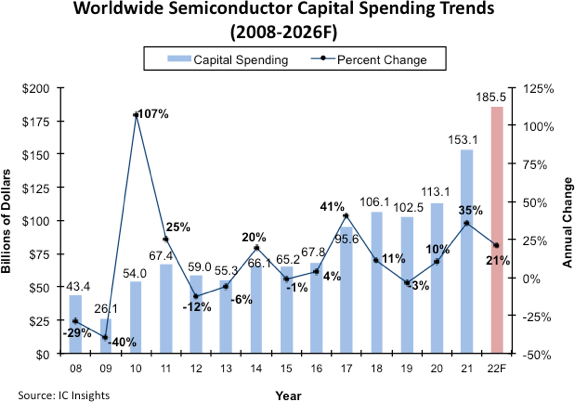
Experts note that even caution, which is currently displayed by some market players will not prevent the semiconductor industry from ending the year with a record $185.5 billion in capex.Source image: IntelAccording to IC Insights, analysts expect the growth of CapEx in the industry to reach 21% by the end of 2022.
This is less than last year's growth of 35%, and less than the forecasted value at the beginning of this year (24%), but the nuance is that for the third consecutive year, the capital expenditure of the semiconductor industry is growing consistently by double-digit percent.
This was last seen from 1993 to 1995 inclusive.Image source: IC InsightsIc Insights analysts previously expected semiconductor capital spending to increase to $190.4 billion this year, but difficult macroeconomic conditions and signs of an overproduction crisis in some market segments suggest that growth will be limited to 21 percent and that spending will not exceed $185.5 billion.
In any case, together with the last year market participants will spend an impressive $338.6 billion for the construction of new enterprises.
At the same time, conveyors of vertically integrated producers of chips are still loaded more than 90%, and contract manufacturers load their capacities at 100%, still not being able to meet the entire demand.
Most likely, as the authors of the forecast summarize, next year the industry will face a decrease in the amount of capital expenditures, as market participants will need to assess the situation after three years of active growth.

8.19.2022

MIT professor suspected of spying for China helped discover \"best material\" for semiconductor manufacturing

MIT professor suspected of spying for China helped discover \"best material\" for semiconductor manufacturing

MIT professor suspected of spying for China helped discover \

A team of researchers at the world-renowned Massachusetts Institute of Technology (MIT) announced the discovery that cubic boron arsenide has better characteristics for microchip production than silicon, calling it \"the best material for semiconductors ever found.
Notably, the team that made the discovery included a scientist of Chinese descent, previously suspected of spying for China.Image source: Muzammil Soorma/unsplash.comIn July, scientists from MIT, University of Houston and other academic institutions have proven that cubic boron arsenide conducts both heat and electricity better than the commonly used silicon in semiconductor production.
According to the study, cubic boron arsenide is 10 times more efficient conductor of heat than silicon.
It is also a better conductor for both electrons and electron holes - this is especially important for semiconductor performance.
Materials like boron arsenide, if they can be used commercially, could change the \"rules of the game\" in the industry.The research team included Gang Chen (Gang Chen), formerly head of the Department of Mechanical Engineering at MIT - for a year he was under investigation for suspicion of espionage, after which the U.S.
Department of Justice dropped the charges for insufficient evidence.
According to Fortune, during the Trump era, the Justice Department's China Initiative began investigating dozens of Chinese scientists and Chinese-American scientists, accusing them of having ties to Chinese agencies to transfer advanced technology to Beijing.It could be decades before commercial use of boron arsenide chips - if the technology is even recognized as suitable for use.
Nevertheless, the material is expected to produce better, faster and more compact chips than today - results that, according to Fotrune, the U.S.
could be deprived of because of pressure on specialists like Chen.Image source: Lucas Vasques/unsplash.comIt is known that authorities arrested the Chinese-born Chen (naturalized in the United States back in 2000), in January 2021.
He was accused, among other things, of hiding ties to Chinese agencies in grant applications from the U.S.
Department of Energy.
The prosecutors stressed the allegiance to China.
The scientific community, including scientists at MIT, criticized the arrest and wrote an open letter saying, \"They are all Gan Chen.
Under President Joe Biden, the Justice Department dropped all charges after the Department of Energy reported that no one had ever asked for information about Gang Chen's ties to China.
A month after the Chen case was dismissed, the Justice Department also terminated the China Initiative.Scientists stressed that this \"witch hunt\" discourages researchers - particularly those from China - from moving to the United States, making the United States unable to capitalize on their intellectual potential.
According to one study, the U.S.
would need to increase the staff of semiconductor manufacturing specialists by 50 percent in order to shift the center of chip production from Asia to North America.
At the same time, talent will have to be recruited from abroad, including China.

8.11.2022

Semiconductor equipment shipments from South Korea to China fell by half

Semiconductor equipment shipments from South Korea to China fell by half

Semiconductor equipment shipments from South Korea to China fell by half

Compared with the same period last year, exports of South Korean microchip equipment to the Middle Kingdom in the first half of the year fell by 51.89%.
Experts do not rule out the possibility that sales will continue to fall, and at the initiative of China itself.Image source: L N/unsplash.comAccording to the Korean Customs Service, released on August 9, total exports of semiconductor equipment to China amounted to $694.8 million in the first half of the year - a 51.89% decrease compared with the first half of 2021.
According to Business Korea magazine, China is the most important market for South Korean producers of the equipment, which accounted for 60% of South Korea's exports of the relevant \"tools\", primarily sent to Samsung Electronics and SK hynix plants located in China.
In addition, Chinese companies such as YMTC, CXMT and SMIC are considering to buy South Korean solutions for the semiconductor industry in response to supply restrictions by the U.S.
Experts explain the drop in exports by increasing Chinese investment in its own semiconductor industry amid growing pressure from the United States.
Industry sources suggest that exports may drop even more due to Korea's joining the Chip 4 alliance, which consists mostly of states unfriendly to China.
It is expected that Chinese authorities themselves may limit export of equipment to South Korean memory chip plants in China by encouraging Chinese enterprises to stop using South Korean equipment for development and production of the equipment in the country itself.We know that the U.S.
has already introduced restrictions on cooperation with the Celestial Empire in the semiconductor industry, limiting inter alia access to subsidies for manufacturers planning to develop semiconductor production in the PRC.
China itself has initiated criminal proceedings against officials responsible for import substitution in the semiconductor industry - it remains to be seen how effectively the allocated funds were used.