Showing posts with label electric car. Show all posts

6.10.2022

From 2024, NIO will start producing its own 800-volt traction batteries

From 2024, NIO will start producing its own 800-volt traction batteries

From 2024, NIO will start producing its own 800-volt traction batteries

Many electric car manufacturers see organizing their own production of traction batteries as a way to achieve better cost control, Chinese company NIO is among them.
Starting in the second half of 2024, it expects to produce 800-volt traction batteries, which will be used in new brand electric cars starting at $30,000.Image source: NIOIn the future, as Reuters explains, citing comments from NIO chairman William Li, the company will combine the use of both third-party batteries and its own.
In the second quarter of this year, NIO had to raise its costs for purchasing batteries manufactured by CATL as the latter raised its selling prices.
NIO has 400 employees working on the development of its next-generation batteries.The switch to 800 volts can speed up charging the traction battery and somewhat reduce the cost of the wiring used in an electric vehicle, but Tesla CEO Elon Musk said during a recent speech that the leading electric-car manufacturer believes it makes sense to switch to the 800 volt standard only for fairly large vehicles like the Cybertruck pickup and Semi truck.Korean carmakers Apparently, for NIO the choice of this standard is more dictated by the desire to achieve savings and improve usability for car owners.
NIO expects to deliver 23,000 to 25,000 electric vehicles in the second quarter, slightly less than the results of the first quarter, as the two-month lockdown in Shanghai undermined the company's ability to produce electric vehicles in the required quantity.

Lightyear is ready to start production of a solar electric car that can drive for months without recharging

Lightyear is ready to start production of a solar electric car that can drive for months without recharging

Lightyear is ready to start production of a solar electric car that can drive for months without recharging

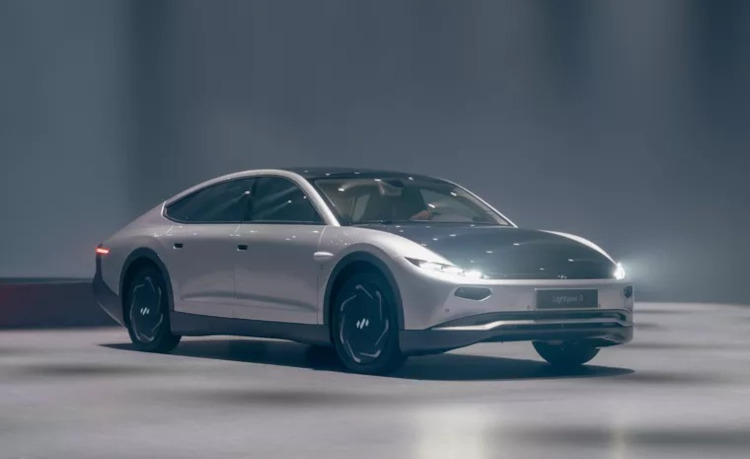
Rumors about the expensive and extremely economical Lightyear 0 electric car have been around for years, but only now a global premiere took place and the developer announced that the first \"solar\" model is ready for production.
The company has already employed up to 500 people and signed agreements with over a hundred suppliers - the car is already ready for production.
Unlike competitors the novelty under certain conditions is able to work without external charging for months.Image source: LightyearThe electric car is a family sedan with solar panels with a total area of 5 m2, capable of generating electricity per day, allowing to travel up to 70 km.
The four-door sedan has a range of 560 km on the highway at 110 km/h, even when there is no sunlight.
In WLTP testing, the Lightyear 0 managed to drive a total of 625 km, 4% more than the all-wheel-drive Tesla Model 3 Long Range.
At the same time, the Lightyear model has a traction battery of 60 kW∙h, while the same Tesla - 82 kW∙h.
According to Lightyear, the car is largely due to such indicators low drag coefficient (0.19) - this is the most aerodynamic family car ever built.
Bridgestone tires play a certain role.
It is known that the car accelerates to 100 km/h in 10 seconds and reaches a top speed of 160 km/h.
Although it is inferior to the Tesla Model 3, it charges much faster.
At the same time, although even on a cloudless day the solar cells will not allow to charge the battery fully, their contribution is large enough - during the summer day the car can get enough solar energy to drive up to 70 km.
According to the company, if the driver does not drive more than 50 km daily, he is able to drive for months until he finally needs a charging station.Solar cells are able to add range up to 10 km hourly, charging from the home power grid - 32 km per hour, when using a charging station with fast charging capability - up to 520 km per hour.The interior of the five-seater car is made from artificial vegetable leather, recycled PET bottles and palm wood.
At the same time, for a car made of recycled materials the model will cost obscenely expensive - it is unlikely that such prices will be compensated by savings on electricity.
A total of 946 electric cars will be produced, and deliveries will begin in November of this year.
In case of success, the company promises to present a version with more affordable price of $32,000, production of which is expected to start in 2025.

The Ministry of Transport has proposed measures to stimulate the distribution of electric cars in the regions

The Ministry of Transport has proposed measures to stimulate the distribution of electric cars in the regions

The Ministry of Transport has proposed measures to stimulate the distribution of electric cars in the regions

The Russian Ministry of Transport has sent recommendations to regional authorities to \"stimulate\" the distribution of electric cars and rechargeable hybrids.
Owners of environmentally friendly vehicles could be entitled to free travel on toll roads and transport tax could be abolished for them.
It is also proposed to develop a system of storage and disposal of waste batteries.Image source: Kindel Media / pexels.comThe document was prepared within the framework of the government-approved concept for the development of electric transport until 2030.
A significant part of the recommendations concern the organization of parking lots: here the opinions of electric car owners are taken into account, as well as the possibility of connecting recharging stations at parking lots to the network and the climatic aspect - in the northern regions there will be fewer specialized facilities for electric cars than in the south.In areas of public and business development at least 10% of all parking spaces for electric cars will be equipped with charging stations, and in residential areas all parking spaces will be equipped with slow chargers - such stations will provide 80% of the charge.
It is proposed to mark the fast charging stations (up to 20 minutes) with signs limiting the time of parking.
When installing charging stations at parking lots it is also proposed to place information boards with an indication of the number of free spaces.
As financial incentives for owners of electric cars it is proposed to reduce the rate of car tax or cancel it completely, as well as to allow them to travel for free on toll roads.
Finally, it was recommended to create \"zero-emission\" zones, where vehicles with internal combustion engines would not be allowed.The first candidates for implementation of the measures proposed by the Ministry of Transport will be regions with heavy traffic and places with high environmental requirements.
Recently, the Ministry of Industry and Trade updated the requirements for state-subsidized charging stations for electric cars - the Chinese GB/T connector became mandatory.

6.09.2022

Chinese electric car maker NIO resented the actions of AMD, which announced the cooperation

Chinese electric car maker NIO resented the actions of AMD, which announced the cooperation

Chinese electric car maker NIO resented the actions of AMD, which announced the cooperation

The transition of the dynamic Chinese electric car maker NIO to the server systems based on AMD EPYC generation Milan processors this week was referred by the Chinese representative office of AMD to the achievements of the company itself.
At the same time representatives of the automaker a couple of days later rebuked AMD, claiming the illegality of its use of this fact for advertising.Image source: CnEVPost explains with reference to the director of corporate relations NIO Ma Lin (Ma Lin), the company is not working with AMD and does not discuss such a possibility.
In addition, NIO has not given AMD's Chinese representative office the right to use such information for promotional purposes.
As explained by the representative of the automaker, as a result of the appeal to the Chinese representative AMD of the latter company has agreed to remove the press release from its website, but at the same time left a video on its page in Weibo, which talks about the cooperation between the two companies.
NIO representatives insist on the removal of this video, which has already gathered over a million views.In fact, as explained by NIO's director of corporate affairs, the company purchased third-party server systems that contained AMD processors, but the deal was formalized without the direct participation of the latter company.
Nevertheless, the Chinese representative office of AMD used the fact of the deal purely in its own interests, reporting on direct cooperation with NIO, which irritated the representatives of the latter.

6.07.2022

Samsung SDI has decided to make its new batteries the same size as the Tesla 4680

Samsung SDI has decided to make its new batteries the same size as the Tesla 4680

Samsung SDI has decided to make its new batteries the same size as the Tesla 4680

The traction battery market has already passed the stage of development when it was possible to endlessly experiment with the cell sizes used.
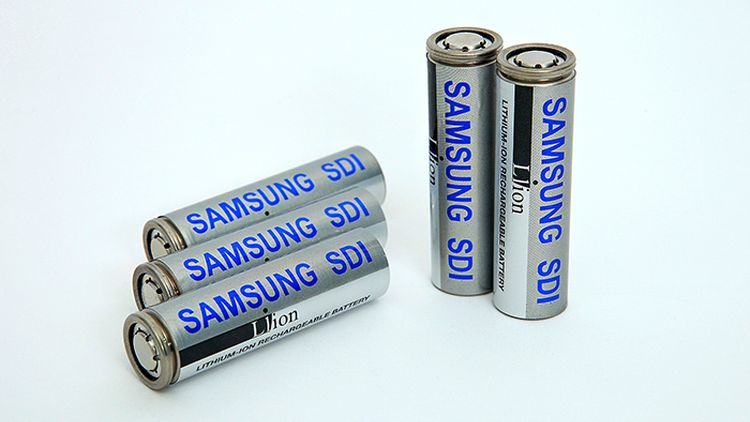
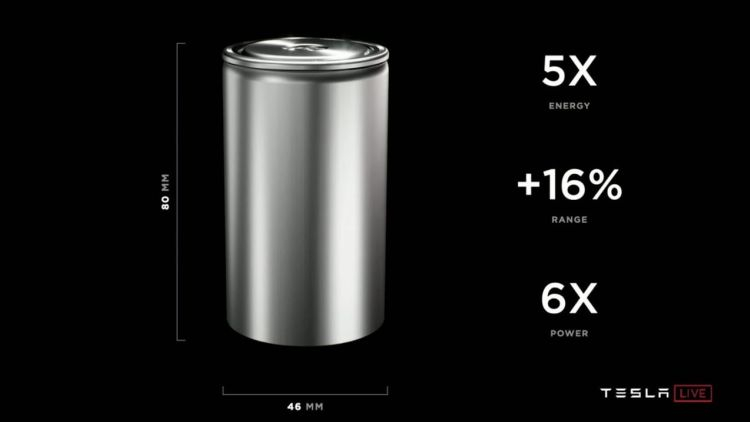
Samsung SDI first wanted to increase the diameter of its cylindrical lithium batteries to 40 mm, but now Korean sources say that the reference point is the diameter of similar cells from Tesla, which reaches 46 mm.Image source: Samsung SDI If you consider that the cylinder height was originally supposed to be 80 mm, then Samsung SDI can achieve full unification in size with the cylindrical cells 4680, which begin producing Tesla and its close partner, Panasonic.
However, LG Energy Solution is also experimenting with the creation of such batteries, so all three third-party manufacturers could eventually become suppliers of cells like 4680 to the Tesla assembly line.According to Business Korea, Samsung SDI now produces cylindrical lithium batteries in two sizes: 2170 and 1865, where the first two digits define the diameter of the cylinder and the second two define its height in millimeters.
Work on the standardization of the third size is coming to an end, and Samsung SDI is inclined to choose the diameter of 46 mm as a basis.
What will be the height of the cylinder, has not yet been decided, but for the purpose of unification, it will probably reach 80 mm, inherent in the products of Tesla, Panasonic and LG Energy Solution.According to SNE Research, now the cylindrical batteries account for 19% of the traction battery market, but by 2030 they will reach 26%.
The alternatives are either prismatic hard-shell batteries or packaged soft-shell batteries.
Samsung SDI is going to ramp up production of cylindrical-shaped batteries at its facilities in South Korea and Malaysia.

BMW and Ford will get Solid Power solid-state battery samples for electric cars by the end of the year

BMW and Ford will get Solid Power solid-state battery samples for electric cars by the end of the year

BMW and Ford will get Solid Power solid-state battery samples for electric cars by the end of the year

In 2017, German automaker BMW invested in the capital of a young company called Solid Power, which aims to develop and mass produce solid-state electrolyte batteries that can be used in electric cars.
Ford Motor later joined the investors, and now by the end of the year both automakers could have the first samples of Solid Power batteries for further testing.Image source: Solid PowerThis will become possible, according to a press release, with the launch of a pilot Solid Power solid electrolyte battery production line in Colorado.
This line will be able to produce 300 battery cells per week, with an annual production capacity of 15,000 units.
This should be enough to supply key customers with enough batteries for qualification tests.
BMW and Ford will start receiving samples of Solid Power cells later this year.Solid Power partners also include Hyundai, Samsung and SK On.
The latter two will certainly be able to set up mass production of corresponding batteries if necessary - all the more so as the developers point to the possibility of using existing technological equipment.
The cells developed by Solid Power contain 50% more silicon in the anode, increasing the density of energy storage and increasing the range of the electric car without changing mass.
The absence of liquid electrolyte in the cell increases operational safety and allows the battery to be charged faster.Solid Power cells can be used to create batteries with a capacity of 60 to 100A‧h.
The cost of the new batteries should be lower than that of traditional batteries, which will also contribute to the growth of their popularity.

GM expects to reduce the cost of traction batteries for electric cars by 60%

GM expects to reduce the cost of traction batteries for electric cars by 60%

GM expects to reduce the cost of traction batteries for electric cars by 60%

It is generally believed that this year, for the first time in the history of mass production of lithium batteries, their cost will stop decreasing, and this will have a negative effect on the rate of expansion of electric cars.
Experts explain that this effect will not be long-term, and for the foreseeable future, savings in mass production of electric cars will allow to override the impact of rising prices for traction batteries.Source image: GMS Beginning this year, as explained by Barron's, the cost of the most popular metals used to produce traction batteries has increased by 50%, which itself has caused an increase in prices of electric cars on average by $ 1500 per unit.
Tesla raised its product prices even more dramatically, counting on further cost increases throughout the year.Tim Grewe, General Motors' director of electrification, refers to the existence of the so-called Wright curve, which describes the tendency for production costs to fall every time output doubles.
GM Corporation of America aims to reduce the cost of producing traction batteries by 60% by the end of 2026 or 2027.
In a couple of years, it is possible to reduce the cost of production by 30%, but to do this, it will be necessary to double the production of batteries.
The effect will be achieved not only due to economic dependencies, but also as a result of introducing a new composition of cathodes and electrolyte.
Local companies in the U.S.
and suppliers of raw materials close to them will be counted on to develop production.
Taken together, all this will reduce the cost of electric cars by $5000 or $6000 by the end of the forecast period, more than offsetting the possible impact of rising raw material prices.
In addition, the cost of electric cars could equal the cost of cars with internal combustion engines, and this would serve as a tipping point in the transition of consumers to electric power.
At least theoretically, this is what the future scenario for the industry looks like.

6.06.2022

In April, BYD managed to break into second place in the ranking of the largest lithium battery suppliers

In April, BYD managed to break into second place in the ranking of the largest lithium battery suppliers

In April, BYD managed to break into second place in the ranking of the largest lithium battery suppliers

Chinese company BYD developed in parallel with Tesla, but started producing electric cars after it mastered mass production of lithium batteries.
The shutdown of Tesla's assembly line in Shanghai allowed BYD to become the world's second largest producer of traction batteries in April.
The first place is still occupied by CATL with 33.7% of the market.Image source: BYDThe statistics of SNE Research presented by Business Korea traditionally focuses on the business dynamics of Korean battery manufacturers, considering the period from January to April of this year inclusive.
Korean manufacturers have made significant progress in the annual comparison, but Chinese CATL still surpassed them, increasing the volume of supply by 114.1% and securing a little more than a third of the world market.
BYD is in third place with a 224.5% increase in supply volume and has almost doubled its market share to 12.1%.
LG Energy Solution managed to increase battery sales by 19.1% in the first four months of this year, but its share has dropped from 22.9% to 14.1%, although it is still in second place in the world ranking compared to its Chinese competitors.
Korean SK On was awarded only the fifth place, although its sales increased by 141.3%, and market share grew from 5.3% to 7%.
Samsung SDI is on the sixth place with a sales increase of 26.9%, but its share for the year decreased from 5.8% to 4.0%.
Total for the first four months of this year was released by manufacturers of traction batteries with a total capacity of 122.9 GWh.
This represents an increase of 83.4% over the same period last year.
Shipments have grown steadily since the third quarter of 2020.
Japanese manufacturers, including Panasonic, have also reduced their market share this year amid the progress of Chinese and Korean competitors.

6.03.2022

State-subsidized electric car charging stations in Russia must now have a Chinese GB/T connector

State-subsidized electric car charging stations in Russia must now have a Chinese GB/T connector

State-subsidized electric car charging stations in Russia must now have a Chinese GB/T connector

The Ministry of Industry and Trade has updated the requirements for the equipment of state-subsidized charging stations for electric cars - now the presence of a Chinese standard GB/T connector has become mandatory.
Experts noted that even Chinese electric cars go to Russia with a European connector, and this decision may indicate the intention of the Ministry to establish the import of cars from Asia.Image source: Mikes Photography / pixabay.
comAccording to the new requirements for the equipment of subsidized charging stations for electric vehicles (EZS), facilities must necessarily be equipped with at least three connectors: the Chinese GB/T is mandatory, while the European CCS2 and Japanese CHAdeMO can be added at one's discretion.In 2021, there were 545 EZS in Russia.
The state program in force from 2022 to 2024 offers subsidies of up to 60% (but not more than 1.86 million rubles) for construction of the station, and up to 30% (but not more than 900 thousand rubles) for connection to the power grid.
These measures are expected to help install another 2,900 EPS in the country.Rusgidrovoice (a joint venture between Sollers Group and JSC Hydroinvest from RusHydro) noted that the only JAC iEV7 electric car officially represented on the Russian market comes with a CCS connector - carsharing with this model is now developing in the Far East.
The Russian representative office of Chinese Chery that is just getting ready to release its first electric car in Russia confirmed that they planned to adapt it to Euro standard CCS, but in light of the new initiative of the Ministry of Industry and Trade it admitted that they may reconsider this decision and keep the \"native\" GB/T.
Andrey Gurlenov, executive director of Sitronics Electro reminded that China had already become a leader in producing electric cars and supposed that in a couple of years up to 70% of electric cars in Russia will be equipped with Chinese interface - even Russian models with a plug-in interface.
The developers of the EVM PRO electric car (based on the UAZ Profi platform) introduced in February said that they had made provisions for it to support GB/T and CHAdeMO.

6.02.2022

The first road with wireless charging for electric cars will appear in the U.S.</br>

The first road with wireless charging for electric cars will appear in the U.S.

The first road with wireless charging for electric cars will appear in the U.S.</br>

The piggy bank of unusual global transportation solutions will soon be added to the American project.
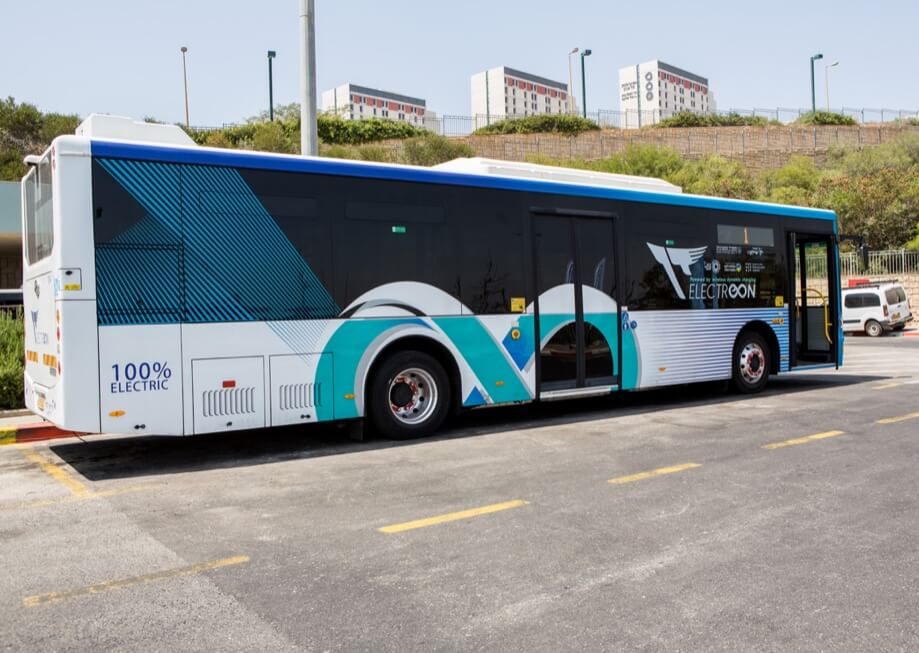
A road that provides wireless charging for electric cars will be commissioned in Detroit next year.
In the future, the system could be useful for dedicated bus lanes or for areas where traffic jams often occur and cars have to stand for a long time.Image source: ElestrainThe Israeli company Electreon is responsible for the project, which plans to finish construction already in 2023.
Test road will be only one mile long (about 1.6 km).
It is known that under the road there will be charging induction coils, connected to the power grid.
Electric cars will need a special receiver - similar to smartphones - to get power.
The system does not work without an active receiving device within reach and will be safe for others.
It will get a modular design and if the road is damaged, the work will not stop - each coil is connected to the power grid in parallel.How much power the electric car will get will depend on the design of the car itself and how fast it moves.
Of course, the road will not be able to fully charge the battery, especially over such a short distance, but it is able to provide some energy, enough to get to the nearest charging station.According to a representative of Electreon, the optimal location of charging coils will be under the dedicated lanes for public transport, since the traffic moves here predictably and regularly.
In addition, the system can be useful in places with frequent traffic jams - you can recharge your battery while standing in a traffic jam.
At the same time, the charging will not be free - the user will receive a bill for payment.Something similar is already being implemented in other areas.
For example, the Logitech Powerplay system involves using a special mat to charge a wireless mouse directly at work.

Panasonic sent Tesla first samples of battery cells type 4680

Panasonic sent Tesla first samples of battery cells type 4680

Panasonic sent Tesla first samples of battery cells type 4680

Japanese corporation Panasonic was originally Tesla's partner in traction battery production in Nevada, now their joint venture is capable of producing batteries with a combined capacity of 39 GW‧h annually.
The pilot production of new cells type 4680 in Japan has already yielded the first samples of batteries, which were sent to Tesla for further testing.Image source: TeslaWhat emphasizes Reuters with reference to comments from representatives of Panasonic, mass production of cells type 4680 will start at the enterprise in Japan after March next year.
In May of the current year the Japanese company managed to start mass production of prototypes of these cells that will be sent to the USA for the needs of Tesla.
In the future, Panasonic is considering organizing their production in the United States.
Rumors mention the states of Kansas and Oklahoma as the closest places to Tesla's facility in Texas, where the new Panasonic plant will be located.
Experts from the Japanese company were actively involved in the development of a new type of cell, which due to its increased size will make traction batteries cheaper with a simultaneous increase in capacity.For Tesla, the transition to the use of cells type 4680 is of strategic importance.
Such batteries should be used in the electric Cybertruck pickup and Semi truck, and now the Model Y crossovers with a new power structure of the body are already equipped with them at the plant in Texas.
Production of such crossovers will be set up in Germany, but so far the Model Y local assembly uses a transitional design with a battery based on 2170-size cells.
Tesla plans to organize independent production of cells of 4680 type not only in Texas, but also in Germany.The representatives of Panasonic said that car business should increase its share in the total revenue of the corporation from 14 to 19% by March of the next year.
Overall, global car production will have to return to pre-pandemic levels by then, but shortages of semiconductor components will persist after that.
Panasonic intends to partially compensate the growth of battery production costs by increasing prices for its products.

Lamborghini believes there will be room for hybrids on the market even after 2030

Lamborghini believes there will be room for hybrids on the market even after 2030

Lamborghini believes there will be room for hybrids on the market even after 2030

Already now some automakers are abandoning the production of cars exclusively with internal combustion engines, switching to hybrid powertrains or pure electric power.
By 2030, authorities in some countries will ban the sale of new vehicles with internal combustion engines, so even sports car manufacturers are preparing for the new requirements in advance.
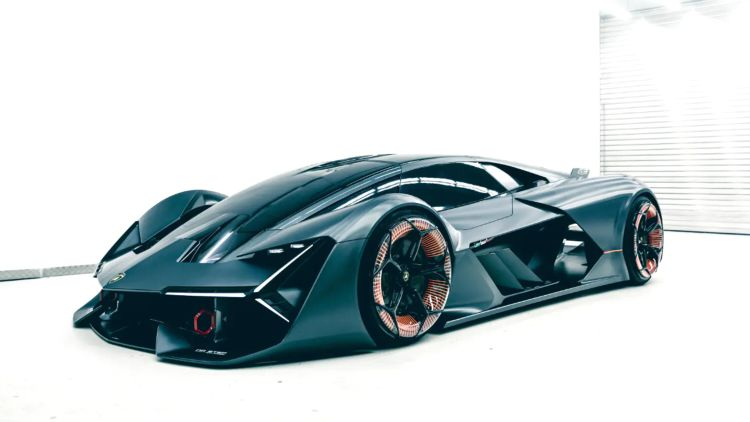
Lamborghini, however, expects to keep producing hybrids in the next decade.Image source: LamborghiniIt's not even about the dynamics, which electric cars with their torque response provide in abundance.
Traction batteries add significantly to the weight of electric cars, and sports car manufacturers are used to fighting for every kilogram of car weight.
Again, an electric car with a powerful propulsion system and a modest battery capacity will not be a practical choice for wealthy customers, who are the main target audience of sports car manufacturers.
As its head Stephan Winkelmann told Italian edition Il Corriere della Sera, Lamborghini brand expects to keep two hybrid sports cars in its range even after 2030, when restrictions on sales of cars with internal combustion engines will come into force in Europe.
We are talking about sports cars with power plants that can run on synthetic fuels that do not harm the environment as much as traditional hydrocarbon fuels.
The problem, according to the head of Lamborghini, is not only the limited volume of production of such fuels, but also the lack of legislative exemptions allowing the sale of such cars after 2030.
In this sense, the company, which is part of Volkswagen, is counting on the relaxation of lawmakers.The hybrid power unit in the sports car allows to maintain impressive dynamics, as well as to limit the weight of the vehicle without sacrificing its power reserve.
Many of Lanborghini's competitors like Ferrari, Aston Martin and McLaren adhere to the same strategy, but all of them intend to switch to pure electric power by 2030, presenting their first electric car models by the middle of this decade.
Lamborghini itself intends to make the powertrains of all its models hybrid by 2024, starting the migration next year.
The brand's first electric car won't appear until the end of the decade.
Representatives of McLaren previously stated that customers are important and roaring sound of the exhaust, which, when abandoning the internal combustion engine will have to be synthesized through the speakers.
Another important direction of innovative activity of sports car manufacturers and their partners is the development of lighter and more capacious traction batteries.Toyota Motor Corporation though it does not show obvious ambitions in the sphere of construction of sports cars, the problem of refusal from the internal combustion engine tries to solve in its own way.
The public has already been shown a prototype of the racing Toyota Yaris, whose combustion engine has been modified to convert to hydrogen fuel, which does not harm the environment.
The problem in this case is not only the size of the power plant, which took away half of the space in the cabin, but also the high cost of hydrogen fuel itself.
Usually it is tried to be used to generate electricity in fuel cells, and so far Toyota's approach seems too exotic to find widespread application.

5.23.2022

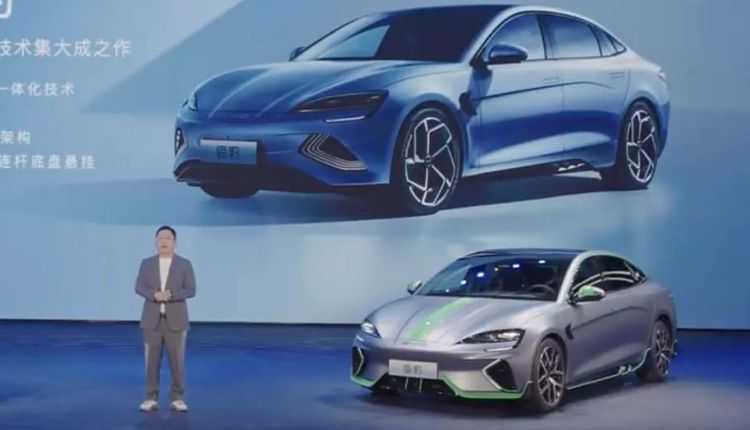
The Chinese electric car BYD Seal has a body-integrated battery and a price tag starting at $32,000

The Chinese electric car BYD Seal has a body-integrated battery and a price tag starting at $32,000

The Chinese electric car BYD Seal has a body-integrated battery and a price tag starting at $32,000

For almost twenty years BYD has been producing cars, although before that it specialized in lithium batteries.
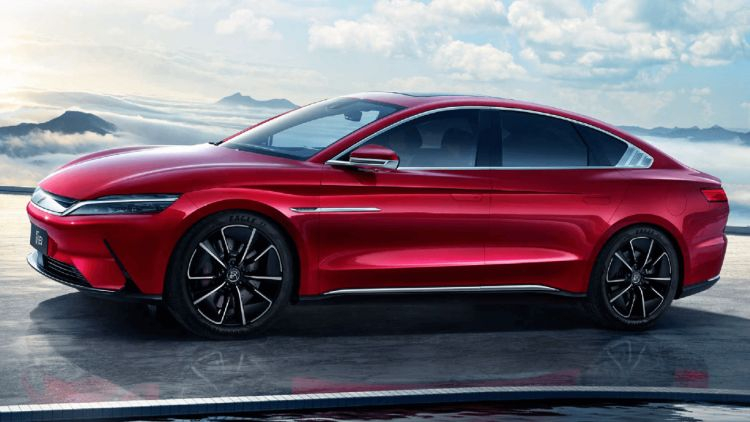
Electric cars are now for obvious reasons a strategic direction for her development, and the Seal model on a new platform demonstrates the use of the current principle of integration of the traction battery in the power structure of the body.
Orders for the car have already started at a price of $32,000.Image source: Weibo, BYD AutoAccording to Electrek, this is the first model for BYD, which implies such a layout of the traction battery.
Tesla is just about to introduce such a body structure at a plant that has opened in Germany, although progress is moving faster at the new Texas assembly line.
In the case of BYD, the new layout is claimed to increase volume efficiency by 66 percent, and the body's torsional stiffness is doubled, which has a positive effect on the car's handling.
Safety in frontal collisions is increased by 50%, the manufacturer even claims that the traction battery of this design has a high chance of surviving most road accidents.Image source: Weibo, BYD AutoIn contrast to Tesla, which uses cylindrical lithium batteries, BYD uses plate batteries of its own production.
The Seal electric car's traction battery capacity ranges from 61 to 83 kW‧h, with a range in the conditional CLTC cycle of 550 to 700 km for the rear-drive versions.
The all-wheel-drive variant with a range of more than 650 km, which will be offered for $43,576, stands apart.
There are four options available, three of which will be offered with rear-wheel drive.
Pre-orders for the new vehicle are already being taken, and at first it will be available only on the Chinese market.

Korean battery makers prepare to build 11 factories in the US

Korean battery makers prepare to build 11 factories in the US

Korean battery makers prepare to build 11 factories in the US

The US is immediately embarking on its own \"import substitution\" program.
South Korea's three largest electric vehicle battery companies plan to build 11 traction battery plants in the U.S.
by 2026, mostly in cooperation with U.S.
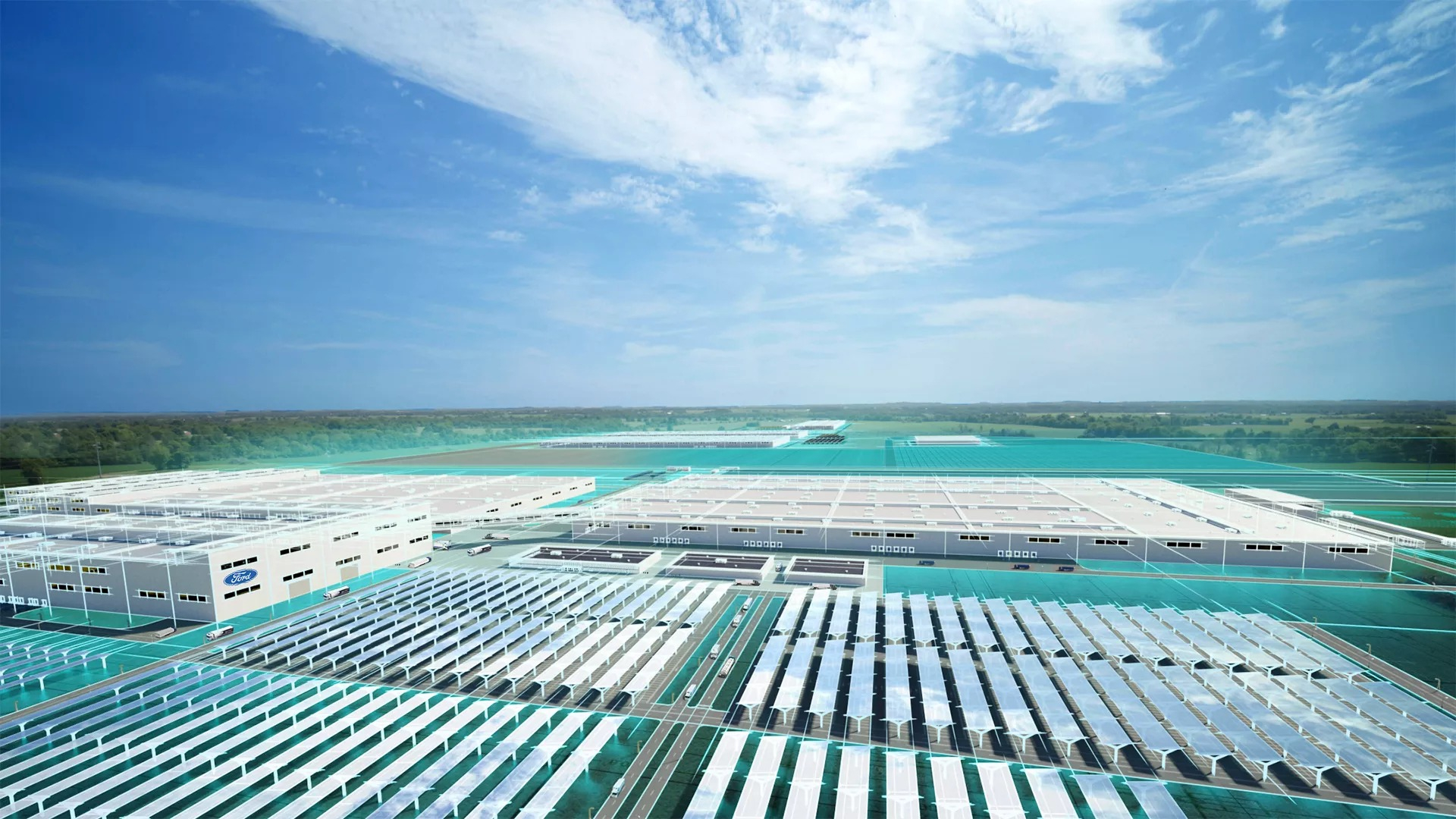
electric vehicle manufacturers.Image source: FordFor example, LG Energy Solution plans to build six production bases in the U.S.
by 2026.
It is the most active player among Korean battery manufacturers, constantly expanding its production.LG Energy Solution has already established a joint venture with General Motors Ultium Cells - construction of a plant with a production capacity of 35 GW∙h or more has already begun in Ohio, and a second plant (35 GW∙h or more) in Tennessee.
A third plant (over 50 GWh) should begin mass production in Michigan in 2025.
A plan for another plant will be discussed in detail this year.
In addition, the company is independently building a plant for cylindrical batteries in Arizona and intends to expand its own production capacity in Michigan.SK On plans to build four battery plants in the U.S.
The company is already building facilities with a total production capacity of 129 GW∙h in Kentucky and Tennessee.
The Blue Oval SK joint business is being implemented together with Ford, and work is expected to begin in 2025.In addition, Sk On is building two of its own plants in Georgia.
It is known that Hyundai Motor Group plans to build an electric car plant in the same state, so it is very likely that these businesses will cooperate in this state.Samsung SDI decided to create a joint business for the production of traction batteries together with Stellantis.
The plan is to start producing battery cells in the U.S.
in 2025.
When construction is completed, the production capacity will be 23 GWh.
In the future, production will be expanded to 40 GW∙h.

5.21.2022

Hyundai will invest about $5.54 billion in electric car and battery production in the US

Hyundai will invest about $5.54 billion in electric car and battery production in the US

Hyundai will invest about $5.54 billion in electric car and battery production in the US

The US is the third-largest market for electric cars, but local production, other than at Tesla, is relatively underdeveloped.
Following the example of many competitors, Korea's Hyundai Motor has decided to build an electric car and traction battery manufacturing facility in the U.S.
It will be located in Georgia and will start assembling electric cars in the first half of 2025.Image source: Hyundai MotorConstruction of the new facility will begin in 2023, and the design capacity implies the production of 300,000 electric cars per year.
This is not the only enterprise of Hyundai in the USA which will be able to establish production of electric cars for the local market.
A part of production lines in Alabama will be re-profiled for these needs and it will be spent $300 mln for these purposes.
In general, Hyundai intends to direct $7.4 bln to development of American projects related to mobility till 2025.
It is known that the new venture in Georgia will be financed on a cost-sharing basis with a certain partner, whose name Hyundai has not yet disclosed, the total project budget will exceed $5.54 billion.
It is possible that it will be South Korean company SK On, which already has facilities in Georgia to produce traction batteries.
They are supplied for the needs of Volkswagen and Ford Motor, but knowledgeable sources told Reuters that electric cars Hyundai Ioniq 7 will be equipped with batteries manufactured by SK On.
The state of Georgia intends to attract about $1 billion more in investment to build facilities by Hyundai suppliers that will create the necessary local infrastructure for the Korean giant.

The Swedish company Northvolt has started commercial deliveries of traction batteries manufactured in Europe

The Swedish company Northvolt has started commercial deliveries of traction batteries manufactured in Europe

The Swedish company Northvolt has started commercial deliveries of traction batteries manufactured in Europe

Europe has managed to become the second largest market for electric cars after China, ahead of the US, but without localizing production it is impossible to achieve acceptable prices, and the process itself entails organizing battery production in the vicinity of assembly lines.
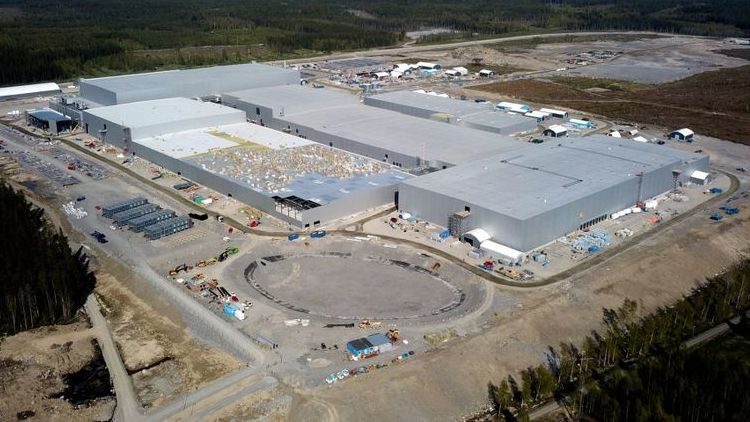
Northvolt has recently started supplying its first mass-produced batteries to customers.Image source: NorthvoltThe enterprises of South Korean companies producing lithium batteries have long been present in Europe and the Chinese one under the brand CATL will soon start operating, but there have been no \"native European\" companies in this segment so far.
Thus, as Automotive News Europe explains, the Swedish company Northvolt has become the first European supplier of locally produced lithium batteries for customers in the region.
The first batches of traction batteries were shipped to customers last week, although Korean media reports claim that Northvolt's yields are not yet that high and that its equipment needs to be replaced with more reliable ones as a matter of urgency.
The company now employs about a thousand people but is adding an average of 150 each month and could eventually reach not 3,000 but the full 4,000 workforce.
Northvolt has already managed to collect $50 billion in orders from electric car manufacturers such as BMW, Volkswagen, Volvo and its subsidiary Polestar.In Norway, Northvolt simultaneously started a joint venture with Hydro to recycle end-of-life traction batteries.
It has become the largest in Europe and will be able to recycle 25,000 traction batteries each year.
The processes involved will recover for recycling a significant portion of the raw materials, which at the current rate of growth in electric vehicles will constantly become more expensive and remain in short supply.
One of the founders of Tesla, Jeffrey Brian Straubel, predicts that over time the electric car industry will be able to fully meet its needs in raw materials for traction batteries just by recycling already used batteries.
However, with an average service life of 15 years, we will have to be patient before such predictions become a reality.

Tesla's body-integrated battery can be replaced, but half of the car must be disassembled

Tesla's body-integrated battery can be replaced, but half of the car must be disassembled

Tesla's body-integrated battery can be replaced, but half of the car must be disassembled

One of the most popular Tesla electric cars, the Model 3 sedan contains three to four thousand type 2170 cylindrical battery cells, and replacing even a few and the associated diagnostics is a long and costly undertaking.
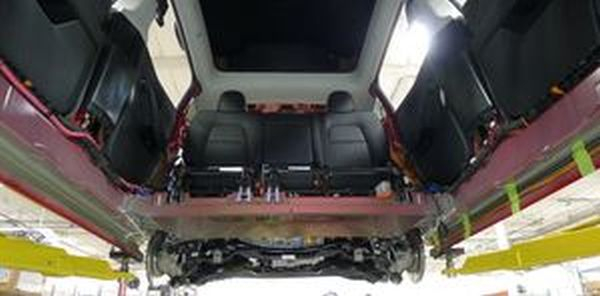
However, after the transition to the battery integrated into the power structure of the body, the situation is exacerbated by the fact that to replace it you have to disassemble half of the car.Image source: TeslaSuch revelations are shared by the resource Electrek with reference to the already available employees of corporate services for repair of electric cars Model Y new sample.
Recall that in parallel with the transition to the use of battery cells of size 4680, the company expects to introduce a traction battery, integrated into the power frame of the lower part of the body.
This arrangement may be more advantageous from a performance standpoint, but when repairing the battery, you would have to do at least 143 consecutive manipulations just to remove it.
Putting the battery back in place would require another 171 manipulations, and in the process of repairing almost the entire lower part of the body will be separated from the rest, along with the front seats.Image source: Tesla, ElbrickIt may make traction battery repair more difficult and more expensive, but in terms of manufacturing the new electric car will achieve up to 10% weight savings and increase range by 14%.
At the same time, the number of necessary parts will be reduced by 370 pieces.
Model Y crossovers with the new body structure will be produced at Tesla's recently opened facilities in Texas and Berlin, but the German site will temporarily use 2170-size cells before switching to 4680 cells.

5.20.2022

Chinese authorities are mulling extending the electric car subsidy program for this year

Chinese authorities are mulling extending the electric car subsidy program for this year

Chinese authorities are mulling extending the electric car subsidy program for this year

According to many experts, China's electric car market could not have become the world's largest without active support from the government, which since 2009 has spent $14.8 billion on subsidy payments to buyers of private and commercial vehicles with traction electric motors.
The subsidy program was set to end this year, but authorities are mulling extending it until the end of next year.Image source: BYDThis was reported by Reuters, citing its own knowledgeable sources.
In April this year, sales of new vehicles in China fell by 48%, while sales of electric cars and hybrids rose by 45% to 299,000 units.
In March, the volume of sales of cars with new types of power units more than doubled, so the Chinese authorities want to compensate the economic slowdown provoked by the new lockdowns with new stimulating measures.Initially, the local authorities wanted to refuse subsidizing the purchase of electric cars by Chinese citizens back in 2020, but the pandemic prolonged the program for a couple of years.
It is noteworthy that about 40% of the Chinese market of electric cars now are cars worth about $4,000, most of them are not covered by subsidies.
But buyers of more expensive models are able to save a couple of thousand dollars from the car.At the same time the value of subsidies in the years decreased, and tax incentives for buyers of cars with power plants of the new type will be reduced.
If this year, the authorities allow buyers to not pay tax on the purchase of the vehicle, from next year will apply a rate of 5%.
Initially, the Chinese government wanted to introduce the tax at a rate of 10%, but in the current economic conditions it was decided to act in stages.

Tesla Supercharger stations are now available in the UK, Spain, Sweden, Belgium and Austria to charge any electric vehicle

Tesla Supercharger stations are now available in the UK, Spain, Sweden, Belgium and Austria to charge any electric vehicle

Tesla Supercharger stations are now available in the UK, Spain, Sweden, Belgium and Austria to charge any electric vehicle

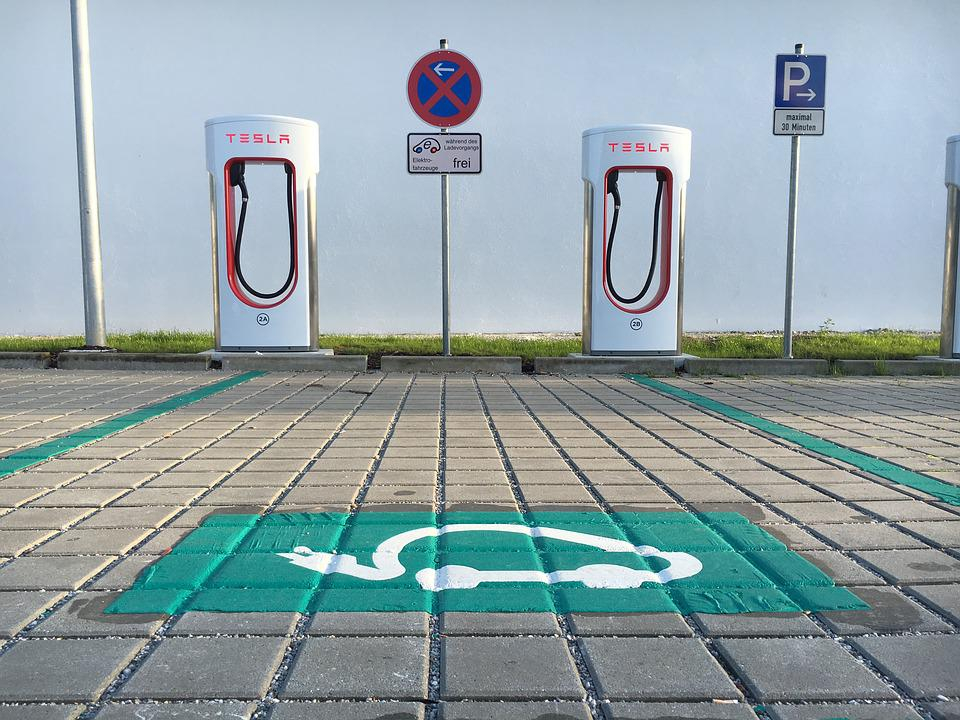
Tesla is expanding the presence of \"open\" Supercharger charging stations in Europe - not only Tesla electric vehicles, but also traction batteries of other manufacturers' cars can be charged at them.
While previously a similar program operated at some Supercharger stations in the Netherlands, Norway and France, now Tesla charging stations have become available to everyone in the UK, Spain, Sweden, Belgium and Austria.Image source: johnjakob/pixabay.comSince last year, Tesla CEO Elon Musk has talked about expanding the program to charge any electric vehicles at Tesla stations in the United States, but how the project will be implemented is not yet reported.
There, local Superchargers use Tesla proprietary ports, while Europe uses the CCS2 standard, which supports most local electric vehicles - in accordance with local laws.
What's more, North American electric vehicles, for the most part, have CCS1 charging ports, and variants like the Nissan Leaf have CHAdeMO charging ports.Residents of European countries participating in the pilot program can find compatible charging stations in the Tesla app.
If a user owns both a Tesla and another electric vehicle, they can search the app for the right Supercharger for each type.
In addition to the electricity fee, owners of third-party vehicles will have to pay an additional fee, which is also listed in the app.

5.18.2022

Anodes with high silicon content will allow Mercedes-Benz to put an electric Gelandewagen on the assembly line by 2025

Anodes with high silicon content will allow Mercedes-Benz to put an electric Gelandewagen on the assembly line by 2025

Anodes with high silicon content will allow Mercedes-Benz to put an electric Gelandewagen on the assembly line by 2025

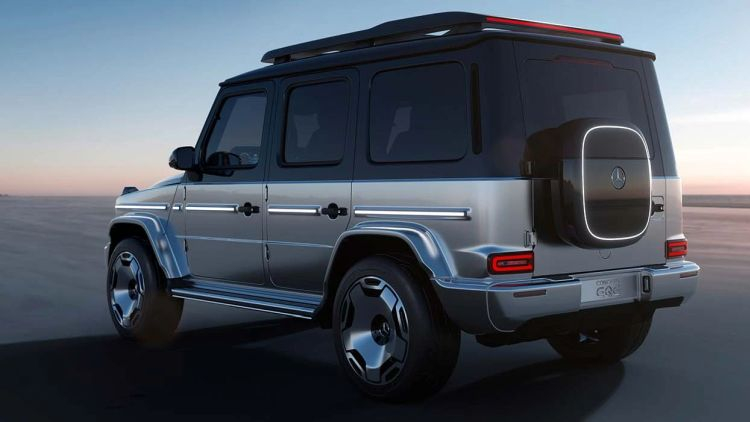
Last fall, Mercedes-Benz showed at the IAA Mobility exhibition a concept EQC, which is destined to become a precursor of the electric version of the legendary \"Gelandwagen\" - a heavy four-wheel drive vehicle, which is inferior in its overall dimensions to American competitors.
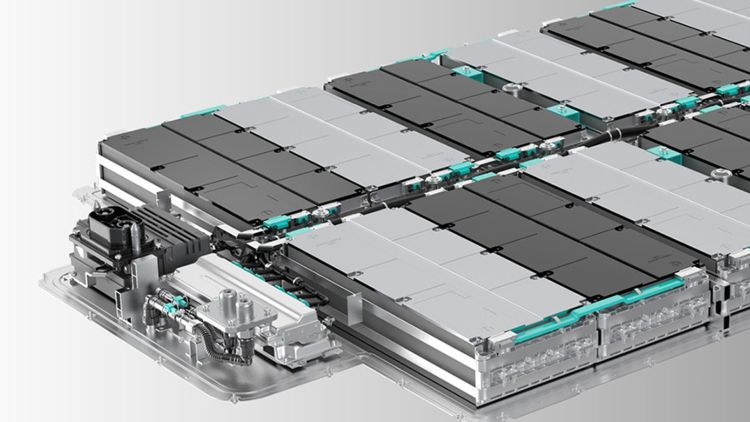
It is on this model should debut a new type of battery with a high content of silicon in the anode, which will provide the SUV sufficient range.Image source: Mercedes-BenzAs explained in a press release on the website of the German automaker, by 2025 should bring its benefits after years of cooperation with the young California company Sila Nanotechnologies, which was founded in 2011 and eight years later began receiving funding from Mercedes-Benz.
The company's developments are aimed at creating anodes for lithium batteries, which due to their high silicon content allow increasing the energy storage density by 20-40% up to 800W‧h per liter of traction battery volume.
It is in the electric version of the G-Class that such batteries will debut, which will be produced using anodes produced by Sila.The latter will set up production of the necessary components at its facility in Washington state, for the construction of which several hundred million dollars have been allocated.
This site will initially use 100 percent energy from renewable sources and will start operating in 2024.
Although Mercedes-Benz will be Sila's first commercial customer, it is unlikely to be the only one, since the startup is also working with rival BMW.
Sila was founded by a former Tesla specialist and managed to raise about $590 million in investments last year, and the startup's current capitalization is estimated at $3.3 billion.