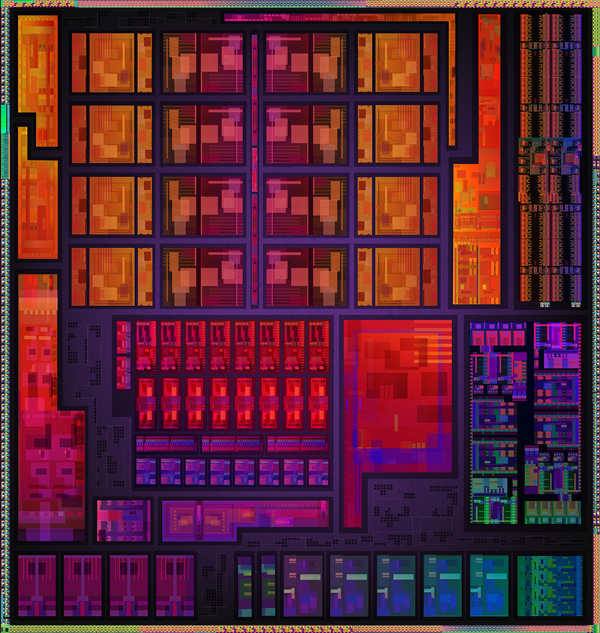
Showing posts with label zen 3. Show all posts

10.01.2022

AMD introduced Ryzen Embedded V3000 embedded processors based on Zen 3

AMD introduced Ryzen Embedded V3000 embedded processors based on Zen 3

AMD introduced Ryzen Embedded V3000 embedded processors based on Zen 3

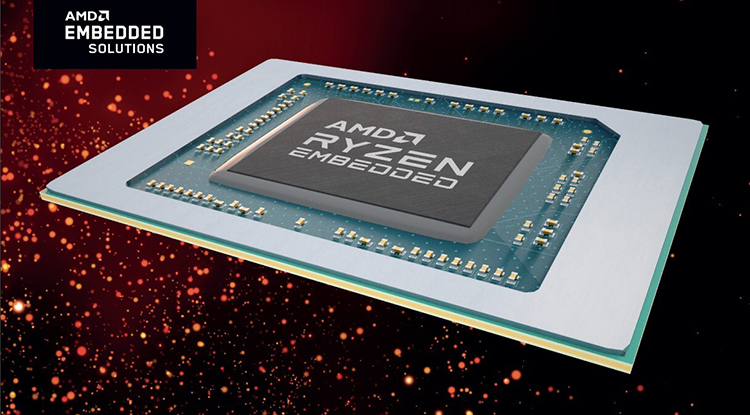
AMD today introduced Ryzen Embedded V3000 embedded processors based on Zen 3 architecture cores.
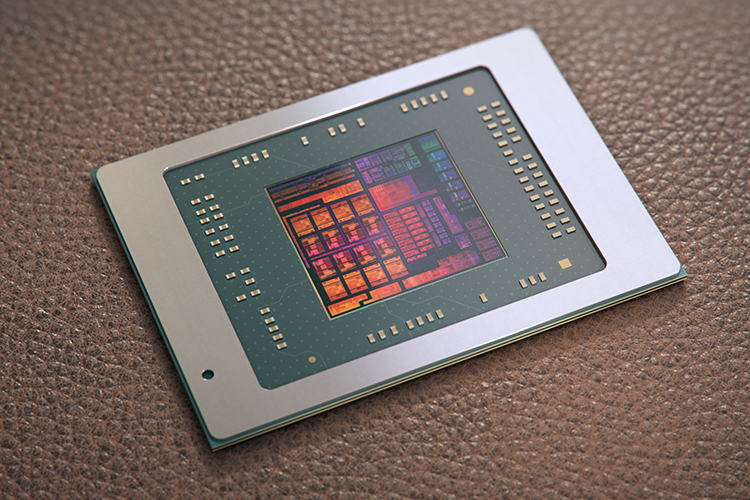
Compared to the V1000 series, the new AMD Ryzen Embedded V3000 processors offer more cores, higher performance, increased DRAM memory transfer rates, and improved I/O capabilities.Image source: AMDThe Ryzen V series processors can be used in a variety of applications - enterprise and cloud storage, network routing, switching and firewall protection in data centers.
Their high performance and low power consumption are suitable for the most demanding work environments and 24/7 workloads.
\"We designed AMD Ryzen Embedded V3000 processors for customers looking for a balance of high performance and power efficiency for a wide range of applications in a compact BGA package,\" said Rajneesh Gaur, corporate vice president and general manager, Embedded Solutions Group, AMD.
\"The V3000 Series processors provide a wide range of features needed for productive work in enterprise Storage and networking processors must be balanced in performance and heat dissipation for rack-mount, space-constrained applications,\" said Shane Rau, IDC's vice president of computing semiconductor research.
- The new AMD Ryzen Embedded V3000 processor family enables system designers to take full advantage of single board design and BGA packaging to create more versatile and flexible solutions that facilitate system integration.\"

7.01.2022

The unreleased eight-core Ryzen 7 5700

The unreleased eight-core Ryzen 7 5700

The unreleased eight-core Ryzen 7 5700

AMD may release another Cezanne series processor.
The Ryzen 7 5700 has been found in the Geekbench 5 synthetic test database.
Apparently, the chip is a version of the hybrid APU Ryzen 7 5700G, lacking an integrated graphics core.Image source: AMDThe Ryzen 7 5700 processor's affinity with the Ryzen 7 5700G is hinted at by its equipment.
The chip is built on the Zen 3 architecture, has eight physical cores with support for 16 virtual threads and received 16 MB of L3 cache memory.
The difference between models is in clock speeds.
The Ryzen 7 5700G has a base frequency of 3.8 GHz, while the Ryzen 7 5700 model has 3.7 GHz.
At the same time, the maximum frequency in both cases is the same - 4.6 GHz.
But the main difference between the chips, as mentioned above, is the Ryzen 7 5700 model's lack of integrated Radeon Vega graphics.
So why can't it be the Ryzen 7 5700X version? At least the latter has twice as much cache memory of the third level, and the base frequency is lower.Image source: Tom's HardwareThe Ryzen 7 5700 scored 1546 points in the single-core test, and 8502 points in the multi-core test.
By comparison, the Ryzen 7 5700G scores 1,547 points in the single-threaded test and 9,032 points in the multi-threaded test.
In other words, the Ryzen 7 5700G is about 6% faster in the second case.
All indications are that the Ryzen 7 5700 is still the same Ryzen 7 5700G, but only with base frequency lowered by 100 MHz and without the mentioned iGPU.
Source image: GeekbankshAt the moment, it is unknown whether AMD plans to release the processor to retail or it will be distributed through PC OEM manufacturers.
Or maybe AMD will not release this chip at all.
Recall that the Ryzen 7 5700G cost $359 at the launch of sales.
Now it has dropped to $289.
How much cheaper the Ryzen 7 5700 will be priced is still unclear.
The forecast is also complicated by the fact that the more productive Ryzen 7 5700X model now sells for about $287.

6.21.2022

AMD announced Ryzen Threadripper Pro 5000WX for retail - they will offer 24 to 64 cores of Zen 3

AMD announced Ryzen Threadripper Pro 5000WX for retail - they will offer 24 to 64 cores of Zen 3

AMD announced Ryzen Threadripper Pro 5000WX for retail - they will offer 24 to 64 cores of Zen 3

Debuted in March, AMD Ryzen Threadripper Pro 5000WX processors have been offered exclusively as part of Lenovo's ThinkStation P620 workstations for months.
Dell recently said the chips will be available this summer as part of its Dell Precision 7865 workstations.
AMD has announced today that the Ryzen Threadripper Pro 5000WX will soon be generally available.Image source: AMDThe Ryzen Threadripper Pro 5000W will start being offered as part of other OEM workstations in July, and the chips will be available at retail later this year.
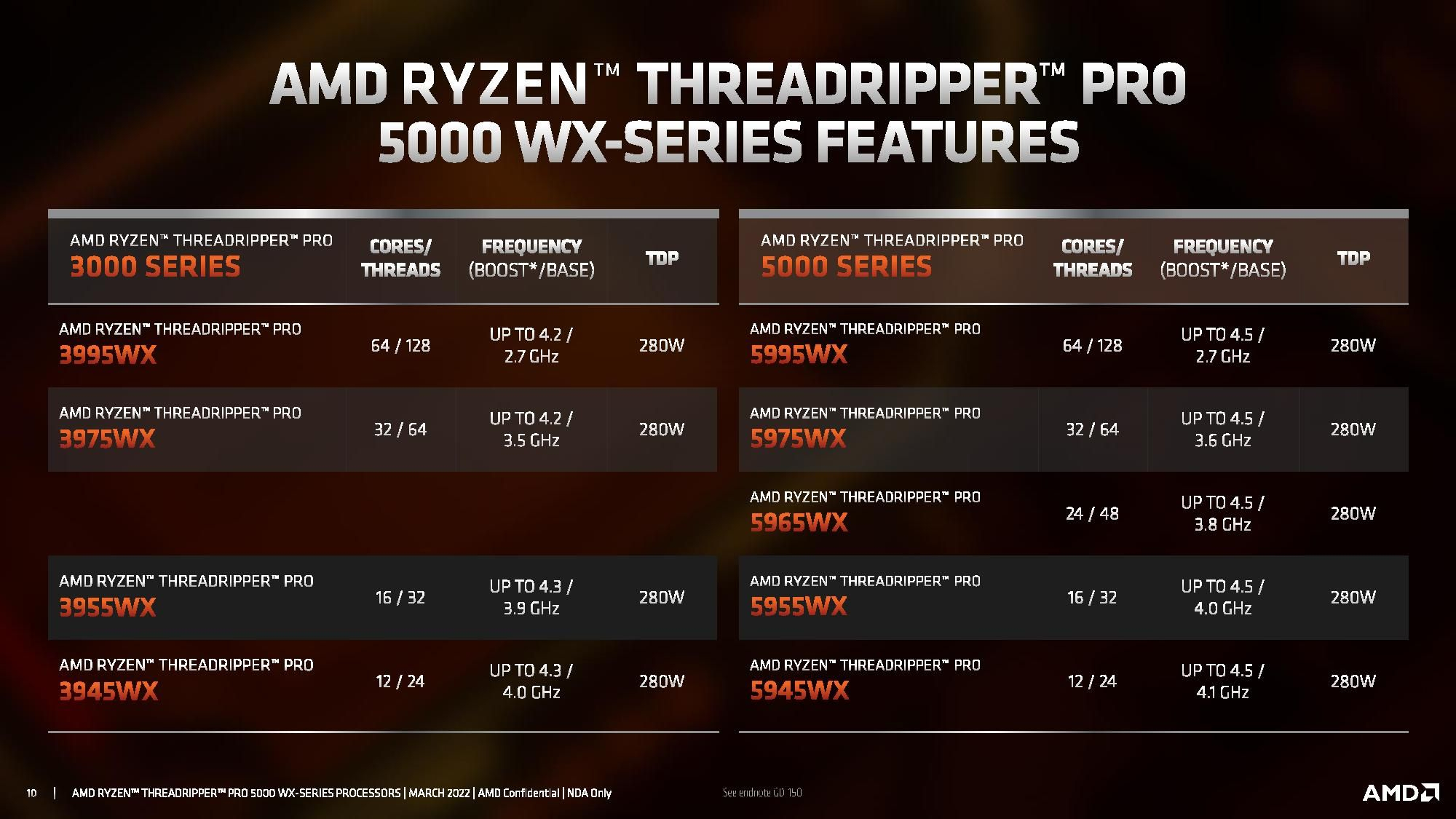
However, we are not talking about the entire series of these processors, but only three models: The 24-core Ryzen Threadripper Pro 5965WX, the 32-core Ryzen Threadripper Pro 5975WX and the 64-core Ryzen Threadripper Pro 5995WX.Recall that the Ryzen Threadripper Pro 5000WX series consists of five CPU models with 12 to 64 cores operating at frequencies from 2.7 to 4.5 GHz.
The five models are based on Zen 3 architecture, offer up to 2TB of eight-channel DDR4 memory, have 64 to 128 MB of L3 cache, support 128 PCIe 4.0 lanes and have a claimed TDP of 280W.
All Ryzen Threadripper Pro 5000WX chips are designed to work with AMD sWRX80 CPU socket and motherboards equipped with WRX80 chipset, so there is a 19% increase in IPC (number of instructions per clock) over the previous Ryzen Threadripper Pro 3000WX series' Zen 2 architecture.
To support the new chips you'll need to update motherboard BIOS.

6.08.2022

Dell has introduced Precision 7865 workstations based on Ryzen Threadripper Pro 5000WX

Dell has introduced Precision 7865 workstations based on Ryzen Threadripper Pro 5000WX

Dell has introduced Precision 7865 workstations based on Ryzen Threadripper Pro 5000WX

Dell has announced Precision 7865 workstations based on Ryzen Threadripper Pro 5000WX processors.
The chips have been used exclusively by Lenovo in its P620 workstations in the months since their release.
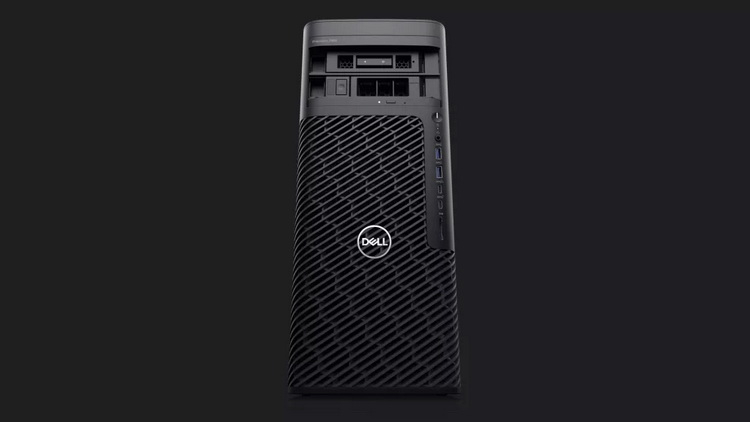
Dell will offer up to 64-core Ryzen Threadripper Pro 5995WX, up to 1TB of DDR4 RAM with error correction feature (ECC) and a choice of NVIDIA RTX A6000 or AMD Radeon Pro W6800 gas pedals for its systems.Image source: DellThe Precision 7865 workstation is 14 percent smaller than its predecessor Precision 7820, Dell said.
The manufacturer says it has paid very close attention to the new workstations' cooling, as well as their acoustics.
The new Precision 7865 uses a hexagonal airflow pattern to deliver fresh air directly to key system components.
For easy portability, the system is equipped with a handle.The front of the case is richly equipped.
This includes two quick-swap bays, two USB 3.2 Gen 2 Type-C connectors (one with PowerShare feature), two USB 3.2 Gen 1 Type-A connectors as well as an SD 6.0 card reader and a 3.5mm audio combo jack.
An optional optical disk drive is also available.
On the rear panel there are two LAN ports (one 10 Gb/s), three USB 3.2 Gen 2 Type-C, three USB 3.2 Gen 1 Type-A and one audio jack.
One serial port is also provided.
Dell also offers Thunderbolt 3 connectors for the system, but their work is provided by an additional expansion card.
The set of video connectors depends entirely on the selected gas pedal.
Ryzen Threadripper processors have no integrated graphics, and the company offers a choice of NVIDIA RTX A6000 or AMD Radeon Pro W6800.
Each has a power consumption rating of 300W.
The system also allows you to install up to 56 TB of permanent memory via RAID arrays.
The capacity of DDR4-3200 RAM can be up to 1 Tbyte.
Everything runs from a 1350 Watt power supply with 80 Plus certification.The Dell Precision 7865 workstations will go on sale this summer.
The company did not disclose their price.
Taking into account the previous offers, it is likely that the price tag will start at $3000 in the base configuration.

5.23.2022

Ryzen 7 5800X3D Processor Overview: Final Point Socket AM4

Ryzen 7 5800X3D Processor Overview: Final Point Socket AM4

Ryzen 7 5800X3D Processor Overview: Final Point Socket AM4

Ryzen processors with 3D V-Cache technology, which expands cache memory with additional SRAM semiconductor crystal, were first mentioned by AMD exactly one year ago - at Computex 2021.
And at that time, this announcement has created a real furore.
On the one hand, through it AMD has confirmed its technological potential, as it showed its readiness to introduce an advanced technology of 3D-mounting of semiconductor chips and expand the chip design of its processors in the vertical direction.
On the other hand, it has promised to significantly strengthen the Ryzen 5000 series by the end of 2021, adding a flagship 12-core processor with a giant cache and significantly increased performance in gaming applications.However, these Napoleonic plans - at least in their original form - were not fated to materialize.
Promised Ryzen 9 5900X with 3D V-Cache technology never came out, and instead of it AMD released another consumer CPU with increased cache according to this technology - Ryzen 7 5800X3D.
And it frankly looks a lot less spectacular.
Firstly, Ryzen 7 5800X3D is just an octa-core CPU, which obviously cannot be a universal flagship solution, because 12- and 16-core solutions have been widely available in the desktop segment for a long time.
Secondly, by the end of this year there will be more progressive processors based on Zen 4 microarchitecture in AMD's arsenal, which will almost certainly eclipse the Ryzen 7 5800X3D due to the IPC index growth and DDR5 SDRAM support.
And third, with the introduction of the Alder Lake family late last year, the leadership in desktop processor performance has gone to Intel.
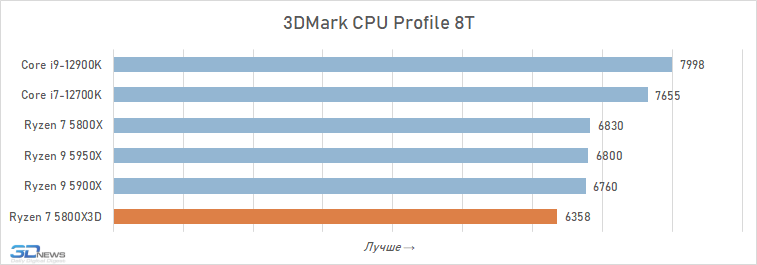
Because Alder Lake offers higher specific performance than Zen 3, Ryzen 7 5800X3D now has to solve a completely different problem: it does not set new performance records in games, but only tries to catch up with competitor processors in an extensive way - by multiplying the amount of cache memory.In other words, the Ryzen 7 5800X3D output ended up being quite stripped out, and it seems that AMD lost a lot from the fact that it missed the deadline and made the model not at all what it promised.
Nevertheless, that doesn't stop it from touting the Ryzen 7 5800X3D as \"the world's fastest gaming processor.\" However, there is a feeling that AMD overestimates the capabilities of its product: at least, many independent reviews could not confirm AMD's rightness in performance evaluations of the novelty.
And for this reason we decided to test Ryzen 7 5800X3D with our own hands.
Moreover it is not only unique by its design AMD processor, but also a kind of a final line in the history of Socket AM4 ecosystem: its development on Ryzen 7 5800X3D stops completely and no other CPU models will be available for this socket anymore.⇡# 3D V-Cache in detailsThe idea to expand cache capacity for better performance obviously did not come from AMD out of nowhere.
Moving large amounts of data closer to the processor cores, which dramatically increases the speed of access to them - a fairly simple trick, which AMD liked before.
AMD processors have long been distinguished by the amount of cache memory, and the company's marketing department uses the name Game Cache for it, explicitly stating that a capacious L3 cache is extremely useful for games.
The opposite is also true: Ryzen processors with reduced cache, such as Ryzen 5 5500, have rather modest gaming performance.Ryzen 7 5800X3D is a processor where the idea of increasing cache capacity in the name of maximum FPS is taken to the absolute limit: it has 96 MB of L3 per eight cores (12 MB per core).
But its main peculiarity is not even the impressive size of the cache, but the design, which is figuratively described in the model number of the processor with the ending \"3D\".
It means that in the Ryzen 7 5800X3D cache is expanded with an additional 3D V-Cache crystal, which is physically superimposed on the original processor chip on top - in the third dimension.
In words it sounds quite simple: an additional 64 MB SRAM chip is mounted on top of the 32 MB L3 cache present in the CPU chip and connected to it through connections.
But in reality it is much more complicated.
To place the superstructure in the form of a 3D-cache crystal on the processor chip, AMD had to work with TSMC on a special production technology, which would reduce the thickness of the combined from two parts - CCD (Core Complex Die) and 3D-cache - integrated device.
As a result, it is reduced to the height of a single chip of conventional processors, so Ryzen 7 5800X3D fits into exactly the same package as other Ryzen family processors and does not require any special cooling systems or their mounts.This is achieved by two techniques.
First

5.16.2022

Ryzen 5 5500 processor review: affordable six-core that is late

Ryzen 5 5500 processor review: affordable six-core that is late

Ryzen 5 5500 processor review: affordable six-core that is late

It so happened that the Ryzen 5000 series release coincided with the crisis on the semiconductor market and the peak of chip shortage, as a result of which AMD had to severely limit the variety of model range.
In November 2020, the company released only one model each with 6, 8, 12 and 16 cores, with the minimum price of a processor with Zen 3 progressive cores above $300.
This approach displeased AMD fans, but the company had no other choice: the production quotas which it managed to get from its manufacturing partner, TSMC, were not enough even to cover demand for expensive processors.
A year and a half passed since then, and the problem with the lack of production capacity for the manufacture of Zen 3 semiconductor chips weakened noticeably.
But AMD did not hurry to expand the Ryzen 5000 lineup - the situation was quite good for it, because by selling more expensive processors it was increasing its profits.
Yes, with this approach the users of low-cost systems had no opportunity to get processors with progressive microarchitecture at their disposal, but the company did not care much: it was quite successful in distributing obsolete solutions of Ryzen 3000 series among this audience.
And these processors were also in high demand, because the alternatives, which until recently were offered by Intel, did not have serious competitive advantages.However, with the appearance of Alder Lake the situation has changed dramatically.
Intel created a very successful processor family which was almost immediately available in all price segments.
Because of this, it turned out that with the advent of 2022 there was nothing suitable in AMD's range that the company could counter the competitor's punchy processors like Core i5-12600K, Core i5-12400 and Core i3-12100, which very quickly came out on top in the sales statistics.
So as soon as AMD realized that its market position had staggered and its share of the desktop market began to rapidly shrink, it immediately moved to retaliate.
Firstly, it aggressively reduced prices on all available Ryzen 5000 series processors by 25-30%.
Secondly, the lineup was replenished at once with several new products - available eight- and six-core carriers of the Zen 3 microarchitecture.
Thus, since the beginning of April, sales of the $300 Ryzen 7 5700X eight-core and two six-core models: the $200 Ryzen 5 5600 and the $160 Ryzen 5 5500 started on the global market.
Unfortunately, in Russia, which is now cut off from direct supplies, these models arrived with a noticeable delay and not at the prices AMD intended for them.
But nevertheless, the most affordable CPU among the new products, Ryzen 5 5500, still looks interesting.
In \"normal life\" it should be the cheapest six-core with modern microarchitecture, but in the current reality its Russian price is approximately equal to the cost of the youngest six-core Alder Lake, Core i5-12400, which is still quite good.
That is why the 3DNews lab immediately started a detailed testing of this promising product as soon as the opportunity presented itself.It is worth to remind that AMD has already tried to produce such budget six-core units, which became the cheapest variants in their class, for example Ryzen 5 3500 and 3500X.
However, they were only available in certain geographical regions and also had significantly reduced specifications.
In Ryzen 5 3500 and 3500X, for example, the company turned off SMT technology, which was a big hit to performance.
But the new Ryzen 5 5500 is a completely different breed of processor.
It is globally available, the SMT technology is in place, and the main difference from the older brothers is the reduction of cache memory, which at first glance does not look catastrophic loss and makes familiarity with it only more interesting.⇡#Ryzen 5 5500 in detailsThe Ryzen 5000 lineup has undergone very noticeable changes this spring.
Now there are eight representatives instead of four.
The expansion took place mainly \"downwards\", but among the new models there is also the innovative Ryzen 7 5800X3D with 3D V-Cache technology, which is positioned by the company as a kind of gaming flagship.
The composition of the family is listed in the table below, and, pay attention, a separate column - \"Current price\" is added to it.
It shows retail prices of Ryzen 5000 family members on the world market after the occurred price reduction (in Russia, of course, the situation with prices is different, and there is no point in discussing it within the scope of this article).
Cores/threadsFrequency, GHzL3, MbytesTDP, Wofficial priceCurrent priceRyzen 9 5950X16/323,4-4, 964105$799$559Ryzen 9 5900X12/243.7-4.864105$549$399Ryzen 7 5800X3D8/163.4-4.592105$449$449Ryzen 7 5800X8/163.8-4.732105$449$349Ryzen 7 5700X8/163.4-4.63265$299$

5.14.2022

All MSI 300-series chipset-based motherboards get support for Ryzen 5000 processors

All MSI 300-series chipset-based motherboards get support for Ryzen 5000 processors

All MSI 300-series chipset-based motherboards get support for Ryzen 5000 processors

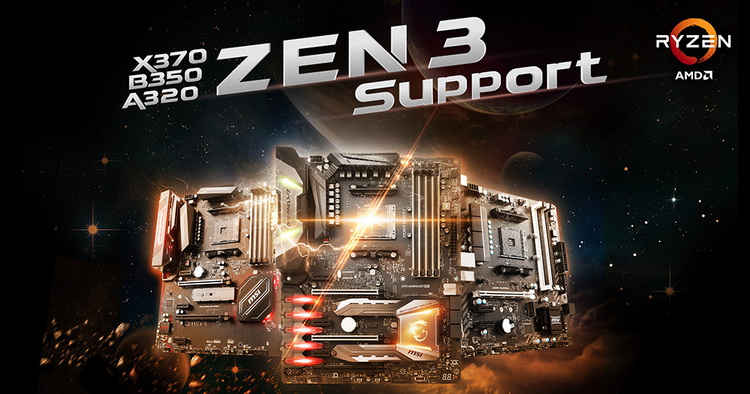
MSI announced that all of its 300-series AMD chipset-based motherboards (A320, B350 and X370) get support for Ryzen 5000 CPUs based on Zen 3 architecture, including the latest Ryzen 7 5800X3D with 3D V-Cache extended memory technology.
Picture source: MSIThe company notes that support is provided by new BIOS firmware based on AMD AGESA COMBO PI V2 1.2.0.7 library set for mainboards.
Release of updated versions of BIOS will begin in the middle of this month.The manufacturer also announced that it will begin releasing beta versions of BIOS based on the specified AGESA libraries for AMD 400 and 500 series motherboards at the beginning of June.
The update will address the problem of Windows 10 and 11 freezes on systems with Ryzen and fTPM enabled.

The first Ryzen 7000X processor tests appeared in OpenBenchmarking

The first Ryzen 7000X processor tests appeared in OpenBenchmarking

The first Ryzen 7000X processor tests appeared in OpenBenchmarking

According to information available today, AMD's upcoming Ryzen 7000X desktop processors on Zen 4 architecture will be launched this September, the first samples are already being tested, with mass production scheduled for June.
A preliminary sample recently appeared in the Openbenchmarking database.
It has been tested in a Linux environment (Ubuntu 20.04), and it looks like most of the tests focused on the embedded GPU.
In addition, Moore's Law Is Dead published expected performance gains for Ryzen 7000X models.Advertisement OpenBenchmarking database records show an 8-core, 16-thread processor codenamed OPN 100-000000666, which matches the previous January leak.
Apparently, the chip was tested May 4 on the AMD Splinter-RPL AM5 reference platform, and its maximum clock speed can reach 5.21 GHz.
Resource Videocardz notes that the iGPU has the identifier GFX1036, which is a new variant belonging to the Beige Goby/Yellow Carp/Van Gogh family.
There is also a Radeon HD audio codec, borrowed from the recently released Ryzen 6000 mobile processors. Unfortunately, the tests were not conducted at maximum GPU clock speeds, so you can't really compare the results with similar models from Nvidia and Intel.
According to Videocardz, Ryzen 7000X iGPUs are not designed for gaming, but they should offer basic multimedia capabilities. The IPC increase of the Zen 4 chips over the Zen 3 is expected to be between 15 and 24 percent, about 6 percent higher than the Zen 3 over the Zen 2.
The increase in clock speeds will also give an increase of 8 to 14 percent.
All of this combined could result in a 28 to 37 percent performance increase in single-core mode, and the performance gains in multithreaded mode will be even higher.
AMD is also increasing to 1MB of L2 cache per core instead of the previous 512KB, and by default the new processors will support RAM speeds up to DDR5-5200.Rewarded for the postThis piece was written by a site visitor and is rewarded.

1.04.2022

AMD head showed off Rembrandt 6nm processor ahead of official announcement at CES 2022

AMD head showed off Rembrandt 6nm processor ahead of official announcement at CES 2022

AMD head showed off Rembrandt 6nm processor ahead of official announcement at CES 2022

AMD President and CEO Lisa Su< tweeted today an image of what appears to be the forthcoming Ryzen 6000-series (Rembrandt) 6nm mobile processor. The tweet was published ahead of AMD's event, which will take place today during CES 2022.

Lisa Su is expected to share details about the upcoming processors during her talk. The first information about the specifications of the Rembrandt chips appeared earlier in rumors and leaks. The new series is expected to be named Ryzen 6000. These chips will contain up to eight Zen 3 cores and 16 MB of cache memory Level 3. The processors will be manufactured in 6nm TSMC process technology. The most significant update in new chips, probably, will affect the graphics subsystem. It is expected that AMD will refuse using outdated Vega graphics architecture in favor of modern RDNA 2. Rumor has it that the new integrated graphics chip will also include up to 768 stream processors. This is 50% more than the integrated Vega generation GPUs, which will make the new chips a good choice for gaming.

The new APUs are expected to boast support for DDR5 and LPDDR5 RAM, as well as improved connectivity, offering users up to 20 PCIe 4.0 lanes and two USB 4 ports, providing data transfer speeds of up to 40 Gbps. It's worth noting that these are just rumors at this stage. What AMD will really show at CES 2022 will be known on January 4 at 18:00 Moscow time.

7.19.2021

AMD prepares new desktop processors on the obsolete Zen 2 architecture

AMD prepares new desktop processors on the obsolete Zen 2 architecture

AMD prepares new desktop processors on the obsolete Zen 2 architecture

The Ryzen 5000 (Vermeer) processors on the advanced Zen 3 architecture are among the best desktop solutions available on the market. Nevertheless, it seems that the manufacturer has some unused stock of chips with Zen 2 cores & ; probably, AMD will soon release the next processors on this not so fresh architecture.

According to the non-profit USB Implementers Forum (USB-IF), the release of the Athlon Gold 4100GE, Ryzen 5 4500 and Ryzen 3 4100 A1 revision & ; the relevant data is filed by AMD. Although there is no reliable information that the models will be based specifically on the Zen 2 architecture, we know that the company has saved the Ryzen 5000 series for Zen 3 products. It is very likely that the younger named processors will come out on the older architecture. By their names, new products will become a kind of lquo;intermediate link» between Ryzen 5000 and Ryzen 3000. It is also possible that this is a special offer for the company's OEM partners & ; AMD often produces custom solutions. The Athlon Gold 4100GE may be the successor to the Athlon Gold 3150GE & ; an APU for OEMs. Athlon Gold series is equipped with Vega GPUs, so the novelty is unlikely to be an exception. Although neither the number of processor cores nor their frequency is known, the GE suffix indirectly indicates that the TDP of the model is limited to 35 watts. Additionally, we can assume that Ryzen 5 4500 and Ryzen 3 4100 are direct successors of Ryzen 5 3500 and Ryzen 3 3100 models, with six and four cores Zen 2, respectively, TDP 65 watts, without integrated graphics. We can expect that the new variants will differ only in terms of frequency. Prices and availability of the new models will be announced later.

4.14.2021

AMD released Linux patches to disable vulnerable PSF prediction mechanism

AMD released Linux patches to disable vulnerable PSF prediction mechanism

AMD released Linux patches to disable vulnerable PSF prediction mechanism

Last week it became known that AMD's Zen 3 architecture processors are vulnerable to side-channel attacks. Prominent representatives of this type of vulnerability are Spectre and Meltdown, which are mostly intrinsic to Intel processors. Later, AMD promised to provide Linux patches to disable PSF prediction engine which is vulnerable to these vulnerabilities. Today the distribution of these patches has begun.

According to Phoronix reporters there are five new Linux kernel patches which allow to disable Predictive Store Forwarding (PSF) on Ryzen 5000 and EPYC 7003 series CPUs. After installing this hotfix, PSF mechanism will still be enabled, but you will be able to disable it, if necessary. To do this, you need to set nopsfd in the boot parameters.

AMD itself does not consider the new vulnerability to be a real threat. The company warns that disabling the prediction mechanism may reduce processor performance. Nevertheless, tests have shown that disabling PSF has a minimal impact on performance. Users have found that the difference is only visible in long workloads, and even then there is a drop in performance of only 1-2 percent or less.

Disabling the vulnerable PSF mechanism in AMD Zen 3 processors almost does not reduce performance

Disabling the vulnerable PSF mechanism in AMD Zen 3 processors almost does not reduce performance

Disabling the vulnerable PSF mechanism in AMD Zen 3 processors almost does not reduce performance

AMD recently reported that the Predictive Store Forwarding (PSF) mechanism in Zen 3 processors is vulnerable to side-channel attacks (like Spectre and Meltdown), which are based on analyzing data deposited in the processor cache during speculative instruction execution. The company told users how they can protect themselves and disable this functionality, but did not comment on how it would affect performance. Phoronix journalists decided to clarify this issue.

(Phoronix).

The new Predictive Store Forwarding (PSF) mechanism in AMD Zen 3 processors has been exposed to a hardware vulnerability of reading data through a third-party channel. In theory, disabling this feature should reduce performance, and that's the effect we've seen with Intel processors during the Spectre and Meltdown vulnerability remediation process. But at the moment AMD refers to the fact that there are no known cases of PSF vulnerability exploitation, so it does not recommend end users to disable the functionality to avoid performance degradation. The PSF mechanism is disabled in Zen 3 processors by setting certain MSR bits. AMD has promised in a white paper to publish Linux patches to easily disable PSF if needed, but there are no publicly available patches yet.

(Phoronix).

Nevertheless, Michael Larabel from Phoronix has built a Linux operating system kernel with PSF disabled and has done dozens of tests with AMD Ryzen 5000 and EPYC 7003 series processors on bare-metal and PSF disabled kernels. According to him, the testing was done on a wide range of workloads, and each test was run automatically several times. As a result, it had to be stated that PSF disabling had a minimal effect on performance. In most cases the difference was within statistical error, although in some workloads it was close to 1 %. For example, Ryzen 7 5800X processor was run through a set of more than 100 tests. That said, averaging all the results suggests less than 1.5 % performance loss when the potentially dangerous Zen 3 feature is disabled.

(Phoronix).

In short, while AMD generally does not recommend its customers to disable PSF, if someone decides to take this step in the name of improving security, it probably won't result in any significant performance difference. Unlike other patches designed to combat attacks related to speculative command execution, this time everything was handled with little blood.

2.12.2021

Engineering samples of the eight-core AMD Ryzen 7 5700G on Zen 3 have appeared on eBay for $500

Engineering samples of the eight-core AMD Ryzen 7 5700G on Zen 3 have appeared on eBay for $500

Engineering samples of the eight-core AMD Ryzen 7 5700G on Zen 3 have appeared on eBay for $500

AMD has yet to officially confirm its intentions to release Ryzen 5000G (Cezanne) series hybrid desktop processors, but engineering samples of these chips are already available for purchase on the eBay marketplace. A seller from Hong Kong under the pseudonym hugohk is offering the Ryzen 7 5700G model for $499.

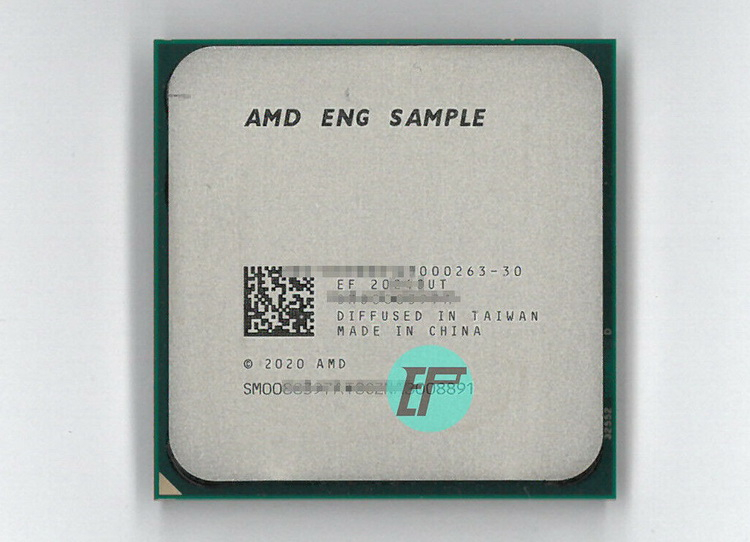
The processor uses the marking 100-000000263-30. An engineering sample Ryzen 7 5700G with the same model number made headlines a month earlier. The chip is based on Zen 3 architecture and belongs to the Cezanne family, which last January introduced the Ryzen 5000U and Ryzen 5000H series mobile processors. The desktop Ryzen 7 5700G uses 8 physical cores and 16 virtual threads and has a clock speed of up to 4.45 GHz.

Initially, the seller indicated that the APU contained Radeon Vega integrated graphics, but since there was no driver for it, he recommended to use the processor only as part of a system with a discrete graphics gas pedal. He later added that a driver was available and he was ready to provide it to the customer. In addition, he recommended to use AMD X570 and B550 chipset-based motherboards for the chip. Older X470 and B450 chipsets will not work with it & ; you have to wait for the BIOS update.

The vendor has published screenshots of the CPU-Z program, which apparently we have already seen in early January. According to the seller, the screenshots were provided by its customers, which may indicate that all the engineering samples of Ryzen 5000G processors are distributed from the same source. According to the CPU-Z test, the Ryzen 7 5700G engineering sample is 20% and 16% faster than the Ryzen 7 3700X based on the Zen 2 architecture.

1.31.2021

AMD to release at least two Ryzen PRO 5000 processors for business notebooks

AMD to release at least two Ryzen PRO 5000 processors for business notebooks

AMD to release at least two Ryzen PRO 5000 processors for business notebooks

AMD at CES 2021 in the first half of this month announced, among other things, Ryzen PRO 5000-series mobile processors. Now details about two members of the new family of chips for professional notebooks have been revealed from various sources.

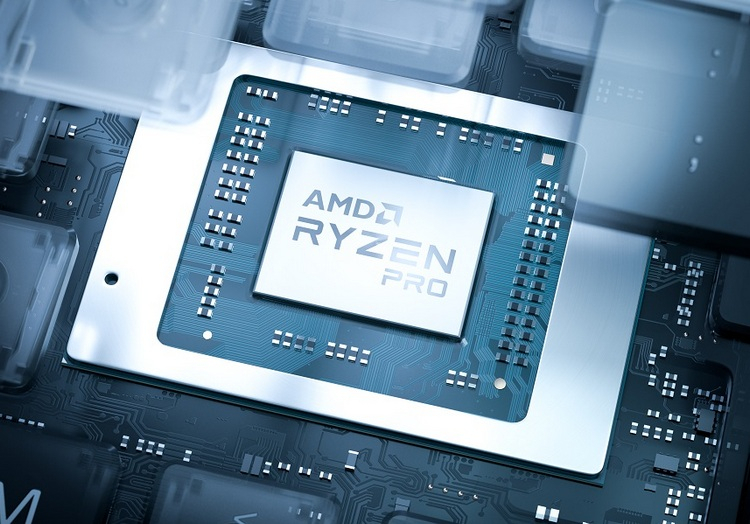
Recall that last year AMD released three mobile Ryzen PRO 4000 processors based on Zen 2 architecture. What sets them apart from the consumer Ryzen 4000 is support for more advanced encryption to protect information, such as Memory Guard, as well as technologies such as Microsoft Endpoint Manager for cloud management. The environment in which these processors are used is business laptops. The new 5000-series will get the same features. The UserBenchmark database found a Ryzen 7 PRO 5850U processor model, which is probably based on the regular Ryzen 7 5800U (Zen 3). The processor has a base frequency of 1.9GHz, which is identical to the regular Ryzen 7 5800U. There is no information about the maximum frequency of the chip in UserBenchmark. It only states that the average frequency value within the test was 3.65GHz.

Missing data was found on the HP website, which states that the Ryzen 7 PRO 5850U can automatically overclock up to 4.4GHz, which is also similar to the regular Ryzen 7 5800U model.

HP's website doesn't list information about the processor's graphics subsystem, but we wouldn't be surprised if its specs are exactly the same as the regular version of the chip. According to HP, the upcoming Ryzen 7 PRO 5850U will be used in the HP ZHAN 66 PRO A 14 G4 laptop.

Image source: VideoCardz

AMD itself has said that it intends to introduce the Ryzen PRO 5000 series of processors during the first half of this year. No information has been made available about the range of the series. However, another model of the future series, Ryzen PRO 5650U, has been revealed on the same HP website, copying the specifications of the regular AMD Ryzen 5 5600U. The latter is based on six Zen 3 cores with speeds ranging from 2.3 to 4.2GHz. It is also possible that AMD will release a new Ryzen 3 PRO chip.

1.26.2021

AMD unveils Zen 3 architecture for mobile Ryzen 5000 a huge jump in single-core performance and other improvements

AMD unveils Zen 3 architecture for mobile Ryzen 5000 a huge jump in single-core performance and other improvements

AMD unveils Zen 3 architecture for mobile Ryzen 5000 -a huge jump in single-core performance and other improvements

AMD today lifted a ban on publishing details related to the Zen 3 architecture, which is the basis of the Cezanne range of Ryzen 5000 mobile processors. At the disposal of resource VideoCardz were promotional images and graphics, describing the features of new chips.

AMD announced that the production of new mobile chips based on Zen 3 architecture, it has started just a few months after introducing mobile processors on the Zen 2 architecture. The new Cezanne APU and the previous Renoir APU have a lot in common, with Zen 3 computing cores being the main focus of the upgrade;

The manufacturer claims "historic increases in single-core performance" in the new Cezanne chips. The new flagship mobile Ryzen 9 5980HX has a 23% single-core performance advantage over the previous generation Ryzen 9 4900H flagship, as well as a 19% single-core performance advantage over the Intel Core i9-10980HK competitor Ryzen 9 5900HX. The company helped to achieve these results by optimizing Zen 3 architecture, as well as a noticeable increase in the chip's clock speeds relative to the previous generation of Renoir processors. AMD points out that chip area of Cezanne hybrid processors has increased by 15% over its predecessors to 180 mm2. The fresh APUs are based on 10.78 billion transistors, which is 10 percent more than the previous generation chips. The Cezanne chipsets use a single eight-core CCX (Core Complex). In addition, the new chips have doubled the amount of Level 3 cache memory. This increased to 16 MB, and now is equally distributed to all CPU cores. Additionally AMD works on memory controller, providing it with LPDDR4X support with up to 32 GB capacity and dual channel mode support. Graphics core remains the same old one - it is the same 7nm Vega with eight compute units (CU, Compute Units) that was used in Renoir mobile processors (Ryzen 4000). The increase in graphics performance in this case will be mainly due to the increased limiting frequency of the graphics core, which now stands at 2.1GHz. The company has also worked on the power saving capabilities. Voltages are now managed separately for each core to reduce the overall power consumption of the entire processor. This optimization results in two additional hours of battery life for the new Ryzen 5000 mobile system. New notebooks based on the latest AMD mobile processors will be available from major manufacturers in February 2021. Some laptop models with Ryzen 5000H and 5000U series chips are already available for pre-order.

1.12.2021

AMD unveils Ryzen 5000 mobile processors

AMD unveils Ryzen 5000 mobile processors

AMD unveils Ryzen 5000 mobile processors

As expected, as part of its presentation at CES 2021, AMD today announced its new Ryzen 5000 family of mobile processors. It includes 10 processors with Zen 3 architecture, codenamed Cezanne, as well as three models of chips with Zen 2 architecture, known by the codename Lucienne (Renoir Refresh).

The Ryzen 5000 CPUs released today are divided into two classes. First class H-processors, based on the new Zen 3 architecture, with up to 8 processing cores and equipped with Vega graphics core. These processors have a 35W or 45W thermal package and are aimed squarely at gaming notebooks with discrete graphics. The second class  -energy efficient U-processors, which are based on Zen 3 and Zen 2 architectures (depending on the model), usually have fewer cores and lower operating frequencies, and are enclosed in a 15 watt thermal package.

The Ryzen 5000 H-series lineup is as follows:

ModelNumber of cores/threadsMax./Base frequency (GHz)L3 cache (Mbytes)TDP (Watt)Architecture

AMD Ryzen 9 5980HX 8C/16T Up to 4.8 / 3.3 16 45+ Zen 3

AMD Ryzen 9 5980HS 8C/16T Up to 4.8 / 3.0 16 35 Zen 3

AMD Ryzen 9 5900HX 8C/16T Up to 4.6 / 3.3 16 45+ Zen 3

AMD Ryzen 9 5900HS 8C/16T Up to 4.6 / 3.0 16 35 Zen 3

AMD Ryzen 7 5800H 8C/16T Up to 4.4 / 3.2 16 45 Zen 3

AMD Ryzen 7 5800HS 8C/16T Up to 4.4 / 2.8 16 35 Zen 3

AMD Ryzen 5 5600H 6C/12T Up to 4.2 / 3.3 16 45 Zen 3

AMD Ryzen 5 5600HS 6C/12T Up to 4.2 / 3.0 16 35 Zen 3

The 45+W HX processors are designed for high performance gaming notebooks, while the HS processors, with reduced 35W estimated heat dissipation, deliver H-series performance in a slimmer, lighter package. All Cezanne mobile processors are based on a monolithic 7nm die with 16 Mbytes of L3 cache like its predecessors. The graphics core remains the same, it is the same Vega with eight CUs that was used in Renoir mobile processors (Ryzen 4000). So, the performance gains in this case will be mainly due to the introduction of Zen 3 architecture, doubling the L3 cache and a rather noticeable increase in marginal clock speeds. Speaking of performance, AMD noted that the new flagship Ryzen 9 5980HX processor is capable of a 23% increase in single-threaded performance and a 17% increase in multi-threaded  compared to the previous generation Ryzen 4900H, making it suitable for both gaming and content creation applications.

The Ryzen 5000 U-series power-efficient processor lineup is as follows:

ModelNumber of cores/threadsMax./Base frequency (GHz)L3 cache (Mbytes)TDP (W)Architecture

AMD Ryzen 7 5800U 8C/16T Up to 4.4 / 1.9 16 15 Zen 3

AMD Ryzen 7 5700U 8C/16T Up to 4.3 /1.8 8 15 Zen 2

AMD Ryzen 5 5600U 6C/12T Up to 4.2 / 2.3 16 15 Zen 3

AMD Ryzen 5 5500U 6C/12T Up to 4.0 / 2.1 8 15 Zen 2

AMD Ryzen 3 5300U 4C/8T Up to 3.8 / 2.6 4 15 Zen 2

A lot of new U-series models with 15W heat pack look like a rather strange mix of Zen 3-based Cezanne and Zen 2-based Lucienne (Renoir Refresh) CPUs, which differ significantly in characteristics like L3 cache size. In fact, we are only talking about two really new models - the eight-core Ryzen 7 5800U and the six-core Ryzen 7 5600U, while the other processors are slightly improved in frequency from the Ryzen 4000 series.

Not surprisingly, when talking about the benefits of the Ryzen 5000 U-series, AMD focuses specifically on the Ryzen 7 5800U with Cezanne design. For such a CPU compared to the old Ryzen 7 4800U, a 16 percent improvement in single-threaded performance and a 14 percent boost in multi-threaded performance is promised.

Mobile computers built on Ryzen 4000 processors have become very common in the past year. According to Mercury Research, AMD's market share of notebook processors reached 20.2 percent by the end of the third quarter, a historic high for the company. The new Ryzen 5000 processors should strengthen AMD's position by introducing a more advanced architecture and increasing performance and efficiency. However, this year the competition in the notebook market will be fiercer because of interesting offerings from Intel as well. The quad-core 35W Tiger Lake for gaming notebooks was unveiled yesterday and Tiger Lake with eight processing cores should be out by the end of the first quarter. The new laptops based on Ryzen 5000 mobile processors will be available from major manufacturers including Asus, HP and Lenovo during the first quarter of 2021. And for all of 2021, AMD expects to release a broad range of more than 150 consumer and commercial laptops based on Ryzen 5000 mobile processors. Also in the first half of 2021, Ryzen PRO 5000 mobile processors with additional security features are expected to be released, orie

AMD unveils Ryzen 9 5900 and Ryzen 7 5800 processors

AMD unveils Ryzen 9 5900 and Ryzen 7 5800 processors

AMD unveils Ryzen 9 5900 and Ryzen 7 5800 processors

AMD has officially unveiled two new processors during its CES 2021 presentation, completing the Ryzen 5000 range of desktop PCs. The new additions & ; 12-core and 8-core models featuring reduced to 65W estimated heat dissipation.

AMD has announced additions to its Ryzen 5000 desktop processor lineup with two new models with reduced TDP: Ryzen 9 5900 and Ryzen 7 5800. Both processors are based on the Vermeer design, i.e. they are carriers of the Zen 3 architecture. The heat pack of both processors is limited to 65W instead of the 105W typical of the Ryzen 9 5900X and Ryzen 7 5800X already on the market. Because of this, the clock speeds of the new products are noticeably lower.

Cores/StreamsBasic frequency, MHzTurbo frequency, MHzL3-cache, MbytesTDP, W Price

Ryzen 9 5950X 16/32 3,4 4,9 64 105 $799

Ryzen 9 5900X 12/24 3,7 4,8 64 105 $549

Ryzen 9 5900 12/24 3,0 4,7 64 65 -

Ryzen 7 5800X 8/16 3,8 4,7 32 105 $449

Ryzen 7 5800 8/16 3,4 4,6 32 65 -

Ryzen 5 5600X 6/12 3,7 4,6 32 65 $299

AMD is not mentioning retail prices of the new products, as they are expected to be distributed exclusively through the OEM channel and will only be available as part of complete PCs. However, given market realities, their appearance can eventually be expected at retail as well. However, AMD is currently struggling to meet demand for the Ryzen 5000, so the availability and pricing situation could be unpredictable.

AMD has shown how EPYC runs on Zen 3 and promised more details later

AMD has shown how EPYC runs on Zen 3 and promised more details later

AMD has shown how EPYC runs on Zen 3 and promised more details later

AMD is bringing processors based on the Zen 3 architecture to market a little slower than one would expect. So far, desktop and mobile Ryzen 5000s have been introduced, but no HEDT or server carriers of the architecture have been released. Nevertheless, today during a presentation at CES 2021 AMD CEO, Lisa Su, briefly mentioned future Milan generation EPYCs, which will find use of Zen 3 cores.

EPYC (Milan) processors are expected to be the logical successor to the current EPYC (Rome) processors, retaining compatibility with the existing processor socket. What is expected is a change from the Zen 2 core architecture to Zen 3, with a natural 19% increase in IPC, but no dramatic changes in the number of cores, memory support or PCI Express. That the release of the EPYC (Milan) processors is just around the corner was confirmed today at CES 2021 by AMD CEO, Lisa Su. During her presentation, she demonstrated how a dual-processor system with 32 cores of Milan performs when simulating weather phenomena in the dedicated WRF software package, which is widely used in the industry. The simulation speed was compared with a similar task in a dual-socket system with Intel Xeon Gold 6258R processors (28 cores, 2.7–4.0 GHz).

AMD claimed that when simulating a 6-hour weather pattern over the continental US, the AMD system was 68% faster than the Intel system.

As indicated, AMD plans to announce details of next-generation server products and ecosystems in Q1 2021.

1.11.2021

Some AMD Ryzen 5 5600X and Ryzen 7 5800X have found a second dormant CCD chip

Some AMD Ryzen 5 5600X and Ryzen 7 5800X have found a second dormant CCD chip

Some AMD Ryzen 5 5600X and Ryzen 7 5800X have found a second dormant CCD chip

Some AMD Ryzen 5 5600X and Ryzen 7 5800X processors actually have two CCD (Core Complex Die) & ; chipsets containing eight processing cores each. This was found out by well-known programmer-enthusiast Yuri 1usmus Bubliy, who developed the program ClockTuner for Ryzen (CTR) for efficient overclocking of processors of generation Zen 2, and then Zen 3. This finding has been confirmed by the authoritative resource Igor's Lab.

Officially, six-core AMD Ryzen 5 5600X and eight-core Ryzen 7 5800X have one CCD chiplet, while the older members of the Vermeer family (Ryzen 5000) with 12 and 16 cores are based on two chiplets, each containing 6 or 8 physical cores. But as 1usmus, which debugged the CTR 2.0 utility for Zen 3, found out, some of the lower-end Ryzen 5000 processors come with two CCDs, but one of them is somehow blocked.

As Igor's Lab points out, the «special gold versions» of the Ryzen 5 5600X and Ryzen 7 5800X with two chips, which happen to be the ones that reviewers get most often, are actually «degraded» 12-core Ryzen 9 5900X and 16-core Ryzen 9 5950X. Apparently, one of the available CCD chipsets in them has not passed quality control checks at the manufacturing facility and has therefore been deliberately disabled. There is no way to find out exactly which chiplet & ; CCD 0 or CCD 1 & ; is disabled in any particular CPU sample at this time. According to Igor's Lab, however, indirect verification is possible. Chips with an inactive CCD 0 chiplet cause minor interface errors in some utilities for low-level frequency and voltage control of the CCX complexes of Ryzen processors. It is due to such bugs that these «special processors» were discovered by Igor Wallosek, editor-in-chief of Igor's Lab, and enthusiast 1usmus. According to Igor's Lab, in theory it should be possible to enable the deactivated chiplet, which would thereby turn the «happy» 6- and 8-core Ryzen 5 5600X and Ryzen 7 5800X back into the 12- and 16-core Ryzen 9 5900X and Ryzen 9 5950X. However, the feasibility of this conversion is in question, as AMD would be unlikely to reduce the value of the senior processors to the junior models without a good reason. On the other hand, the story of the Athlon II X3 and Phenom II X3 triple-core, which could easily be turned into quad-core by enabling the inactive core via BIOS, is still fresh in the memory.

1.09.2021

Mobile AMD Ryzen 7 5800U has been found to have multi-threaded performance issues in synthetic tests

Mobile AMD Ryzen 7 5800U has been found to have multi-threaded performance issues in synthetic tests

Mobile AMD Ryzen 7 5800U has been found to have multi-threaded performance issues in synthetic tests

Network sources have shared performance results of AMD Ryzen 7 5800U mobile processor in GPU-Z and Cinebench synthetic tests. Recall that Ryzen 5000 series chips on the Zen 3 architecture will be presented next week. It will include both power efficient Ryzen 5000U models with limited to 15W TDP, and high-performance Ryzen 5000H with a claimed power consumption level of 45W.

The Ryzen 7 5800U belongs to the first category of the aforementioned processors. This processor belongs to the Cezanne family and is built on the Zen 3 architecture. It should also be added that the Ryzen 5000 series will include chips from the Lucienne family, built on the Zen 2 architecture, which are Refresh versions of the current mobile Renoir (Ryzen 4000). The Ryzen 7 5800U has 8 cores and 16 virtual threads and runs in the 2.0-4.4GHz frequency range. Compared to its predecessor Renoir series, the novelty on Zen 3 gets twice the amount of cache memory of Level 3, 16 Mbytes. In addition, the Ryzen 7 5800U has 200 MHz higher base and Boost frequency compared to its predecessor. In CPU-Z synthetic test, Ryzen 7 5800U processor scored 592 and 3812 points in single-threaded and multi-threaded tests respectively. Interestingly, in the first case, the performance of AMD's mobile chip was even higher than the current flagship desktop Intel Core i9-10900K, which scores 584 points in the same test. The red's multi-threaded performance, on the other hand, is disappointing. Even the current Ryzen 7 4800U scores over 5000 points in this test. Whether this is due to problems with simultaneous multi-threading (SMT) or to a "raw" BIOS of the laptop's motherboard, which uses a Zen 3 chip, is unknown. In Cinebench R20, the Ryzen 7 5800U scores 509 points in the single-threaded test and 3,614 points in the multi-threaded test. In the fresh Cinebench R23 shows scores of 1311 and 9326 in the respective tests. Thus Ryzen 7 5800U is 6% faster in single-threaded Ryzen 7 4800U but slower in multi-threaded test.