Showing posts with label geekbench. Show all posts

10.31.2022

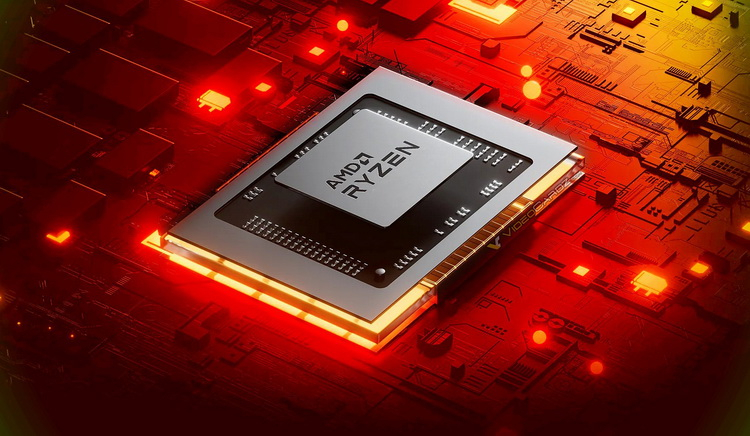
Ryzen 5 7725HS mobile processor on Zen 2 architecture has marked in Geekbench

Ryzen 5 7725HS mobile processor on Zen 2 architecture has marked in Geekbench

Ryzen 5 7725HS mobile processor on Zen 2 architecture has marked in Geekbench

The eight-core and 16-thread Ryzen 5 7725HS mobile processor on Zen 2 architecture has marked in Geekbench synthetic test database.
The software has determined that the chip belongs to a series of Renoir, writes VideoCardz.
The name of the processor also indicates that it is based on the architecture of Zen 2.
This is interesting, because AMD has not talked about the appearance of a similar model in the mobile Ryzen 7000 series.Image source: VideoCardz According to Geekbench data, the Ryzen 5 7725HS processor has a base frequency of 2.9 GHz and can automatically overclock to 4.3 GHz.
The suffix HS in the name of the chip indicates that it is designed for light gaming laptops.
The processor was tested with the Eluktronics RP-15 laptop without a discrete graphics subsystem.
In the single-threaded performance test Ryzen 5 7725HS scored 1106 points, in multi-threaded - 6929 points.
Image source: GeekBenchThe results of Ryzen 7 7725HSAs VideoCardz writes, it would be fair to compare this chip with the Ryzen 7 4800HS Renoir series, which also uses the Zen 2 architecture and eight processing cores.
In addition, the latter also has a TDP at 35W, like the novelty.
The obvious difference between the chips is the maximum clock speed, which is 4.2 GHz in the Ryzen 7 4800HS, which is 100 MHz lower.
Taking all this into account, the Ryzen 5 7725HS is 6 and 6.5% faster in single-threaded and multi-threaded performance, respectively, than the Ryzen 7 4800HS.

AMD will release 10-core Ryzen 7 7800X and 4-core Ryzen 3 7300X - new products have made a mark in Geekbench test

AMD will release 10-core Ryzen 7 7800X and 4-core Ryzen 3 7300X - new products have made a mark in Geekbench test

AMD will release 10-core Ryzen 7 7800X and 4-core Ryzen 3 7300X - new products have made a mark in Geekbench test

The Ryzen 7000 processor family should be updated with several new models in the foreseeable future.
Yesterday it was reported that data about Ryzen 7 7700 model appeared in Geekbench synthetic test database.
Now in the same database marked the Ryzen 7 7800X and Ryzen 3 7300X models, which are also not included in the first wave of AMD desktop processors on the architecture Zen 4.Image source: AMDThe Ryzen 7 7800X model has two more cores compared to its predecessor Ryzen 7 5800X.
Thus, the novelty could become the first AMD Ryzen desktop processor with 10 cores and 20 threads.
According to Geekbench, the chip can automatically overclock to 5.4 GHz and has 64 MB of L3 cache memory on board, which is twice as much as the Ryzen 7 7700X.
But that's not surprising, since the 10 cores are recruited using two chipsets, while the Ryzen 7 7700X has only one octa-core chip.
Image source: GeekbankshThe processor was tested on a Gigabyte Aorus B650 motherboard.
The Ryzen 7 7800X scored 2,097 points in the single-threaded performance test and 16,163 points in the multi-threaded test.
In terms of multi-threaded performance, the novelty in its current state is about 15% ahead of the Ryzen 7 7700X.Ryzen 7 7800X results.
Image source: GeekbenchThe Geekbench database also revealed information about the quad-core and eight-threaded Ryzen 3 7300X model.
According to the benchmark, this processor is able to automatically overclock up to 5.0 GHz and has 32 MB of L3 cache memory.
Image source: GeekbankshThe quad-core and octa-core Ryzen 3 7300X in the single-core test scored 1984 points, and in the multi-threaded performance test - 7682 points.
This chip is capable of delivering a clock speed of 5GHz in auto overclocking.Ryzen 3 7300X results.
Source image: GeekbenchWe should keep in mind that the Geekbench tests most likely involved engineering samples of processors, which may differ in frequency characteristics and power consumption from the final consumer versions.

The eight-core Ryzen 7 7700 processor made its mark in Geekbench at 5.35GHz

The eight-core Ryzen 7 7700 processor made its mark in Geekbench at 5.35GHz

The eight-core Ryzen 7 7700 processor made its mark in Geekbench at 5.35GHz

The yet-to-be-announced AMD Ryzen 7 7700 processor has made its first mark in the Geekbench synthetic test database.
The chip has eight physical cores with support for 16 virtual threads, and its clock speed reaches 5350 MHz, probably in automatic overclocking.Image source: AMD Recall that AMD introduced only four desktop models within the new Ryzen 7000 series: the 16-core Ryzen 9 7950X, the 12-core Ryzen 9 7900X, the eight-core Ryzen 7 7700X and the six-core Ryzen 5 7600X.
Surely in the future the company is going to dilute the range of the series with younger models, as well as solutions without the suffix \"X\" in the name.
AMD Ryzen 7 7700 specifications.
Source image: GeekbankshThe above Ryzen 7 7700 was tested on ASRock X670E Taichi motherboard, with DDR5-4800 RAM.
Recall that Ryzen 7000 processors are supported without overclocking and faster DDR5-5200 memory.
According to test data, the chip base frequency is 3.8 GHz, which is 700 MHz lower than the Ryzen 77700X model.
Power consumption of the new item is 65W, which is lower than that of the Ryzen 7 7700X, which has 105W.
AMD Ryzen 7 7700 performance in Geekbench 5 test.
Image source: GeekbenchIn the single-core performance test, the Ryzen 7 7700 scored 2,062 points, lower than the Ryzen 7 7600X, which scored 2,125 points in the same test.
In the multi-core performance test, the new processor scored 12,685 points, which is 13% higher than the Ryzen 7 7600X (11,215 points).Image source: VideoCardz Unfortunately, the official Geekbench performance ranking does not yet have the results of Intel Core 13th generation processors, and AMD Ryzen 7 5700 model, so we can not compare them directly.

10.01.2022

Mobile 14-core Core i9-13900HK and Core i7-13700H made a mark in Geekbench - flagship showed 5.3 GHz

Mobile 14-core Core i9-13900HK and Core i7-13700H made a mark in Geekbench - flagship showed 5.3 GHz

Mobile 14-core Core i9-13900HK and Core i7-13700H made a mark in Geekbench - flagship showed 5.3 GHz

Mobile Core i9-13900HK and Core i7-13700H processor test results have appeared in Geekbench synthetic test database.
According to the test, both chips are 14-core (six powerful and eight power-efficient cores) and support 20 virtual threads.
Chips were tested in some Samsung laptops.Image source: WccftechAccording to the test details, the Core i9-13900HK is able to automatically overclock to 5.3GHz.
The Core i7-13700H was able to clock up to 4.95GHz.
Recall that the current mobile Core i9-12900HK and Core i7-12700H generation Alder Lake have maximum clock speeds of 5.0 and 4.7 GHz respectively.
Interestingly, the novelties are claimed to have 1.25 MB of L2 cache per core, but the Raptor Cove cores architecture implies 2 MB of L2 cache per core.
Image source: GeekbankshThe performance of the new processors, especially the multi-threaded ones, is not impressive yet.
In the Geekbench database, you can find higher results for the same Core i9-12900HK.
However, the new chips are engineering samples, so it's too early to definitively judge their performance.Core i9-13900HK results (top) and Core i7-13700H (bottom) Single-threaded processor performance comparison.
Image source: WccftechIntel has previously confirmed that the mobile Raptor Lake series processors will be released by the end of this year.
However, the company did not specify whether it applies to all models of the new series.
According to VideoCardz, the first notebooks based both on the new Intel mobile processors, and AMD next-generation processors are expected to be announced at CES 2023 early next year, along with the announcement of mobile video cards NVIDIA Ada Lovelace and AMD RDNA 3.
Multi-threaded processor performance comparison.
Image source: Wccftech

9.21.2022

According to Geekbench, the Ryzen 9 7900X is a third faster than its predecessor

According to Geekbench, the Ryzen 9 7900X is a third faster than its predecessor

According to Geekbench, the Ryzen 9 7900X is a third faster than its predecessor

Performance data for the AMD Ryzen 9 7900X 12-core processor has appeared in the Geekbench 5 synthetic test database.
It remained the only chip in the new Ryzen 7000 line of processors for which no independent performance tests were published in this benchmark.
Earlier leaks confirmed the performance of the six-core Ryzen 5 7600X, the eight-core Ryzen 7 7700X and the flagship 16-core Ryzen 9 7950X.Image source: WccftechThe Ryzen 9 7900X has a base frequency of 4.7 GHz.
On one of the eight cores, it can automatically overclock to 5.6 GHz.
The chip has a claimed TDP of 170W, 76 MB of cache memory (64 MB of L3 and 12 MB of L2) and supports 24 virtual threads.
Image source: GeekBenchThe processor was tested with Gigabyte X670E Aorus Master motherboard equipped with 32 GB of DDR5 memory.
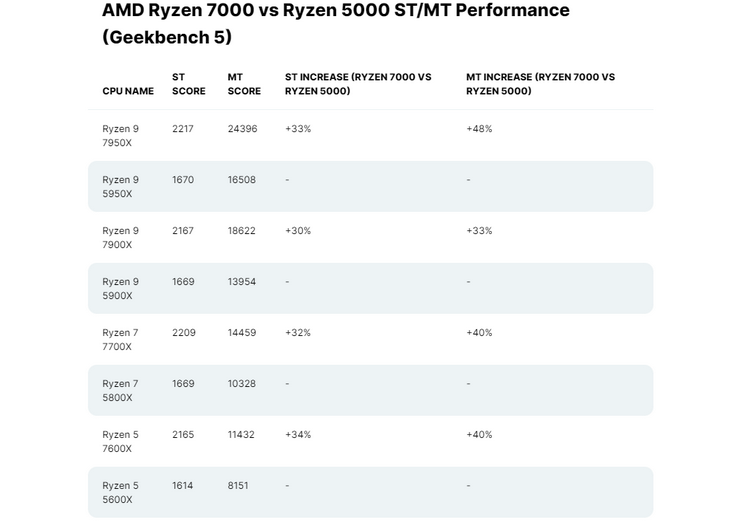
The chip scored 2167 points in single-core test and 18,622 points in multi-core test.
Novelty on Zen 4 architecture was 30% faster in single threaded and 33% faster in multi-threaded tests than its predecessor, Ryzen 9 5900X.
In comparison with Core i9-12900K new AMD chip was also faster.
Intel's still current 16-core flagship scored 1,901 and 17,272 points in the same tests, respectively.
Compared to engineering samples Core i7-13700K and Core i9-13900, Ryzen 9 7900X processor is faster in single threaded performance, but inferior in multi-threaded performance.Comparison table for single threaded performanceAmd Ryzen 7000 processors and motherboards for new Socket AM5 platform on senior AMD X670E and X670 chipsets will go on sale September 27.

9.20.2022

The 35 watt Core i7-13700T has appeared in the Geekbench test database, and it is higher than the Ryzen 7 5800X

The 35 watt Core i7-13700T has appeared in the Geekbench test database, and it is higher than the Ryzen 7 5800X

The 35 watt Core i7-13700T has appeared in the Geekbench test database, and it is higher than the Ryzen 7 5800X

Only K-series models with unlocked multiplier are expected to be announced as part of the first wave of Intel Raptor Lake series processors.
However, a model from the future energy efficient Core T series has made its mark in the Geekbench synthetic test database.
We're talking about the 16-core and 24-thread Core i7-13700T with an estimated heat dissipation of 35 watts.Image source: VideoCardzBase frequency of the processor is 1.4 GHz.
In auto mode, it can overclock up to 4.78 MHz.
Recall that the Intel T-series processors are not designed for gaming.
It is designed for use in compact energy-efficient and embedded systems, often equipped with passive cooling systems.Image source: GeekbanenchIn single-core performance tests, Core i7-13700T showed results from 1893 to 1939 points.
In multi-core performance tests, the chip scored from 8,925 to 11,564 points.Source image: GeekbanxThe Core i7-13700T is faster than the eight-core Ryzen 7 5800X on the Zen 3 architecture.
The maximum TPD of the Raptor Lake chip is unknown, but it should be lower than that of the Ryzen model (105W nominal and 142W maximum).
Intel chip was tested with DDR4-3200 RAM, hence it did not take advantage of faster DDR5 memory support.Compared to the 10-core Core i5-12600K Alder Lake series, the Core i7-13700T showed higher single-core and almost the same multi-core performance.
Image source: VideoCardzIntel usually releases energy-efficient models of its processors after the release of the higher-end K-series models with TDP 125W and mass models without overclocking and with TDP 65W.

9.09.2022

The eight-core Ryzen 77700X was faster than the 16-core Core i9-12900K in the CPU-Z test

The eight-core Ryzen 77700X was faster than the 16-core Core i9-12900K in the CPU-Z test

The eight-core Ryzen 77700X was faster than the 16-core Core i9-12900K in the CPU-Z test

A database of the CPU-Z utility's built-in performance test revealed the performance of the eight-core AMD Ryzen 7 7700X processor on the 5nm Zen 4 architecture.
Soon the record was deleted, but vigilant users managed to take screenshots.Image source: AMDAll eight cores of AMD processor in the test worked at the same frequency of 5425 MHz.
This is 25 MHz higher than the claimed auto overclocking frequency for this model.
The TDP rating of the Ryzen 7 7700X processor is 105W.
It supports AVX512IF instructions, DDR5 memory and PCIe 5.0 interface.
AMD Ryzen 7 7700X specifications.
Image source: ValidX86 / TUM_APISAKThe processor was tested on Gigabyte X670E AORUS Master motherboard, and with DDR5-6400 memory with CL30 timings.
With this configuration, the chip scored 774 points in CPU-Z single-core performance test, and 8381 points in multi-threaded test.
Ryzen 77700X single-core performance test with CPU-Z.
Source image: ValidX86 / TUM_APISAKWith these single-core performance results, the novelty is 21% faster than the eight-core Ryzen 7 5800X and 20% faster than the 16-core Ryzen 9 5950X on Zen 3 architecture.
In addition, the Ryzen 7 7700X was 1% faster than the 10-core Core i5-12600K, but inferior to the 12-core Core i7-12700K.
Ryzen 7 7700X multicore performance test by CPU-Z.
Image source: ValidX86 / TUM_APISAKMultithreaded performance of the Ryzen 7 7700X in this test was 1 percent better than the 16-core Core i9-12900K and 8 percent better than the Core i7-12700K.
Moreover, new AMD Raphael CPU is 28% faster than Ryzen 7 5800X.
AMD new product also showed up in Geekbench synthetic test database.
However, in this case we used a different motherboard (ASUS ROG Crosshair X670E Hero) and a different RAM configuration (64 GB DDR5-6000 memory).
Source image: GeekbenchWith results of 2209 and 14,459 points in single-threaded and multi-threaded performance tests, the novelty in the first case was 16% faster than the Core i7-12700K model, and in the second - 2% faster.Ryzen 7 7700X processor along with the rest of the Ryzen 7000 series goes on sale September 27.
Reviews of the new generation chips will start to appear one day earlier.

9.05.2022

Intel Core i9-13900 embedded graphics were slower than AMD Radeon Vega 10 in Geekbench OpenCL test

Intel Core i9-13900 embedded graphics were slower than AMD Radeon Vega 10 in Geekbench OpenCL test

Intel Core i9-13900 embedded graphics were slower than AMD Radeon Vega 10 in Geekbench OpenCL test

The Geekbench OpenCL synthetic test database has revealed performance data on Intel Core 13th generation processor embedded graphics.
The test was conducted on a certain HP PC equipped with an Intel Core i9-13900 processor.
In the OpenCL graphics test, Intel's Embedded showed a score of 9498 points.
This is roughly 93% lower than the NVIDIA GeForce RTX 3070 discrete graphics card.image source: PC-Magazin.eThe Raptor Lake processor has 32 execution units running at 1.65 GHz.
The current flagship Core i9-12900 has an Intel UHD Graphics 770 \"embedded\" with the same number of execution units, but running at 100 MHz lower or 6.5% slower.
One would expect the Raptor Lake integrated graphics core to be about 6.5 percent slower than the Alder Lake graphics due to this.
But in practice, the iGPU of the 13th generation Intel Core processor turned out to be only 2.6% faster.
Source image: GeekbankshIn comparison with the closest competitors, Raptor Lake graphics turned out to be slower than AMD Radeon Vega 10, NVIDIA GeForce MX350 entry-level discrete mobile graphics card or the same GeForce GTX 750 and Radeon RX 540 \"embedded\".
On the other hand, keep in mind that the test was most likely conducted on the Raptor Lake engineering sample and the final figures of the integrated graphics performance may differ, though hardly significantly.Image source: Tom's HardwareAdd that the test once again confirmed that the Core i9-13900 processor has 24 physical cores with support for 32 virtual threads and runs in the 2 to 5.3 GHz frequency range.
It is also reported to carry 36 Mbytes of L3 cache memory on board.The official announcement of the Intel Raptor Lake series of chips will take place at the end of this month.
They are rumored to go on sale in mid-October, along with new Intel 700-series motherboards.

8.31.2022

Ryzen 9 7950X results hit the Geekbench database, and they are worse than the engineering Core i9-13900K

Ryzen 9 7950X results hit the Geekbench database, and they are worse than the engineering Core i9-13900K

Ryzen 9 7950X results hit the Geekbench database, and they are worse than the engineering Core i9-13900K

Geekbench synthetic test database has posted performance test results for the flagship 16-core Ryzen 9 7950X processor.
Previously reported performance in the same benchmark of the junior six-core Ryzen 5 7600X model.Image source: AMDRyzen 9 7950X was tested on ASUS ROG Crosshair X670E Extreme motherboard paired with 32GB of DDR5-6000 RAM.
As part of the test, the processor automatically overclocked to 5759 MHz, just above the manufacturer's claimed 5.7 GHz.
Ryzen 9 7950X has 16 physical cores with support for 32 virtual threads.
The same number of cores have still current flagship processors AMD Ryzen 9 5950X and Intel Core i9-12900K.
At the same time the new AMD chip has fewer cores than the future flagship Core i9-13900K processor.
The latter will be equipped with 24 physical cores, but 16 of them are energy efficient and do not support Hyper-Threading.Ryzen 9 7950X specifications.
Source: Geekbanksh In the single-core performance test, the Ryzen 9 7950X scored 2,217 points.
This is just below the result announced by AMD itself (pictured below).
Multi-core performance index of the chip is 24,396 points.AMD declared Ryzen 7000 processor performanceMost models of future Intel Core 13th generation processors have already been tested in this benchmark (though, as engineering and qualification samples), the results of new AMD product can be compared with them.Ryzen 9 7950X performance.
Source: GeekbenchThe most recent entry in the Geekbench 5 database shows single-core performance of the Intel Core i9-13900K Raptor Lake series is 4.4 percent better.
The multi-core performance of the Intel chip is 8.8 percent higher than the Ryzen 9 7950X.
At the same time, the new AMD processor is 31 and 47.8% faster in single-threaded and multi-threaded tasks than the Ryzen 9 5950X, and 14.5% and 41.2% faster in the same tests than the Core i9-12900K.Image source: VideoCardzIt should be recalled again that only engineering and qualification samples of 13th generation Intel Core processors took part in Geekbench tests.
This means that their final performance figure may differ from the performance of the off-the-shelf consumer variants.

8.29.2022

Chinese server processors KaiSheng KH-40000 were noticeably slower than modern desktop Intel and AMD

Chinese server processors KaiSheng KH-40000 were noticeably slower than modern desktop Intel and AMD

Chinese server processors KaiSheng KH-40000 were noticeably slower than modern desktop Intel and AMD

The performance data of KaiSheng KH-40000 processors from Chinese company Zhaoxin appeared in Geekbench 5 synthetic test database.
Formally, this series of chips has not yet been presented.
It will include models with up to 16 cores.
As the first tests show, the performance of KaiSheng KH-40000 has increased against its predecessors, but it is not as good as modern AMD and Intel desktop processors.Image source: ZhaoxinThe Zhaoxin company, owned by Via Technologies and the Shanghai government, has continued to use Via microarchitectures in its products (or more specifically, Centaur Technology, which was absorbed by Via) since the middle of the last decade.
The upcoming KaiSheng KH-40000 series of data center processors use the CentaurHauls microarchitecture, which some technology experts say resembles the Intel Haswell architecture from 2013.The 16-core KaiSheng KH-40000/16 and 12-core KaiSheng KH-40000/12 were noted in Geekbench 5 tests.
Both chips run at a frequency of 2.20 GHz.
It is known that the senior model has 32 MB of L3 cache memory, the junior model has 24 MB of L3 cache memory.
The senior model supports SMT technology, so the processor has 32 virtual threads.
Based on the data collected by the Geekbench 5 test, the Zhaoxin KaiSheng KH-40000/16 and KaiSheng KH-40000/12 models are very similar to the never-released Centaur CHA processor reported earlier.
Nevertheless, there is a difference between the chips.
The difference is half the number of cores of the Centaur CNS, its lack of SMT support, and the use of TSMC's more mature N16 manufacturing process.
The new KaiSheng KH-40000 chips are believed to use the more modern TSMC N7 process technology.Although the new KaiSheng KH-40000 processors on the CentaurHaul architecture operate at 2.20 GHz, in tasks related to single-threaded performance, they prove to be significantly faster than the previous generation chips on the LuJiazui architecture, which operate at a higher frequency of 2.70 GHz.
This statement is true both for integer operations, where the new chips are 22% faster, and in floating point operations, where their performance is 75% better.On the background of predecessors, which in the comparison test (results below in the table) represents the eight-core Zhaoxin KX-U6780A model, KaiSheng KH-40000 processors show themselves significantly better.
However, in comparison with any modern AMD and Intel processors, they lose out cleanly.
For example, their single-threaded performance is even lower than AMD's Bulldozer/Piledriver chips from 2012.
There is also a very significant difference in multi-threaded performance between the KaiSheng KH-40000 12-core and 16-core models.
In theory, a chip with 16 cores with support for 32 threads can indeed handle 2.66 times as many threads as a processor that has 12 cores with 12 threads.
However, as the results above show, the KaiSheng KH-40000/16 is even faster: 2.69 times in Integer tasks and 2.84 times in Float operations.
The senior processor has only four more physical cores than the junior one, but its performance is almost three times better.It should be noted that Windows 10 and Windows 11 operating systems do not always work optimally with the task scheduler when an unfamiliar multicore processor is involved.
Therefore, the results of the 12-core KaiSheng KH-40000/12 model, which was tested in Windows 10 Pro, may not reflect the real potential of the processor against the older model, which was tested in a more suitable environment.
Even so, the multi-core performance of the 12-core model on the CentaurHoals architecture was expectedly higher than that of the chip on the preceding LuJiazui architecture.
The latter chip not only has fewer cores, but also uses an older process technology and has a smaller L3 cache.
In Integer and Float operations the difference in favor of the newcomer was 40 and 78%, respectively.
However, as mentioned above, the overall performance level of KaiSheng KH-40000 processors and their predecessor Centaur CHA by modern standards is very modest.
For example, the level of multi-threaded performance of 12-core KaiSheng KH-40000/12 in Windows environment is comparable to the eight-core AMD FX-8350.

Intel Core i9-13900 made a mark in the Geekbench test, where it outperformed all current flagship processors

Intel Core i9-13900 made a mark in the Geekbench test, where it outperformed all current flagship processors

Intel Core i9-13900 made a mark in the Geekbench test, where it outperformed all current flagship processors

Intel Core i9-13900 processor, which belongs to the upcoming Raptor Lake series, has appeared in the Geekbench synthetic test database with performance data.
According to telemetry data, the frequency of some processor cores in the test reached 5.57 GHz.Image source: VideoCardzThe Intel Core i9-13900 has eight high-performance and 16 power-efficient cores, and they collectively support 32 virtual threads.
Unlike the Core i9-13900K with free multiplier and TDP rating of 125W, the version without \"K\" suffix has a locked multiplier and claimed power consumption rating of 65W.Image source: GekbanenchThe processor was tested on Gigabyte Z690 Gaming X motherboard using 32GB of DDR5 RAM.
The chip scored 2,130 points in the single-threaded test and 20,131 points in the multi-threaded test.
This allowed it to overtake the Core i9-12900K, which shows 1988 and 17,245 points in the same tests, respectively, which is about 10 and 17% lower.Image source: GeekbankshThe Intel novelty also overtook the flagship AMD Ryzen 9 5950X, which scores 1,685 and 16,496 points in single-threaded and multi-threaded tests respectively.
That's 26% and 22% lower than the Core i9-13900 result.Image source: VideoCardzIntel will unveil Core 13th generation processors at the Innovation event, which will be held on September 27.
The new products are expected to go on sale in October.

7.13.2022

Engineering sample of Intel Core i9-13900K made its mark in Geekbench test at 5.5-5.7GHz

Engineering sample of Intel Core i9-13900K made its mark in Geekbench test at 5.5-5.7GHz

Engineering sample of Intel Core i9-13900K made its mark in Geekbench test at 5.5-5.7GHz

Engineering sample of future flagship 24-core Intel Core i9-13900K processor again marked in Geekbench synthetic test database.
Chip performance was tested on ASUS ROG Maximus Z690 Extreme motherboard.
This board is equipped with LGA 1700 socket, and ASUS has recently released a new version of BIOS, which brings support for Raptor Lake processors.
At the same time, one of the processor cores automatically overclocked to 5.7 GHz.
Note that with the same range of clock speeds work engineering samples Raptor Lake 3rd generation (Raptor Lake ES3), which is already available in China through various closed channels.Image source: GeekbanenchThe chip includes eight high-performance cores Raptor Cove with Hyper-Threading technology and 16 Gracemont power efficient cores without support for this technology.
According to Geekbench description, the processor has 36 MB of L3 cache memory.
But the amount of L2 cache is incorrect - Geekbench only shows the cache of cores of the same type, and in fact the Core i9-13900K will have a total of 32 MB of L2 cache.Image source: GeekbenchThere were some problems with the system timers during the engineering sample test, so the chip performance data would be unfair to compare with any other CPU already available in the market.
Image source: GeekbenchIf we ignore this point, the Core i9-13900K engineering sample was 7 percent faster in the single-core test and 37 percent faster in the multi-core test compared to the Core i9-12900K in the same Geekbench 5 tests.Single and multi-threaded performance of Intel and AMD processors in Geekbench 5.
Image source: WccftechThe Raptor Lake series processors are expected to debut this October.
Intel is very likely to start first with K-versions of chips with an unlocked multiplier and manual overclocking capability.
Processors not intended for overclocking, in turn, will appear on the market a little later.

7.01.2022

The unreleased eight-core Ryzen 7 5700

The unreleased eight-core Ryzen 7 5700

The unreleased eight-core Ryzen 7 5700

AMD may release another Cezanne series processor.
The Ryzen 7 5700 has been found in the Geekbench 5 synthetic test database.
Apparently, the chip is a version of the hybrid APU Ryzen 7 5700G, lacking an integrated graphics core.Image source: AMDThe Ryzen 7 5700 processor's affinity with the Ryzen 7 5700G is hinted at by its equipment.
The chip is built on the Zen 3 architecture, has eight physical cores with support for 16 virtual threads and received 16 MB of L3 cache memory.
The difference between models is in clock speeds.
The Ryzen 7 5700G has a base frequency of 3.8 GHz, while the Ryzen 7 5700 model has 3.7 GHz.
At the same time, the maximum frequency in both cases is the same - 4.6 GHz.
But the main difference between the chips, as mentioned above, is the Ryzen 7 5700 model's lack of integrated Radeon Vega graphics.
So why can't it be the Ryzen 7 5700X version? At least the latter has twice as much cache memory of the third level, and the base frequency is lower.Image source: Tom's HardwareThe Ryzen 7 5700 scored 1546 points in the single-core test, and 8502 points in the multi-core test.
By comparison, the Ryzen 7 5700G scores 1,547 points in the single-threaded test and 9,032 points in the multi-threaded test.
In other words, the Ryzen 7 5700G is about 6% faster in the second case.
All indications are that the Ryzen 7 5700 is still the same Ryzen 7 5700G, but only with base frequency lowered by 100 MHz and without the mentioned iGPU.
Source image: GeekbankshAt the moment, it is unknown whether AMD plans to release the processor to retail or it will be distributed through PC OEM manufacturers.
Or maybe AMD will not release this chip at all.
Recall that the Ryzen 7 5700G cost $359 at the launch of sales.
Now it has dropped to $289.
How much cheaper the Ryzen 7 5700 will be priced is still unclear.
The forecast is also complicated by the fact that the more productive Ryzen 7 5700X model now sells for about $287.

6.01.2022

Chinese graphics card Zhaoxin Glenfly Arise 1020 - about 60 times slower than GeForce GTX 1060

Chinese graphics card Zhaoxin Glenfly Arise 1020 - about 60 times slower than GeForce GTX 1060

Chinese graphics card Zhaoxin Glenfly Arise 1020 - about 60 times slower than GeForce GTX 1060

Geekbench database shows performance data of mysterious Chinese graphics gas pedal Zhaoxin Glenfly Arise 1020 in OpenCL test.
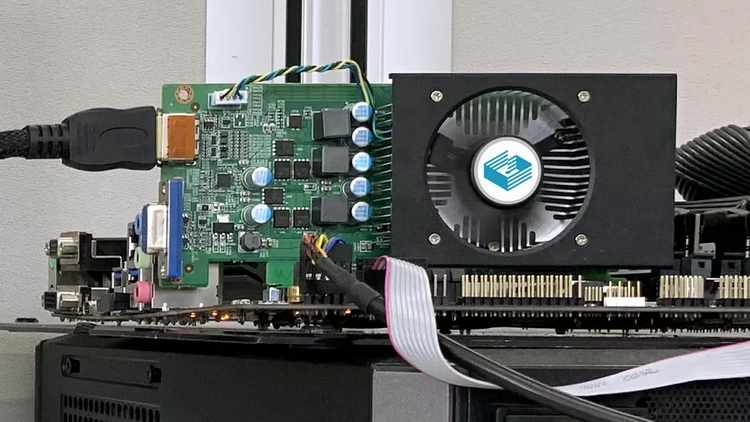
The graphics card was tested with Zhaoxin's KaiXian KX-U6780A processor and a motherboard from the same manufacturer.Image source: GlenFly TechnologyThe graphics card test results look pretty weird.
Either the Geekbench test failed to work properly with the gas pedal, or the video card was really very weak.
It scored only 579 points.
For comparison, even the entry-level model GeForce GTX 1650 scores about 38 thousand points in the same test.
And the latest GeForce RTX 3070 keeps in the range of 135 thousand points.
Image source: GeekBenchThe Glenfly Arise 1020 gas pedal was tested as part of a relatively modern system, at least according to its characteristics.
The central processor here has eight cores with support for eight virtual threads and runs at about 2.7 GHz.
He is accompanied by 8 GB of DDR4 memory.
The video card Glenfly itself has on board 24 computing units, as well as 2 GB of memory.
Such a configuration does not tie in with such low performance in this test.
Image source: GeekbankshThe closest performance to the Zhaoxin Glenfly Arise 1020 is the integrated graphics Radeon HD 6480G or Radeon HD 6410D of entry-level AMD processors from 2011, as well as Arm Mali-G52 mobile chipset graphics from 2018 or Arm Mali-T860 from 2016.
If you compare the Chinese graphics gas pedal with more modern solutions, it turns out to be about 20 times slower than the integrated graphics Radeon Vega 11 of Ryzen 5 2400G and Ryzen 5 3400G processors or about 60 times slower than the discrete GeForce GTX 1060 6GB.

12.28.2021

Mobile Core i5-1250P is roughly equal to desktop AMD Ryzen 5800X in single-core Geekbench test

Mobile Core i5-1250P is roughly equal to desktop AMD Ryzen 5800X in single-core Geekbench test

Mobile Core i5-1250P is roughly equal to desktop AMD Ryzen 5800X in single-core Geekbench test

The Alder Lake-P mobile power-efficient processor has impressive performance, if freshly published data from the Geekbench 5 synthetic test is to be believed. In the single-core test, the upcoming Core i5-1250P showed almost identical results to the desktop AMD Ryzen 5800X.

Mobile Intel Alder Lake will be able to offer up to 14 physical cores: up to six high-performance P cores and up to eight energy-efficient E cores. The chips will be divided into two main subcategories. Alder Lake-H models with higher TDP and speeds, such as the Core i7-12700H, will be destined for high-performance gaming laptops. Alder Lake-P models with lower TDP, frequencies and number of cores, like the same Core i5-1250P, will be designed for thin and energy-efficient laptop models.

The Core i5-1250P processor gets 12 cores with support for 16 threads and 18 Mbytes of L3 cache memory. That is, it uses four P-core and eight E-core, and according to Geekbench 5 call this chip low-performance. In the single-core test Core i5-1250P showed a score of 1611 points, and in multi-core & ; 8789 points.

By comparison, the desktop Ryzen 7 5800X shows 1672 points in the same single-core test, only 6.8% higher than the Intel chip. The difference is not so big to call it significant. However, in multi-core test the Core i5-1250P is noticeably inferior to Ryzen processor, which shows a score of 10 347 points. But still they are «different weight categories 

[GB5 CPU] Unknown CPU: Intel Core i5-1250P (12C 16T) Min/Max/Avg: 3715/4368/3947 MHz Codename: Alder Lake CPUID: 906A2 (GenuineIntel) Scores, vs AMD 5800X Single: 1611, -6.8% Multi: 8789, -18.2%https://t.co/qm8uZ1gffl & ; Benchleaks (@BenchLeaks) December 27, 2021

The single-core performance of the Core i5-1250P is quite impressive, especially considering that this processor is likely to be used in ordinary laptops for everyday tasks rather than inside professional workstations. Equally interesting is the fact that the Intel chip has a much lower base frequency of 2.10GHz compared to the Ryzen 7 5800X, which has a base frequency value of 3.8GHz. Unfortunately, Geekbench does not indicate the exact maximum frequency of the Core i5-1250P. We can assume that it is at the level of 4.4 GHz.

10.22.2021

The upcoming AMD Ryzen Threadripper PRO 5975WX on Zen 3 was up to 34% faster than its predecessor in Geekbench

The upcoming AMD Ryzen Threadripper PRO 5975WX on Zen 3 was up to 34% faster than its predecessor in Geekbench

The upcoming AMD Ryzen Threadripper PRO 5975WX on Zen 3 was up to 34% faster than its predecessor in Geekbench

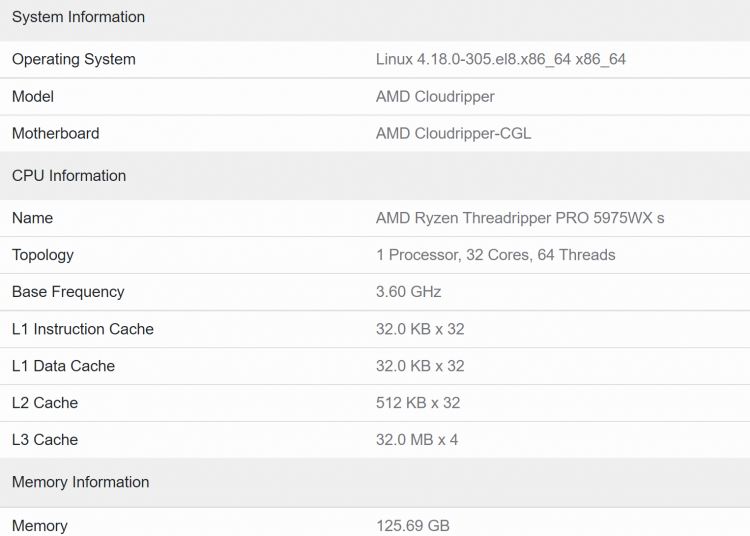
The Geekbench synthetic test database has revealed data on one model of AMD's expected high-performance Chagall-WS (after the artist Marc Chagall) series processors on the Zen 3 architecture. We're talking about the 32-core Ryzen Threadripper PRO 5975WX, which operates in the frequency range from 3.6 to 4.5 GHz.

The processor was tested as part of a certain reference workstation called Cloudripper-CGL, where «CGL» stands for Chagall series code name. This chip will be designed for workstations, and therefore will offer support for eight-channel memory and more PCIe lanes. According to the insider ExecutableFix, cited by VideoCardz, Ryzen Threadripper PRO 5000 processors may be AMD's only series of high-performance workstation processors based on Zen 3 architecture, because the company allegedly decided not to release Ryzen Threadripper series chips without the prefix PRO.

AMD Ryzen Threadripper PRO 5975WX specifications

Boost frequency of AMD Ryzen Threadripper PRO 5975WX

AMD Ryzen Threadripper PRO 5975WX performance

Ryzen Threadripper 3970X performance

In single-core test the processor scored 1686 points, in multi-core & ; 27 603 points, which is 34% and 23% higher respectively than the current 32-core model Ryzen Threadripper 3970X based on Zen 2.

1.14.2021

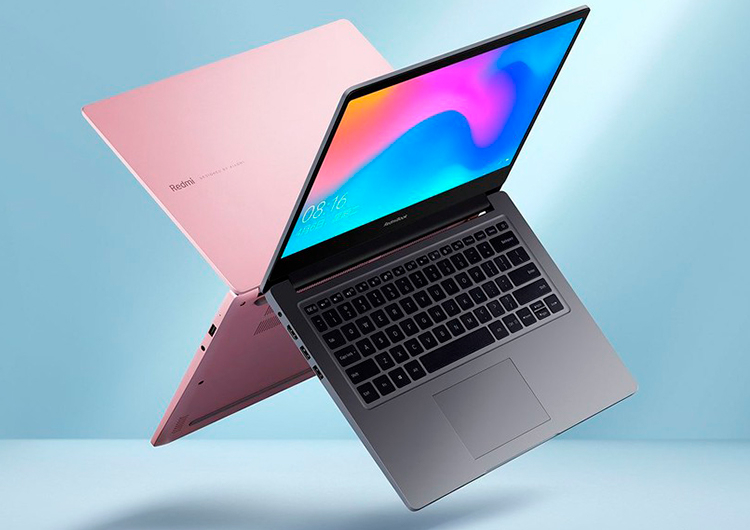
Xiaomi prepares RedmiBook Pro 15S laptops powered by AMD Ryzen 5000 processors

Xiaomi prepares RedmiBook Pro 15S laptops powered by AMD Ryzen 5000 processors

Xiaomi prepares RedmiBook Pro 15S laptops powered by AMD Ryzen 5000 processors

It became known yesterday that Xiaomi is planning to release RedmiBook Pro laptops powered by new Intel Tiger Lake-H processors. Today, benchmark Geekbench has revealed the test results of two versions of the laptops powered by Intel and AMD processors.

Image source: Xiaomi

Based on the test results that have surfaced in the Geekbench database, the company is preparing to release as many as two laptops & ; the RedmiBook Pro 15 and RedmiBook Pro 15S. That said, each will have two more configurations.

Geekbench comparison of results

The younger RedmiBook Pro 15S will be equipped with an AMD Ryzen 5 5600H processor and 8GB of RAM. The older one will be powered by an AMD Ryzen 7 5800H processor and will have 16GB of RAM. What's quite interesting & ; in the single-core test, the younger AMD Ryzen 5 5600H model scores higher (1322 vs 1197), while in the multi-core test, the AMD Ryzen 7 5800H is the leader (6865 vs 5793).

In addition, the benchmark also revealed results for the RedmiBook Pro 15 on Intel Core i5-11300H and Intel Core i7 11370H processors. In the synthetic test, they were weaker than the AMD chip versions. The laptops are likely to be unveiled during MWC 2021 in Shanghai, which takes place from February 23 to 25

12.28.2020

Intel Core i7-11700K is 8% faster than AMD Ryzen 9 5950X in single threaded Geekbench test

Intel Core i7-11700K is 8% faster than AMD Ryzen 9 5950X in single threaded Geekbench test

Intel Core i7-11700K is 8% faster than AMD Ryzen 9 5950X in single threaded Geekbench test

The Geekbench database has a record of testing the final (release) version of the eight-core and 16-thread Intel Core i7-11700K generation Rocket Lake-S processor. It is based on the new Cypress Cove architecture and built using 14nm process technology. According to the test, the novelty was 8% faster than the flagship AMD Ryzen 9 5950X in a single-threaded test.

Intel Core i7-11700K was tested with Gigabyte AORUS Z490 Master motherboard. In single-threaded test the chip scored 1807 points, and in multi-threaded & ; 10 673 points. AMD Ryzen 9 5950X results & ; 1672 and 16,515 points in the same tests respectively.

According to the benchmark, the Core i7-11700K has a base frequency of 3.6GHz, and in auto overclocking mode it goes up to a value of 5GHz. The chip will come to replace the current 8-core and 16-threaded 10th generation Core i7-10700K Comet Lake-S. Despite the lower clock speed range (3.6/5.0GHz vs 3.8/5.1GHz for Comet Lake-S) the Core i7-11700K was 34% and 19% faster in single-threaded and multi-threaded tests respectively.

Image source: VideoCardz

Intel's 11th generation Rocket Lake-S desktop processors are expected to be announced early next year. They will be able to work with current Intel 400-series motherboards, but the manufacturer is also going to release new 500-series boards for them. One of the most important features of the Rocket Lake-S processors will be support for PCI Express 4.0.

12.23.2020

AMD Ryzen 5 5600H based on Zen 3 is much faster than its predecessor

AMD Ryzen 5 5600H based on Zen 3 is much faster than its predecessor

AMD Ryzen 5 5600H based on Zen 3 is much faster than its predecessor

AMD is set to unveil its latest Cezanne processors in just three weeks at CES 2021, according to circulating rumours. The company will announce a family of low-power and high-performance mobile solutions that will be marketed under the names Ryzen 5000U and Ryzen 5000H.

videocardz

Earlier this month there was already a leak regarding the Ryzen 5 5600H six-core processor. It was rumoured to have a base frequency of 3GHz and up to 4.1GHz in Turbo mode. However, fresh data discovered by whistleblower TUM_APISAK suggests that the processor will be noticeably faster. According to Geekbench results, the Ryzen 5 5600H chip will have a base frequency of 3.3GHz with automatic overclocking to 4.24GHz. The processor has been tested in the TIMI Notebook, which is apparently the codename of the Xiaomi Mi Notebook.

AMD Ryzen 5 5600H specifications (Geekbench)

AMD Ryzen 5 5600H performance (Geekbench)

Compared to current generation Ryzen 5 4600H, it showed 37 % faster performance in single threaded mode and about 18 % faster in multi-threaded mode. The main competitor to these chips is now the 10th generation Core i7-10750H, which Intel will again use in fresh relatively inexpensive laptops based on GeForce RTX 30xx. According to Geekbench performance figures, AMD's new six-core CPU turns out to be 20 % faster than Intel's solution and 3 % faster in single and multi-threaded tests respectively.

Performance of different CPUs in Geekbench V5 (videocardz)

Apparently, Ryzen 5 5600H will be slower in single-threaded mode than the Core 11th generation solutions of Tiger Lake-H family, which are expected to be released next year. In particular, quad-core Intel Core i7-11370H is 14 % faster in single thread processing than Ryzen 5 5600H, but slower in multi-thread computing.

Cezanne and Renoir mobile processors (videocardz)

11.18.2020

Coming Intel Tiger Lake-H Distributed AMD Ryzen 4000H in Geekbench 5 tests

Coming Intel Tiger Lake-H Distributed AMD Ryzen 4000H in Geekbench 5 tests

Coming Intel Tiger Lake-H Distributed AMD Ryzen 4000H in Geekbench 5 tests

A well-known Internet detective Tum_Apisak found the results of performance testing of Intel Core i7-11370H processor in a synthetic test Geekbench 5. The chip belongs to the 11th generation of mobile processors Tiger Lake-H, the announcement of which is expected in the coming months.

Thanks to the information contained in the Geekbench database, it became known that the Intel Core i7-11370H is a quad-core processor with support for Hyper-Threading technology, due to which it received 8 virtual computing streams. Very interesting was the fact that the Geekbench 5 database defined the novelty as a representative of the Tiger Lake-U series of energy efficient processors. Recall that the latter have already entered the market and are used in thin notebooks. Tiger Lake-H series, in turn, will be presented with more efficient processors for gaming laptops.

Image source: Tom's Hardware

The operating frequency range of the above chip Core i7-11370H is from 3.3 to 4.8 GHz. The processor has 12 MB of Level 3 cache memory. As there are no quad-core models of the Ryzen 4000H series mobile processors in AMD's range, the upcoming Intel innovation was compared to the six-core and twelve-threaded Ryzen 5 4600H. It is built on Zen 2 architecture, has 8 MB of L3 cache memory and operates in the frequency range from 3 to 4 GHz. Thus, behind the AMD chip advantage in two physical and four virtual cores, but Intel's competitor has 10% and 20% higher base and maximum frequencies, respectively; In the single-core performance test, the Intel Core i7-11370H achieved 1420 points, in multi-core & ; 4964 points. In the same tests, the Ryzen 5 4600H scored an average of 980 and 4808 points respectively. Thus, the single-core performance of Core i7-11370H in this particular synthetic test is up to 44.9% higher than that of Ryzen 5 4600H. The multithreaded performance gap between competitors is in turn minimal & ; 3.2% in favor of Intel, chip; which also positively characterizes Intel Core i7-11370H, because it has, as mentioned above, fewer physical cores and virtual threads.