Showing posts with label smartphone. Show all posts

11.08.2022

MediaTek unveiled the Dimensity 9200, a 4nm flagship platform with Arm Cortex-X3, ray tracing and Wi-Fi 7

MediaTek unveiled the Dimensity 9200, a 4nm flagship platform with Arm Cortex-X3, ray tracing and Wi-Fi 7

MediaTek unveiled the Dimensity 9200, a 4nm flagship platform with Arm Cortex-X3, ray tracing and Wi-Fi 7

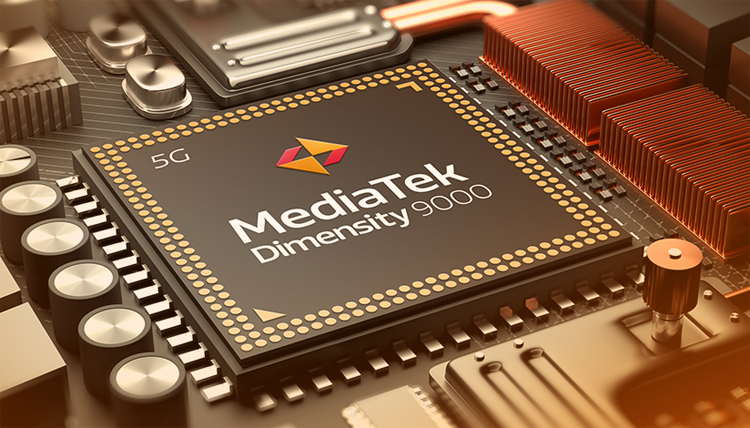
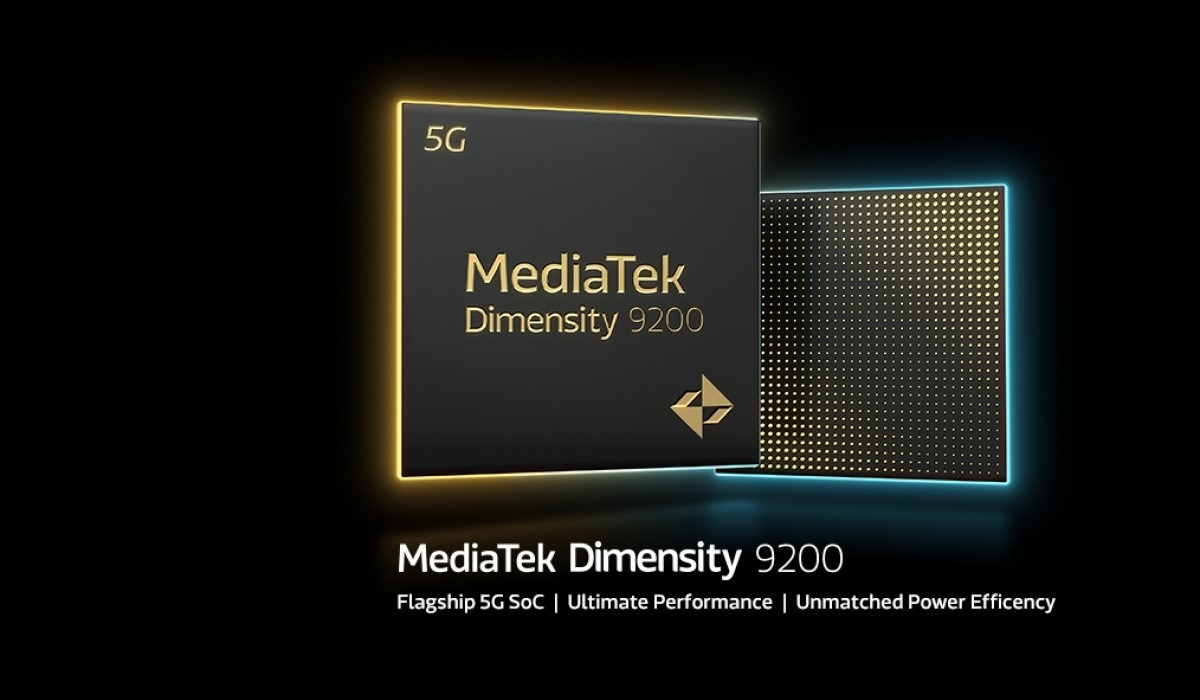
MediaTek unveiled the Dimensity 9200, a flagship mobile single-chip platform that uses the latest solutions for the mobile industry.
It is the first mobile platform to use the Arm Cortex-X3 main core with ARMv9 architecture and a 3.05 GHz operating frequency.
In addition to the Cortex-X3 core, the new chip uses three powerful 2.85 GHz Cortex-A715 cores and four efficient 1.8 GHz Arm Cortex-A510 cores.
The new chip is manufactured according to TSMC's second-generation N4P 4nm process.
Note that the upcoming Snapdragon 8 Gen 2, which will be the main competitor of MediaTek novelty, is rumored to have four core clusters: one Cortex-X3 (3.19 GHz), pairs of Cortex-A715 and A710 (2.8 GHz) and three Cortex-A510 (2.0 GHz).The second breakthrough solution in Dimensity 9200 is the advanced Arm Immortalis-G715 GPU with hardware ray tracing acceleration.
The new flagship platform supports Variable Rate Shading (VRS), that is variable rate shading, which should improve performance.
It also supports LPDDR5X random access memory with data transfer rate up to 8533 Mbit/s and the latest UFS 4.0 ROM.
There is also sixth generation AI processing unit (APU) 690, which provides up to 35% better performance compared to its predecessor, according to ETHZ5.0 benchmark.
It also features up to 30% and 45% reduction in power consumption for image noise removal and upscaling by AI.
The Dimensity 9200 supports up to two displays up to 5K resolution at 60 Hz or 1440p at 144 Hz or 1080p at 240 Hz.
It's also the first chipset to support Wi-Fi 7 at up to 6.5Gbps.
Of course, 5G networks are supported - both up to 6 GHz and millimeter band (mmWave), Bluetooth 5.3 is also provided.The Imagiq 890 image processor is capable of handling RGBW sensors, saving 34% power compared to the previous generation variant.
Finally, MediaTek eXtreme Power Saving technology is used on the basis of AI, allowing to use up to 30% less energy in general.It is expected that the first smartphones based on the Dimensity 9200 will appear on sale before the end of this year.
It is known that back in spring, according to AnTuTu benchmark, smartphones based on the Dimensity 9000 chip for the first time were among the top ten most powerful, displacing Snapdragon 8 Gen 1 models.

9.20.2022

GPU performance of the Apple A16 chip has increased by more than a quarter compared to the A15

GPU performance of the Apple A16 chip has increased by more than a quarter compared to the A15

GPU performance of the Apple A16 chip has increased by more than a quarter compared to the A15

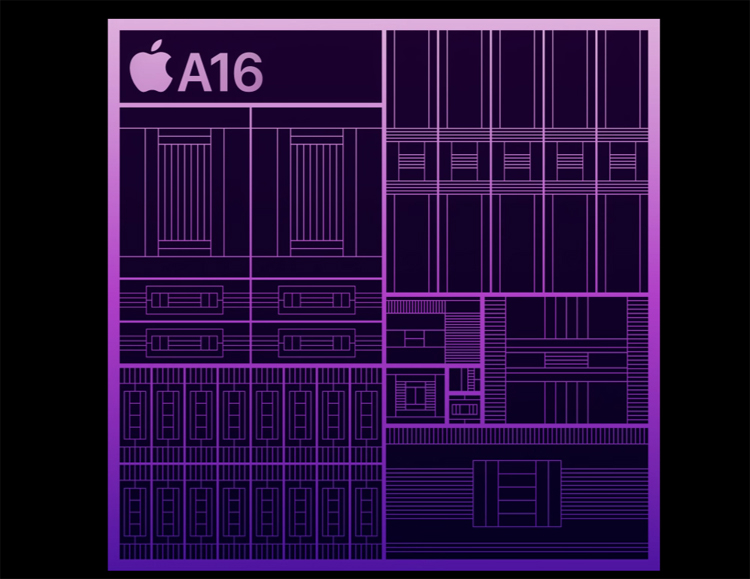
Data from the popular AnTuTu benchmark shows that the Apple A16 Bionic processor, used in the latest iPhone smartphones, significantly outperforms the previous generation A15 Bionic chip in terms of graphics unit (GPU) performance.
Image source: ArpleThe A16 Bionic is the \"heart\" of the iPhone 14 Pro and iPhone 14 Pro Max, while the iPhone 14 and iPhone 14 Plus use the A15 Bionic.
The processors have identical architecture: they are six processing cores (two performance and four energy-efficient), a five-core GPU node and a 16-core neural processor engine (Neural Engine).Image source: ApTuTuIn the AnTuTu test the iPhone 14 Pro smartphone scored a total of 978,147 points, the iPhone 14 Pro Max model - 972,936 points.
This is approximately 19% more compared to the iPhone 13 series with the A15 Bionic chip.The iPhone 14 Pro and iPhone 14 Pro Max models compared to their predecessors show a performance increase of CPU cores by 17%, memory - by 10%.
As for the graphics node, its performance rose by more than a quarter - by 28%.Image source: ApTuTuAdd that in the test AnTuTu used the iPhone 14 Pro and iPhone 14 Pro Max versions, equipped with a 1 Tbyte flash drive.
The devices carry 6 GB of RAM.

9.07.2022

Google has confirmed that the Pixel 7 flagships will get a proprietary Tensor G2 processor

Google has confirmed that the Pixel 7 flagships will get a proprietary Tensor G2 processor

Google has confirmed that the Pixel 7 flagships will get a proprietary Tensor G2 processor

The Pixel 7 series smartphones are set to premiere on October 6 in New York, and Google has already announced that the next generation flagship smartphones will use another version of its proprietary single-chip platform - Tensor G2.
Image source: 9to5googleThe Google Tensor mobile platform debuted last year as the basis for the Pixel 6 and 6 Pro smartphones, and later appeared in the Pixel 6a.
The chip was developed by Google in collaboration with Samsung.
Similar in some aspects to Exynos solutions, the processor received advanced machine learning and AI capabilities thanks to the Google team.It is known that the first version of the chipset was codenamed GS101, but Google calls it exclusively Tensor.
It was reported that the second generation will receive the code GS201, but under what name the solution will enter the market, remained unknown until recently.Now Google has officially announced that on October 6 will premiere the Google Pixel 7, Pixel 7 Pro, as well as the Google Watch and other products.
One of Google's pages has a reference to the Tensor G2 used in the Pixel 7.
Thus, the official name is now known.
If the company follows this year's pattern, not only the Pixel 7 and Pixel 7 Pro will be built on the new platform, but also probably the more affordable Pixel 7a and possibly the flexible Pixel Fold, about which there are only rumors so far.According to the developer, the chipset provides \"even more useful, personalized features for photo, video, security and voice recognition.\" It is possible that in this way Google hints at the specifics of next month's premiere, during which will be presented not only smartphones and other hardware, but also, perhaps, software.
For example, in the context of \"security\" it may be about the function of unlocking smartphones by face, which, according to some reports, was actively developed for the Pixel seventh series.
However, it is possible that this is just an ordinary security update.Earlier it was reported that in Russia there were numerous failures in the work of Google services.
The only way to combat them so far is called the use of VPN.

7.07.2022

TSMC controls 70% of global production of chips for smartphones

TSMC controls 70% of global production of chips for smartphones

TSMC controls 70% of global production of chips for smartphones

Counterpoint Technology Market Research company released the results of the study of the global market of microchips for cellular devices in the first quarter of this year.Image source: pixabay.comThe presented statistics takes into account the production of \"systems on a chip\" (SoC), discrete application processors and individual modems.
Different manufacturing technologies are considered.Shipments of the listed products from January to March inclusive decreased year over year by 5%.
This can be explained by the seasonal factor, the current geopolitical situation and oversupply in the last quarter of 2021.Source image: Counterpoint Technology Market ResearchBut if we consider the industry in monetary terms, growth in annual terms was 23%.
This significant increase is due to an increase in the share of more expensive products with 5G mobile communications support.Approximately 69.9% of all smartphone chips produced during the quarter came from the lines of TSMC.
Another 30% was the share of Samsung.
All other market players together control only 0.1%.
In the segment of products manufactured by advanced technology with 4 and 5 nanometers, Samsung leads with 60%.
The remaining 40% belong to TSMC.
Image source: Counterpoint Technology Market Research

6.30.2022

The global PC market will collapse by nearly 10 percent in 2022

The global PC market will collapse by nearly 10 percent in 2022

The global PC market will collapse by nearly 10 percent in 2022

Gartner has released a fresh forecast for the global consumer PC and mobile market.
It takes into account PCs, notebooks, Ultrabooks, tablets, and cell phones.Image source: pixabay.com / kaboompicsIn 2021, total sales in those categories were 2.07 billion units, an increase of 5.5% over the previous year.
Personal computers, meanwhile, were up 11.0% to 342 million units, while handsets saw a 5.0% increase to 1.57 billion.
Tablet sales declined 0.8 percent to about 156 million units.
This year, the market is forecast to be in the red: total shipments of devices in all categories will decline by 7.6 percent.
The final result will be 1.91 billion units.Image source: Gartner PC sales could decline 9.5 percent to 310 million units in 2022.
The tablet segment is expected to decline by 9.0% to 142 million units.
As for cellular phones, according to analysts, their shipments will decrease by 7.1% - to 1.46 billion.If we consider only the direction of smartphones, the demand for them this year will fall by 5.8%.
At the same time, shipments of 5G devices in annual terms will jump by 29%, amounting to about 710 million units.

6.09.2022

MediaTek came out to the leaders by the number of supplied processors for smartphones

MediaTek came out to the leaders by the number of supplied processors for smartphones

MediaTek came out to the leaders by the number of supplied processors for smartphones

Counterpoint Technology Market Research company released the results of the study of the global market of single-chip platforms (SoC) for smartphones in physical terms in the first quarter of this year.Image source: MediaTekThe day before it was reported that Qualcomm was leading by the amount of revenue from mobile SoC and baseband solutions in the first quarter of 2022 with a share of 44 %.
Next comes Apple and MediaTek with the result 26% and 19% respectively.However if we consider the market in terms of supplies in pieces, the picture looks different.
The largest supplier of processors for smartphones is MediaTek with a share of 38%.
It is noted that sales of 5G products of this company for the year jumped by 20%.
The products of Dimensity 700 and Dimensity 900 series are in high demand.Image source: Counterpoint Technology Market ResearchThe second place in terms of supplies in physical terms is occupied by Qualcomm, which took 30% of the global market.
The Snapdragon 700 and Snapdragon 800 chips are in demand among smartphone developers.Rounding out the top three is Apple with 15%.
Unisoc, Samsung and Huawei HiSilicon are next with 11%, 5% and 1%, respectively.

6.08.2022

Qualcomm leads the market of chips for smartphones with the share of 44%

Qualcomm leads the market of chips for smartphones with the share of 44%

Qualcomm leads the market of chips for smartphones with the share of 44%

Counterpoint Technology Market Research estimated the balance of power in the global market of chips for smartphones.
The report covers the application processor (SoC) and baseband solutions that support cellular communications in mobile devices.
If we consider the sphere of 5G, the growth was at 36%.The undisputed leader is Qualcomm with a share of 44%.
During the year, revenues of this company from sales of SoC and baseband chips soared by 56%, reaching $ 6.3 billion.Second place is occupied by Apple, which received 26% of the total market revenues.
Smartphones of iPhone 13 family continue to be in high demand.Image source: Counterpoint Technology Market ResearchThe bottom three is MediaTek with a share of approximately 19%.
During the year, the company increased revenue by 29%, which contributed to good demand for solutions that support 5G.In addition, the top players in the industry included Samsung, Unisoc and Huawei HiSilicon: their result was respectively 7%, 3% and 1%.

5.26.2022

Qualcomm CEO predicts growth in premium smartphone sales even in global recession

Qualcomm CEO predicts growth in premium smartphone sales even in global recession

Qualcomm CEO predicts growth in premium smartphone sales even in global recession

Qualcomm CEO Cristiano Amon predicts the company will continue to grow as users increasingly want to buy \"better smartphones.\" He said this on Wednesday, speaking at the International Economic Forum - even as the event is dominated by discussions about the economic downturn.Image source: QualcommAmon said Qualcomm has revised its mobile strategy to focus on premium solutions and gained additional market share.
For example, if before the share of Qualcomm solutions in Samsung Galaxy smartphones was 40%, now it has grown to at least 75%.The head of Qualcomm called the smartphone market \"mature\", which limits growth.
At the same time, politicians, business representatives and market experts talk about the threat of a global recession.
Nevertheless, during the COVID-19 pandemic, the demand and usefulness of smartphones continued to grow thanks to strong demand for virtual work meetings in services like Zoom and distance learning, as well as active contact by family members and loved ones separated by health restrictions.
\"People are looking for better phones with more features.
These things can keep the mobile market stable even in the face of inflation and recession risk,\" Amon said.
In April, his company predicted third-quarter revenue would be higher than analysts had expected.Today, Qualcomm's technology powers not only smartphones, but also virtual/ augmented reality devices, including developments by the recognized Russian extremist company Meta*.
According to Amon, its relationship with Qualcomm is expanding.
\"Augmented reality can be as big as smartphones,\" he explained.Qualcomm already has partnerships with Microsoft and TikTok developing virtual and augmented reality devices.
In addition, there are projects that have not yet been announced.
* Included in the list of public associations and religious organizations in respect of which there is a court decision which has entered into legal force to liquidate or ban activities on the grounds provided by Federal Law No.
114-FZ of July 25, 2002 \"On Counteracting Extremist Activity\".

5.11.2022

Google I/O 2022 kicks off today - the company will talk about Android 13 and other new developments

Google I/O 2022 kicks off today - the company will talk about Android 13 and other new developments

Google I/O 2022 kicks off today - the company will talk about Android 13 and other new developments

The annual Google I/O conference kicks off today.
As in previous years, those who want to watch a video broadcast of the event will be able to do so.
During the keynote, Google CEO Sundar Pichai and his colleagues will talk about key new products this year, including likely hardware solutions like the Pixel 6a as well as software innovations, from Wear OS to Android.Image source: GoogleThe event itself will be held for two days in California.
The broadcast of the keynote speech at Google I/O 2022 will start at 20:00 Moscow time.
Although the keynote will be available online for everyone, those who intend to read the report for developers and view videos from individual sessions should register on the event website.What can we expect from Google I/O 2022:Android 13.
Google is likely to talk about improvements to the operating system that will be available in the new Android 13, which replaces last year's Android.
According to some reports, the new OS will include support for spatial audio in Pixel 6 models and, for example, the connection of two mobile carriers to one eSIM;Wear OS.
The operating system for wearable devices should also receive an update.
Previously, Google has already reported on the integration of this operating system with Tizen OS, developed at one time by Samsung.
It is possible that the fruits of cooperation will be described in more detail;Pixel 6a.
Google is expected to unveil a new affordable version of the Pixel 6 smartphone.
According to some reports, the smartphone will get the Tensor chipset used in the \"older\" model and a similar design.
Nevertheless, it is likely that the Pixel 6a will lose some features exclusive to the Pixel 6;Pixel Watch.
In addition to the Pixel 6a, the Pixel Watch, which has been the subject of many rumors lately, may also debut during the event.
According to some reports, the watch will be round and will use the latest version of Wear OS.
Integration with Fitbit services;Pixel Buds Pro is not ruled out either.
It is expected that along with the watch and smartphone, Google may present wireless headphones Pixel Buds Pro with different colors;Google Assistant.
During the event, Google is likely to unveil an enhanced voice assistant, potentially surpassing Amazon Alexa or Apple Siri.
Special additions to allow for more efficient management of smart home systems;Google Search is not ruled out either.
The company is expected to improve search algorithms through updated artificial intelligence and machine learning systems;Other.
Finally, updates to Google Maps, Photos and Gmail, as well as the return of the Wallet application are not excluded.
In addition, Google is reportedly working on the direction of Web 3 and applications for the meta-universe.

5.10.2022

Google began to block the accounts of the deputies of the State Duma of the Russian Federation, caught under U.S.</br>sanctions

Google began to block the accounts of the deputies of the State Duma of the Russian Federation, caught under U.S.
sanctions

Google began to block the accounts of the deputies of the State Duma of the Russian Federation, caught under U.S.</br>sanctions

advertisingThe talks about whether the American corporations Apple and Google will block smartphones and other mobile devices of Russians working on the operating systems Android (Google) and iOS (Apple) have continued for many days.
The fact that they are technically capable of carrying out such a procedure is beyond doubt.
Experts have repeatedly said that no tricks will save smartphones from turning into \"bricks\" and everything depends solely on the will of the American copyright holders.
At the same time, it is pointed out that in such a scenario, the above-mentioned corporations will suffer enormous reputational losses.
Perhaps this is what is holding them back at the moment.
Other countries with strained relations with the U.S., such as China, can urgently begin the procedure of complete rejection of Western software for mobile devices, having developed or brought to the necessary level their own competitive alternatives.
Moreover, the same China already has the necessary developments in the form of Huawei Harmony OS, and therefore such a transition in countries disloyal to the U.S.
could be quite fast.
All this will result in major financial losses for Apple and Google, which will inevitably affect their further development.
At the moment, Apple and Google do not block smartphones of ordinary Russians, but people who have been included in the U.S.
sanctions list are not so lucky.
Several members of the State Duma of the Russian Federation, hit by the U.S.
personal sanctions, reported about blocking their Google accounts - says RBC.
CPRF members Mikhail Matveev and Nina Ostanina, as well as United Russia member Maria Butina reported that they were completely banned from accessing their accounts of the \"corporation of good.\" Their YouTube channels were also blocked.
According to Maria Butina, she did not receive any prior notification from Google, and she only received a message about the fact that the blocking had already taken place.On March 24, 328 members of the Russian State Duma, among others, fell under U.S.
sanctions.
The legislative body itself was also under the ban.
Dmitry Rogozin, head of Roskosmos, said that the YouTube channel of the state corporation had removed most of the videos of his participation, as well as records of a visit to the Vostochny cosmodrome and some other videos.MP Matveev noted that such actions of the U.S.
corporation eventually leads to even greater consolidation of power, including inter-party.For the post there is a rewardThis material was written by a website visitor, and there is a reward for it.

Apple has suspended the purchase of OLED panels for the iPhone from the Chinese BOE

Apple has suspended the purchase of OLED panels for the iPhone from the Chinese BOE

Apple has suspended the purchase of OLED panels for the iPhone from the Chinese BOE

According to the publication The Elec, Apple has ordered the Chinese company BOE to stop production of OLED panels for smartphones iPhone 13 series.
The most likely reason is called problems in the supply chain, because of which BOE had to look for a replacement for already approved components.Image source: ArrleThe publication reports that the Chinese display manufacturer produces OLED panels for the iPhone 12 and 13, but since February BOE has only produced a small number of panels for the iPhone.
The main reason was a shortage of integrated circuits to control the displays, which had previously been purchased from LX Semicon.
The latter preferred to supply more products to LG Display to the detriment of BOE.
According to some reports, the most likely reason is the large size of the chip, which BOE used as a substitute, which was identified by Apple and recognized as unacceptable.
However, it does not seem that Cupertino intended to completely eliminate the Chinese panel manufacturer from the chain of suppliers.
According to experts, Apple is interested in maintaining cooperation with the Chinese manufacturer to put pressure on Samsung Display and LG Display in determining the price of supplied panels.
Moreover, according to reports, the Chinese company will supply the panel for the iPhone 14.Despite the drop in production volumes, sources report that the factory BOE B11 in Sichuan Province, producing panels for the iPhone, is still in operation.Earlier this year, Samsung Display, which produces OLED-panels for Apple, has announced its intention to use its patents to protect business interests in the OLED-sector.
It is possible that Apple has warned BOE about the impending problem, and now the latter is creating a workaround.
It is known that Samsung Display is the first company to commercialize OLED technology for smartphones.
It owns the most significant patents related to the technology, including the pixel structure itself and other basic solutions.

Rumor: Snapdragon 8 Gen 2 flagship chip will get a new 5G modem and will be produced by TSMC

Rumor: Snapdragon 8 Gen 2 flagship chip will get a new 5G modem and will be produced by TSMC

Rumor: Snapdragon 8 Gen 2 flagship chip will get a new 5G modem and will be produced by TSMC

By May a number of new season Android flagship smartphones have already appeared on global sales, most of them using the Qualcomm Snapdragon 8 Gen 1 chip.
According to rumors, an improved version of this chip - Snapdragon 8 Gen 1 Plus - will be released soon.
And meanwhile, information about the next generation model - Snapdragon 8 Gen 2 appeared in the Network.Image source: QualcommAccording to the known accurate forecasts informer Digital Chat Station, work on Snapdragon 8 Gen 2 is already actively underway.
The CPU cores of the new chip will be distributed in three clusters according to the scheme \"1+3+4\".
The main core will be a Cortex X-family supercore, it will have three high-performance cores and four energy-efficient.It is expected that the model will get a new 5G-modem X70 with peak download speeds of up to 10 Gbps and an updated neuroprocessor (NPU) for more effective operations related to the AI and machine learning.
The Snapdragon 8 Gen 2 is codenamed SM8550.
According to a source, the production of the mobile platform has been entrusted to Taiwanese manufacturer TSMC.
It is likely to be produced in accordance with the 4-nm process.In addition, it is reported that the release of Snapdragon 8 Gen 1 Plus, not yet on the market, is postponed.
Earlier Qualcomm had planned to introduce the chipset in May, but now it is likely that the final decision will be made in the second half of this year.
Galaxy Z Flip 4 and Fold 4 are expected to be built on the new platform, which will go on sale in August or early September - by that time the product should be ready for industrial use.According to rumors, the postponement is related to the outbreak of COVID-19 infection in China - the closure of factories has disrupted the plans of many companies.