Showing posts with label samsung. Show all posts

11.07.2022

Samsung begins mass production of 3D V-NAND memory of 8th generation - for SSD with PCIe 5.0 and speed 12.4 Gbytes/s

Samsung begins mass production of 3D V-NAND memory of 8th generation - for SSD with PCIe 5.0 and speed 12.4 Gbytes/s

Samsung begins mass production of 3D V-NAND memory of 8th generation - for SSD with PCIe 5.0 and speed 12.4 Gbytes/s

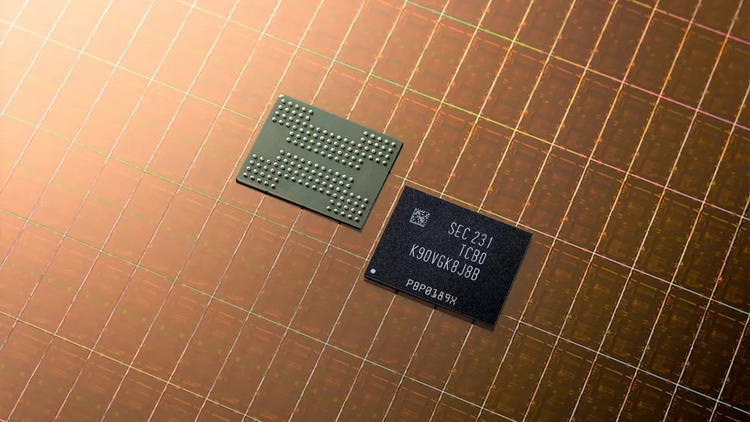
Samsung has announced the start of mass production of 3D V-NAND TLC flash memory chips of new, 8th generation, writes Tom's Hardware portal.
The new chips have a capacity of 1 Tbit (128 GB) and presumably consist of 236 layers, although Samsung does not specify this aspect.
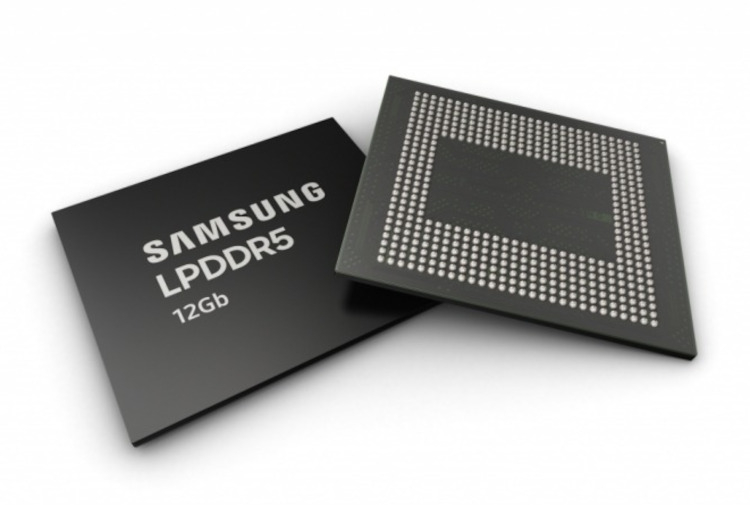
The manufacturer only calls the novelty flash memory with the highest bit density in the industry.Image source: SamsungFlash memory chips Samsung 3D V-NAND TLC 8th generation can provide transfer speeds of 2400 MT / s and in combination with advanced controllers can be used in the consumer solid-state drives with PCIe 5.0 interface.
According to Samsung, such SSDs will offer data transfer rates in excess of 12.4 Gbytes/sec.Samsung claims that the use of new manufacturing technology has made it possible to get more memory from a single silicon wafer - an increase of 20 percent compared with previously produced flash memory chips of the same capacity.
This will ultimately result in lower manufacturing costs, and could potentially mean cheaper SSDs for consumers.Details on the architecture of the new 8th generation 3D V-NAND TLC chip have not been disclosed by the company.
According to Tom's Hardware, like other manufacturers, Sasmung gets memory with more than 200 layers by stacking 128-layer crystals on top of each other.
During the \"lapping\" process some of the layers get lost, which does not allow for the ideal of a 256-layer 3D NAND chip, but nobody stops you from striving for it.
So earlier this year, Micron introduced 3D NAND chips with 232 layers, and SK hynix - with 238 layers.About the first products based on the new flash memory chips Samsung also does not say anything yet.

10.31.2022

Samsung and TSMC are facing a ban on the sale of their components and electronics in the United States

Samsung and TSMC are facing a ban on the sale of their components and electronics in the United States

Samsung and TSMC are facing a ban on the sale of their components and electronics in the United States

The US International Trade Commission (USITC) intends to launch an investigation against Samsung and TSMC related to alleged infringement of the companies' patent rights related to chips and mobile devices based on them.
Source image: SamsungThe USITC said the agency is launching an investigation based on a complaint filed in September by New York-based Daedalus Prime LLC.
The complaint alleges a possible violation of Section 337 of the Tariff Act of 1930, adopted to protect U.S.
businesses from foreign competitors.
The complaint is reportedly related to chips manufactured by Samsung using 14nm and newer technologies as well as chips manufactured by TSMC using 16nm and smaller technology.
The investigation will also cover smartphones, tablets and smart watches that use such semiconductors.
In other words, there could be a huge array of cutting-edge electronics involved.
In fact, the lawsuit demands to block the import and sale of all the patent-infringing products mentioned in the complaint.
A separate complaint is reportedly filed by the same company against Qualcomm.According to media reports, Daedalus Prime is a classic patent troll, owning a number of rights to products or processes without any intention of manufacturing or implementing them.
Such companies make money by licensing out technologies they have acquired in various ways or by filing lawsuits.
The case in question is Intel technology, the rights to which Daedalus Prime acquired earlier this year.Apparently, so far, these are only a few of the investigations initiated by the USITC at Daedalus Prime's initiative.
It is assumed that the company intends to make technobusinesses pay for the use of technologies, once patented by Intel - otherwise they will be threatened with a ban on the import of electronics in the United States.
However, while the USITC said that it had not yet made any decisions related to these complaints.
The agency intends to review the materials and evidence and establish the violation of Section 377 in the manner prescribed by law.Meanwhile, a few months ago, Intel announced the availability of another batch of about 5000 of its patents.
These are technologies whose rights have not yet expired, but which are no longer cutting edge.
Nevertheless, they can still bring Intel some income.

10.24.2022

Memory chip makers are struggling to cope with lower demand and falling prices

Memory chip makers are struggling to cope with lower demand and falling prices

Memory chip makers are struggling to cope with lower demand and falling prices

As the price of electronic components dropped for months, major memory chip makers, including Samsung Electronics and Micron Technology, issued gloomy forecasts and lowered already low estimates for upcoming profit margins.
Other companies announced plans to cut production to avoid further market saturation.
Top company executives and industry analysts don't expect the price decline to end, or even slow, until the middle of next year.Image source: skhynix.comMemory chips used in smartphones, PCs and servers serve as a key health indicator for the semiconductor industry, and there has been a shift from pandemic-driven growth to a sharp drop in demand.
Between July and September, average contract prices for the two major memory types, DRAM and NAND, fell 15 percent and 28 percent, respectively, TrendForce analysts calculated.
With the accumulation of excess inventory, this trend will remain relevant in the fourth quarter of the current and the entire next year, and only by the end of 2023 should we expect a slowdown or even complete cessation of negative dynamics.Samsung, the world's largest memory chip manufacturer, recently reported that its operating profit for the third quarter, according to preliminary data, fell by 32%.
Its U.S.
competitor Micron in late September has not presented a positive report, and the forecast for the current quarter was quite restrained.
SK Hynix, the world's second-largest memory chip market by revenue, is poised to report a 40 percent year-over-year drop in revenue, FactSet analysts believe.Memory chip prices began falling late last year.
Compared to other semiconductor components, they are less differentiated, so demand fluctuations are particularly acute here.
Memory accounts for 27% of the semiconductor industry's revenue, which will be $619 billion by 2022, Gartner analysts say -- the market also includes processors and image sensors, and the biggest players are Samsung, SK Hynix, Micron and Intel.
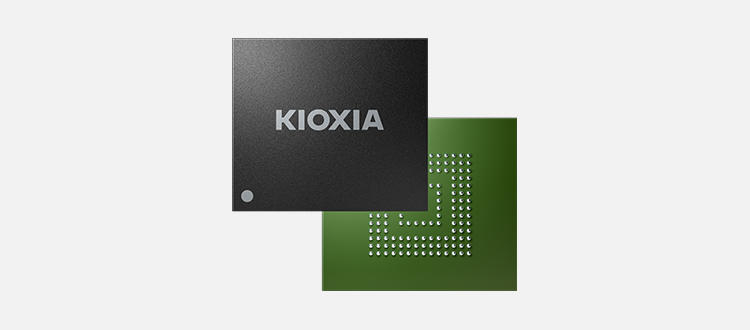
In general, the industry with the arrival of the pandemic showed sharp growth, but this year the situation has changed: powerful negative factors were inflation and geopolitics, which, in turn, collapsed demand for PCs, smartphones and gaming devices.Image source: kioxia.comAfter the memory chips segment, other areas of the electronic components market begin to show negative dynamics: AMD reported that revenues for the third quarter will be much lower than expected.
Stock market also demonstrates pessimism: the day before AMD shares lost 13% of their value, NVIDIA securities fell by 7%, and Micron - more than 3%.
Another negative factor was also another sanctions imposed by the U.S.
on China.
However, there is a way to stop the decline - to reduce production, and it has already resorted to the Japanese Kioxia, which promised in October to reduce the output of memory chips by 30%.Micron CEO Sanjay Mehrotra recently said that the company will reduce production costs and in the short term will reduce supplies, although in the next decade, the memory market will still be ready for significant growth.
The company's capital investment for the current fiscal year will be $8 billion, and this is 30% lower than the year before.
At the same time in the long term the industry still expects growth - the same Micron is preparing to spend up to $100 billion on a new DRAM plant in New York State.
Intel, Samsung, and TSMC are also considering large investments.
However, one of Samsung top managers recently noted that the company's policy does not include intentional production cuts, and there is no need to abandon this strategy so far.
SK Hynix does not give a direct answer to a similar question, but says it is ready to pursue a flexible policy depending on market trends.

7.13.2022

Samsung DRAM-memory sales declined again and will continue to fall until the end of the year

Samsung DRAM-memory sales declined again and will continue to fall until the end of the year

Samsung DRAM-memory sales declined again and will continue to fall until the end of the year

Samsung Electronics has reported a decline in DRAM RAM sales in the first three months of this year - the trend has continued for the second consecutive quarter.
The reason was a number of negative factors.
Nevertheless, the manufacturer manages to maintain a leading position in the relevant market.Image source: Samsung According to analysts from Omdia, in January-March Samsung DRAM-memory sales revenue amounted to $10.34 billion, $ 9 million less than in the three months prior to that.
However, this is the second quarter in which the decline in sales - according to the magazine Business Korea, DRAM sales fell by 9% to $10.5 billion in the last quarter.At the same time, Samsung has maintained its leadership status in the global DRAM market, the company's share of 42.7%.
Samsung's revenue decline in the sector was held against a cyclical decline in DRAM-memory prices, a process exacerbated by events in Ukraine and the disruption of the supply of some products from China due to health restrictions related to outbreaks of COVID-19.DRAM prices are steadily decreasing since October last year.
SK hynix, which ranks second in this market, sold $6.56 billion worth of DRAM modules in the first quarter, down $871 from October through December.
At the end of the first quarter, the company's market share decreased from 30.1% to 27.1%.The third player - American Micron Technology - on the contrary, increases sales.
In the first quarter, its revenues from DRAM sales grew by $575 million to $6.03 billion, and its market share grew from 22.1% to 24.8%.Global DRAM sales in the first quarter of this year totaled $24.25 billion - industry revenues are falling for the second consecutive quarter after they reached a record $26.24 billion in July-September last year.
Meanwhile, industry experts draw a gloomy picture for the DRAM market in the second half of this year, predicting a 10% drop in prices amid rising inflation and the possibility of recession in the world's leading economies.
At the same time, back in January of this year, Samsung predicted a possible increase in DRAM prices - forecasts did not come true.

Samsung's own 3nm processors won't make their way into Samsung smartphones until 2024

Samsung's own 3nm processors won't make their way into Samsung smartphones until 2024

Samsung's own 3nm processors won't make their way into Samsung smartphones until 2024

According to some reports, in the generation of Galaxy S23 smartphones that will debut in early 2023, Samsung Electronics will completely abandon the use of internally developed Exynos processors in favor of Qualcomm 4nm components, which will be produced by TSMC.
Only a year later, 3nm Samsung processors will have a chance to fit in smartphones of this brand.Image source: Samsung ElectricSuch as mentioned earlier, the \"first wave\" of 3nm chips produced by Samsung Electronics will be intended for Chinese developers of specialized gas pedals used in the mining of cryptocurrencies.
It was their production in small quantities was established at the pilot line in the Korean Hwasong by the end of last quarter.
For its own needs, as explained by Business Korea, Samsung Electronics will use a second-generation 3-nm process, which will be mastered only next year.
The company will begin producing its own mobile processors using this processor by early 2024, at which point they will be able to fit into Samsung smartphones.
It is possible that production of Samsung's 3-nm processors will be set up at facilities in Pyeongtaek because the production capacity at Hwaseong is limited in terms of scaling capacity.
Rival TSMC will set up mass production of 3-nm chips only by the end of this year, but it is not certain that in its case the start will be as protracted, so it is premature to talk about a clear advantage of Samsung Electronics in terms of timing.

6.06.2022

A lawsuit has been filed against Samsung that could negatively affect the entire Android smartphone industry

A lawsuit has been filed against Samsung that could negatively affect the entire Android smartphone industry

A lawsuit has been filed against Samsung that could negatively affect the entire Android smartphone industry

K.
Mirza LLC, which is essentially a patent troll with licenses from major companies and scientific organizations, has filed a lawsuit against Samsung, accusing the South Korean smartphone maker of using a feature that allows algorithms to predict the remaining battery life of a gadget.
The process could have an impact on the entire Android smartphone industry.Image source: SamsungThe lawsuit was filed on May 20 - indicating that this widely used feature in Android smartphones is actually developed by the Dutch research institute Nederlandse Organisatie voor Togepast Natuurwetenschappelijk Onderzoe (TNO).According to the statement K.
Mirza, the feature provides \"a comprehensive mechanism for real-time prediction of the remaining battery life of a mobile device like a smartphone.
\"The company emphasizes that the prediction is based on algorithms that analyze user behavior.
Estimating the remaining battery life based on an analysis of user behavior is more accurate than predictions based on tests conducted during the development of devices.The lawsuit mentions Samsung's use of the technology with \"earlier versions of the Android OS.
It is likely that a different algorithm is used with newer versions of the OS, so the latest Android devices are probably not affected by the problem.That said, Samsung is not the only company using a similar technology - similar mechanisms are used in Xiaomi smartphones and Google Pixel series models.
It is possible that the lawsuit against Samsung is only a trial balloon, and, if successful, some claims may be made against other smartphone manufacturers.

6.01.2022

Produce next-generation Tensor chips for Google Pixel 7 will be Samsung on the 4-nm processor

Produce next-generation Tensor chips for Google Pixel 7 will be Samsung on the 4-nm processor

Produce next-generation Tensor chips for Google Pixel 7 will be Samsung on the 4-nm processor

South Korean media again published information that Google will order the production of the next-generation Tensor single-crystal platform (Cloudripper GS201) from Samsung.
It is expected that the chipset will be used in smartphones Google Pixel 7 series.Image source: GoogleThe specifications of the new mobile platform is still known very little.
The new chip is expected to use Samsung's 4-nm process and will use PLP (panel-level packaging) - a fairly rare variant that uses a square wafer instead of a round one in chip production, reducing waste and production costs.The current, first-generation Tensor chipset, codenamed Whitechapel, is also produced by Samsung according to the 5-nm LPE process.
The model is famous for its unusual architecture, involving the use of two large cores Arm Cortex-X1 - most mobile platforms have either one such core, or none at all.Image source: ULVACGoogle said that the use of two cores X1 is more effective for constant loads of \"medium\" level, with \"heterogeneous\" calculations, including, for example, providing the camera viewport - during the work involved several heterogeneous processes.According to some reports, Samsung will begin production of new Tensor in June, and the release This is consistent with the traditional timing of the Made By Google event, during which the Pixel series flagships are usually presented.
It is possible that Samsung will produce server chips for Google as well.
Last year, the company announced a large recruitment of specialists to develop custom cloud and server semiconductors, although there were rumors that it would do these tasks together with Intel.While most users care little about the question of who exactly produces the new chipsets, the news may indirectly indicate some characteristics of semiconductors.
Samsung's 4nm process was used to produce the flagship Qualcomm Snapdragon 8 Gen 1, but an improved version of the Snapdragon 8 Gen 1 Plus is already being produced using a more advanced 4nm TSMC process - the new version offers lower power consumption and some performance gains over Samsung's technology.
If the flagship Qualcomm 2023 will be produced exactly by TSMC, and, according to rumors, this will be the case, the less perfect mobile platform manufacturing process for Pixel 7 will give Snapdragon some head start, other things being equal, but in order to assess the final performance of competing chipsets, we will have to wait for the winter premiere of Qualcomm.

5.25.2022

Apple and Samsung continued to certify equipment in Russia, despite leaving the country

Apple and Samsung continued to certify equipment in Russia, despite leaving the country

Apple and Samsung continued to certify equipment in Russia, despite leaving the country

Despite earlier decisions to suspend operations in Russia, Apple and Samsung continued to apply for product certification.
These certificates allow them to sell equipment throughout the Eurasian Economic Union (EAEU), but experts believe that the manufacturers are interested in resuming deliveries to Russia.Source image: apple.comSamsung stopped supplying products to Russia in early March, but Kommersant managed to find that Samsung Electronics Rus Company LLC (SERK) applied for certification of phones, monitors, TVs and other household appliances, including not yet announced products until May 19 at least.
In May alone, the SSEC registered 12 certificates and 22 declarations with Rosakkreditatsiya.
Among them are smartphones Galaxy A13 5G (announced, but not officially sold in Russia), as well as Galaxy A04 and A13s (not yet officially introduced) - all three models were tested May 16 in the center № 300 Rostest-Moscow.Earlier it was reported that the model Samsung Galaxy A13 5G, together with a number of other devices in the range were on sale in Russia under the parallel export program - imported from Kazakhstan devices were sold in stores DNS, \"Fusion\" and \"M.
Video\" with a significant markup.Not to suspend certification of goods and the company Apple, which also in early March, announced the termination of its work in Russia: from 10 to March 21 the company made requests, among other things for the Mac Studio desktop, monitor Studio Display and upgraded iPhone SE - the latter was tested at the Russian Research Institute of Radio.
China's Huawei did not make any statements about ceasing operations in Russia, but it also reduced the volume of supplies and continued to certify its products, issuing declarations in April and May for the Huawei P50 smartphone and the MateStation monoblock computer.
Despite the fact that permits for all of these devices are valid throughout the EAEU (Russia, Belarus, Armenia, Kazakhstan, Kyrgyzstan), one of the experts interviewed by Kommersant believes that it would be easier and cheaper for manufacturers to certify in the countries where they plan to sell.
This could mean that despite the suspension of sales in Russia, companies are doing so with the prospect of resuming operations in the country, as well as \"to support those who will import their products.

5.11.2022

NVIDIA has booked TSMC's 3nm capacity by the end of 2024

NVIDIA has booked TSMC's 3nm capacity by the end of 2024

NVIDIA has booked TSMC's 3nm capacity by the end of 2024

DigiTimes' Chinese language version of the story, which is not only available to subscription holders, reveals much more details about the specifics of TSMC's cooperation with its customers in the coming years.
It becomes known, for example, that both NVIDIA and Intel are interested in using not only the TSMC's 3nm process, but also the more advanced 2nm process.Advertisement Image source: TSMCNVIDIA will return to using only TSMC services for Hopper and Ada Lovelace graphics solutions, with the latter to be produced not only on 5nm technology, but also on 4nm.
The latter will also be used in Hopper's computing gas pedals, which will not be used in the consumer sector.
According to Taiwanese sources, NVIDIA has already reserved for its needs part of TSMC's production capacity for the production of 3-nm products until the end of 2024.
Intel's interest in using 2-nm technology TSMC looks interesting, especially if you consider that the first of the companies intends to master the 18A technology by 2025, thereby restoring its nominal technological leadership.
However, the processor giant may cooperate with TSMC simply out of a desire to insure itself, or with an eye to possible timing of the implementation of the 2-nm technology by a competitor.

Samsung begins development of 6G communications standard

Samsung begins development of 6G communications standard

Samsung begins development of 6G communications standard

Samsung Electronics recently released a white paper outlining plans for the next-generation 6G network standard.
The document is titled \"6G Spectrum: Expanding the Frontiers\".advertisementSungyun Choi, Samsung's executive vice president and head of the Advanced Communications Research Center, said, \"We have long begun the journey to understand, develop and standardize the 6G communications standard.
We are ready to take the initiative and share the discoveries we have made to spread our vision and bring a new connectivity experience to all aspects of life.\" Overall, the company is working to bring the next-generation standard to market.6G will require spectrum with ultra-wide bandwidths ranging from \"hundreds of MHz to tens of GHz.\" This will enable high-quality mobile holograms and immersive Augmented Reality (XR).
The company is focused on improving coverage.
All available bands are being considered for this, from the lower bands below 1 GHz to the medium bands from 1 to 24 GHz and the high bands from 24 to 300 GHz.Samsung claims that 6G speeds can reach 1 Tbps, which is 50 times faster than 20 Gbps on 5G networks.
During tests in June 2021, the company was able to achieve 6G speeds at 15 meters indoors.
At 30 meters indoors, the speed was 12 Gbps.
At a distance of 120 m the speed reached 2.3 Gbit/s, writes Gizmochina.For the post rewardedThis material is written by a site visitor, and for it the reward is accrued.

5.10.2022

A 200-megapixel camera is being developed for the Samsung Galaxy S23

A 200-megapixel camera is being developed for the Samsung Galaxy S23

A 200-megapixel camera is being developed for the Samsung Galaxy S23

Over the past two years, the resolution of the main camera module of the flagship smartphones Samsung Galaxy remains at 108 megapixels, but if we believe Korean sources, next year with the release of the Galaxy S23 Ultra, things could shift from the dead point, as the smartphone will debut a 200-megapixel camera on board.
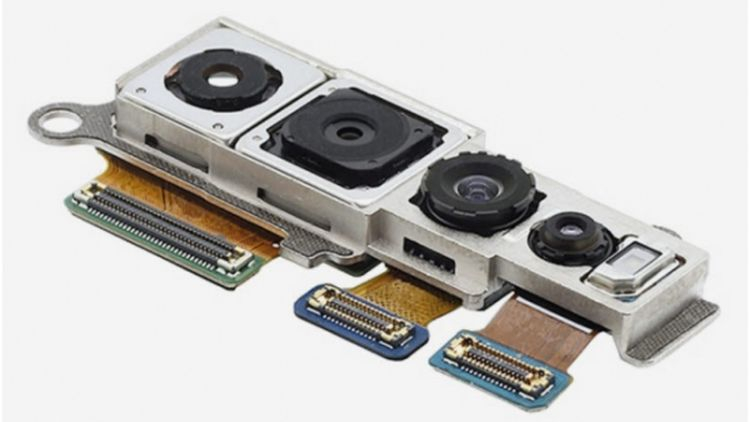
Source image: Sasmung Electro-MechanicsIn accordance with Business Korea, the structure of the Korean conglomerate for the development of camera modules are responsible for two competing structures: Samsung Electronics and Samsung Electro-Mechanics.
The first has about 30% of the production program, while the second controls 70% of the volume of specialized products.
Characteristically, the 200-megapixel module for the new flagship was first developed by Samsung Electronics.
It is not certain that a camera with such characteristics will get to the Samsung Galaxy S23 Ultra smartphone, but the technical conditions for this have already been created.This fall, Apple will present a family of smartphones iPhone 14 with upgraded cameras, which is expected to prompt Samsung Electronics to retaliate.
Early next year, the Korean giant may decide to release the flagship smartphone Galaxy S23 Ultra with a 200-megapixel camera, for the first time in four years seriously upgrading the characteristics of such devices in this part.

1.24.2022

Samsung Xclipse 920 based on AMD RDNA2 was faster than Adreno 730 in OpenCL and Vulkan tests after all

Samsung Xclipse 920 based on AMD RDNA2 was faster than Adreno 730 in OpenCL and Vulkan tests after all

Samsung Xclipse 920 based on AMD RDNA2 was faster than Adreno 730 in OpenCL and Vulkan tests after all

More recently, Samsung has announced a new flagship mobile processor Exynos 2200, although the range of devices on it the company has not yet specified. Despite the fact that in the first tests the chip showed itself weaker than main competitor in the face of Qualcomm Snapdragon 8 Gen 1, now it has managed to rehabilitate at least in the graphics.

Recall, the mobile platform was announced a week later than expected, which gave rise to numerous rumors, for example, that the clock frequency of the chip had to be artificially lowered. The Korean giant has not yet clarified the data on frequencies, so neither confirm nor deny these rumors. Not much clarity has leaked in the data base Geekbench, where the figure is listed at 555 MHz, and hardly corresponds to reality. Xclipse 920 graphics was identified as GFX1040 GPU, and it is definitely a member of the AMD RDNA2 family.

It is known that the Samsung Exynos 2200 CPU is made in a 1+3+4 configuration. The most powerful core has ARM Cortex X2 architecture, the three-core cluster & ; this Cortex A710, and four energy-efficient cores are based on Cortex A510 architecture. The graphics is based on AMD RDNA2; the exact data hasn't been announced yet, so we have to stick to the unofficial data which suggests 6 processing units and 384 threaded processors.

In OpenCL benchmarks, the RDNA2 mobile graphics scored up to 9143 points, which is 50.7 % higher than the best result of the competing Snapdragon 8 Gen 1 with Adreno 730 on the OnePlus 10 PRO smartphone, which scored 6050 points. More similar to the truth in gaming applications, the Vulkan API test showed a 25.5-percent superiority of the Samsung chip over the product from Qualcomm.

The Korean manufacturer, we repeat, has not yet announced a list of devices that will receive the new flagship Exynos 2200, but if the company does not betray traditions, one of the first will be the new flagship Galaxy S22 smartphone in the international version. The device is expected to be announced at the Unpacked 2022 event, which could take place on February 8, although Samsung has not yet confirmed that date.

1.19.2022

First tests of Samsung Exynos 2200 with AMD RDNA2 - weaker than Snapdragon 8 Gen 1 even in terms of graphics

First tests of Samsung Exynos 2200 with AMD RDNA2 - weaker than Snapdragon 8 Gen 1 even in terms of graphics

First tests of Samsung Exynos 2200 with AMD RDNA2 - weaker than Snapdragon 8 Gen 1 even in terms of graphics

When Samsung and AMD first confirmed that they were collaborating on a GPU for the Exynos chipset, expectations were very high. There were even rumors that the new Exynos 2200 would be more powerful than Apple's current chipset, which is traditionally considered the best in the industry. Nevertheless, according to the first tests, Samsung's flagship chipset presented today is still inferior to the rival solution from Qualcomm.

Samsung finally unveiled the Exynos 2200 today. As expected, it uses the latest cores on Armv9 architecture, which are faster and more energy efficient than the previous generation solutions. The chip is made according to the norms of 4-nm process technology and carries on board the GPU Xclipse 920 on AMD RDNA 2 architecture. Unfortunately, this did not allow it to surpass the Snapdragon 8 Gen 1. Insider Ishan Agarwal shared test results of the upcoming Galaxy S22 Ultra flagship, based on Samsung's latest chipset. The device in AnTuTu scored 965,474 points. In the Geekbench benchmark the smartphone got 1108 and 3516 points in single-core and multi-core tests, respectively. In GFXbench Aztec Ruins frame rate reached 109 FPS. By comparison, last year's Exynos 2100-powered Galaxy S21 Ultra scored 657,150 in AnTuTu. This low result is largely due to the GPU performance, and the CPU performance is only slightly lower than that of the novelty. The Exynos 2100 scores 1,081 and 3,463 in the single-core and multi-core Geekbench tests, respectively. However, the frame rate in GFXbench Aztec Ruins does not exceed 71.54 FPS. As you can see, the new Exynos 2200 has indeed grown noticeably in terms of graphics performance, but almost unchanged in terms of CPU performance.

But if we compare the performance of the new Exynos 2200 with Snapdragon 8 Gen 1, the result will not be in favor of the solution from Samsung. The smartphone based on the current flagship Qualcomm platform in AnTuTu scores 977 613 points. In Geekbench the chip shows 1235 and 3837 points in single-core and multi-core tests, respectively. The biggest gap is noticeable in GFXbench Aztec Ruins, where the Adreno GPU as part of the Snapdragon 8 Gen 1 shows a score of 139.25 FPS & ; 30 frames per second more than AMD graphics as part of the new Exynos. Judging by these figures, Samsung flagships based on Exynos will again be inferior to the same devices, but with Snapdragon chips. Nevertheless, the gap between the platforms is no longer as big as last year, so in real-world usage scenarios, both versions of the smartphone are likely to offer users comparable performance.

1.18.2022

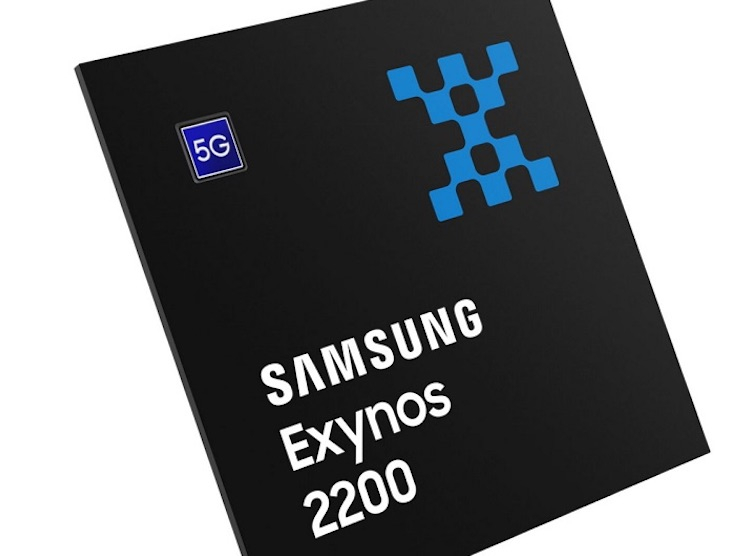
Samsung introduced Exynos 2200 - flagship chip with AMD RDNA2 graphics

Samsung introduced Exynos 2200 - flagship chip with AMD RDNA2 graphics

Samsung introduced Exynos 2200 - flagship chip with AMD RDNA2 graphics

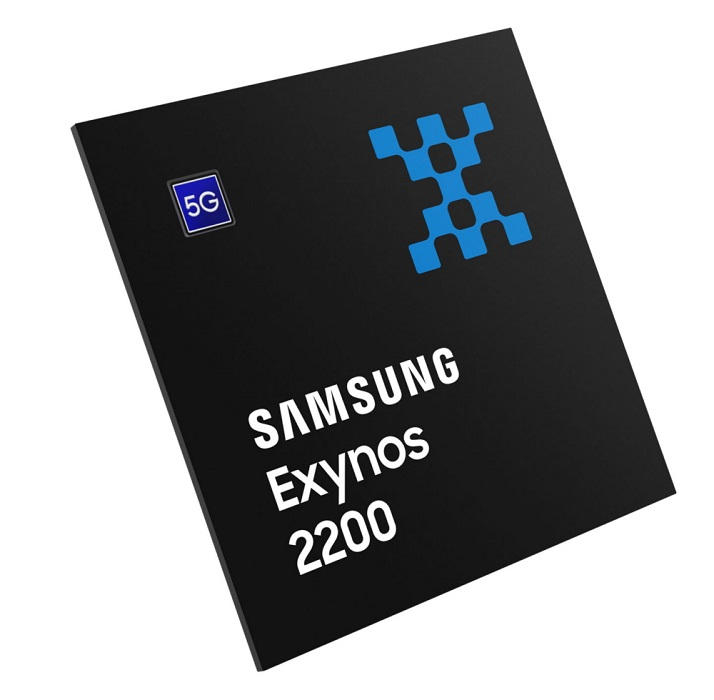
Samsung Electronics has unveiled the latest Exynos 2200 mobile single-chip platform with the powerful Samsung Xclipse 920 graphics gas pedal based on AMD RDNA2 architecture. The company claims that the solution uses the most advanced Arm Core CPU available on the market, as well as an updated neuroprocessor (NPU). The variant is suitable for performing normal tasks, running resource-intensive games and working with media content.

Samsung announced its partnership with AMD back in 2019. The company claims that the Xclipse 920 is a one-of-a-kind GPU, which occupies an intermediate performance position between GPUs for mobile devices and solutions for consoles. AMD RDNA2 architecture at the core of the solution provides hardware-based ray tracing acceleration as well as VRS shading & ; such technologies were previously only available on PCs and consoles. In addition, AMIGO technology is used to improve overall performance and optimize power consumption. Exynos 2200, based on 4nm process technology, is one of the industry's first to feature the latest Armv9 cores, which are more efficient than Armv8. The new octa-core CPU has one of the most powerful Arm Cortex-X2 core, three high-performance Cortex-A710 cores and four energy-efficient Cortex-A510 cores. Compared to the Exynos 2100 model, the novelty uses a more productive integrated AI system and neuroprocessor & ; according to Samsung, the NPU model is twice as productive as the one used in the previous generation flagship. At the same time, the NPU has two, rather than three cores compared to its predecessor.

Exynos 2200 has a built-in 3GPP Release 16 5G modem that supports frequencies up to 6 GHz and mmWave. According to Samsung the use of E-UTRAN New Radio – Dual Connectivity (EN-DC) technology, which allows 4G and 5G simultaneously, provides connection speeds of up to 10 Gbps. Additionally, the model supports a number of cryptographic technologies, in particular, cryptographic processor Integrated Secure Element (iSE) is used. The architecture of the image processor (ISP) has been revised and is now able to support the latest sensors up to 200 megapixels. With one camera supports continuous shooting at 30 frames per second and 108 megapixels, with two cameras simultaneously & ; up to 64+36 megapixels. Notably, the novelty is able to work with 4 cameras simultaneously and supports the connection of up to 7 cameras. The video recording supports 4K HDR, 4K at 120 FPS or 8K at 30 FPS. With the help of NPU image processor is able to recognize multiple objects, the environment and faces within the scene, and then automatically adjust the color rendering, white balance, exposure and other parameters. Mass production of the Exynos 2200 has already begun.

Samsung quietly canceled the announcement of its flagship Exynos 2200 chip with AMD RDNA2 graphics

Samsung quietly canceled the announcement of its flagship Exynos 2200 chip with AMD RDNA2 graphics

Samsung quietly canceled the announcement of its flagship Exynos 2200 chip with AMD RDNA2 graphics

Late last year Samsung officially announced that it would unveil its new flagship Exynos chipset with AMD RDNA 2 graphics on January 11. However, January 11 has come to an end, and the new processor has not been presented. Moreover, Samsung not only didn't announce the postponement of the event and its reasons, but quietly deleted the announcement from the Exynos Twitter page.

According to fresh leaks, Samsung will unveil its Galaxy S22 series of flagship smartphones, which should debut the new Exynos chipset, on February 8. Last year, the Galaxy S21 series was announced on January 14, while the Exynos 2100, on which the smartphones are based, debuted two days earlier. If you follow this logic, Samsung still has time to introduce the Exynos 2200 before the Galaxy S22 series sees the light of day.

Nevertheless, such last-minute changes in the event schedule are probably indicative of the problems Samsung may have encountered. In addition, it remains an open question whether the Exynos 2200 will be ready in time for the launch of the new flagship smartphone series and whether the sudden difficulties will lead to the postponement of the Galaxy S22 release.

1.02.2022

Samsung announced it will unveil a mobile processor with AMD RDNA 2 graphics on January 11

Samsung announced it will unveil a mobile processor with AMD RDNA 2 graphics on January 11

Samsung announced it will unveil a mobile processor with AMD RDNA 2 graphics on January 11

Recent months have seen the announcement of such flagship chipsets as the Qualcomm Snapdragon 8 Gen 1 and MediaTek Dimensity 9000, with smartphones based on which will hit the market early next year. Now it's Samsung's turn to unveil its fresh flagship platform. The company officially announced today that it will unveil its high-end chip with AMD RDNA 2 graphics as early as January 11.

Samsung posted the official announcement video of the event on Twitter. In the caption to the video, the company clearly stated that the chip will boast integrated AMD RDNA 2 graphics, leaving no room for speculation. Unfortunately, there's no more official data about this chipset yet. According to early leaks, the chip will be built using a 5nm process, while the Snapdragon 8 Gen 1 and Dimensity 9000 use 4nm lithography.

#PlaytimeIsOver. The gaming marketplace is about to get serious. Stay tuned for the next #Exynos with the new GPU born from RDNA 2. January 11, 2022. pic.twitter.com/0H2MeVUbeS & ; Samsung Exynos (@SamsungExynos) December 30, 2021

The novelty is expected to be called Exynos 2200 and it will get an eight-core CPU with one Cortex-X2 core, three Cortex-A710 and four Cortex-A510 cores. RDNA 2 graphics will enable features previously unavailable on smartphones, such as real-time ray tracing. The Exynos 2200 is expected to become the basis of the Galaxy S22 series smartphones for a number of markets.

12.17.2021

AMD may order production of some 4nm processors from Samsung in late 2022

AMD may order production of some 4nm processors from Samsung in late 2022

AMD may order production of some 4nm processors from Samsung in late 2022

This is not the first year AMD has mentioned Samsung Electronics in its annual reports as a partner in the production of graphics solutions, although it may well be about the supply of memory chips. In the second half of next year, according to analysts, the cooperation between the companies could move to a new level & ; Korean contractor may receive orders for the production of 4-nm AMD processors for Chromebooks.

This forecast is held by the analysts of J.P. Morgan, an extract from the report, which was published by Marc Moeldner on his Twitter page. This type of product will be produced in limited quantities, and for AMD it will probably be just a "test run" before a more serious stage of cooperation with Samsung. Already in 2023-2024 years, AMD may entrust Samsung to produce 3-nm products, which will include both graphics and CPUs, according to experts from J.P. Morgan. More precisely, at least part of the order may go to Samsung, because TSMC simply may not have enough capacity for all. It is unlikely the mass production of 3nm AMD products will become earlier than 2024, because the company TSMC only has to master the production of 5-nm AMD products in the second half of 2022. Along the way, experts predict that NVIDIA will return to TSMC for the production of its gaming graphics processors generation Ada Lovelace (GeForce RTX 4000), which will be produced on 5-nm technology by the Taiwan contractor. As is known, now gaming GPUs with Ampere architecture for NVIDIA produces on 8-nm technology, and server compute gas pedals on 7-nm technology produces TSMC. It is assumed that by the second half of next year the 5nm TSMC processor process will be transferred to AMD graphics processors. Intel will produce its graphics card chips using 6nm technology at TSMC facilities. In 2023 the processor giant will start ordering TSMC to produce some chips at 3nm technology, which can be used in CPUs, and graphics, as well as programmable matrices. Qualcomm has already made no secret that it will produce its flagship Snapdragon 8 Gen 1 mobile processors using 4nm TSMC technology, and by 2024 the first 3nm Qualcomm products will be built on the TSMC assembly line. In 2023 there will be the first 3nm Apple processors made by TSMC for mobile devices and computers of this American brand. At the same time the Taiwanese contractor will master the production of modems Apple's own design. According to J.P. Morgan representatives expect that TSMC will control up to 90% of the world market of 5nm products manufacturing services, as well as at least 80% of the market of 3nm contract manufacturing services.

9.15.2021

Samsung Exynos processor with AMD graphics is featured in Geekbench

Samsung Exynos processor with AMD graphics is featured in Geekbench

Samsung Exynos processor with AMD graphics is featured in Geekbench

The famous Geekbench 5 benchmark has revealed information about Samsung's next-generation flagship mobile platform equipped with AMD graphics processor based on RDNA 2 architecture.

The chipset hiding behind the codename SM-S906B is supposedly the expected Exynos 2200 mobile solution with AMD's most advanced mobile GPU.


Data Geekbench indirectly confirm this assumption, the test data flashes a reference to the AMD driver with API Vulkan, as well as mentioning  Samsung Voyager EVTA1 & ; previously sources reported that the Exynos 2200 will be the fruit of cooperation Samsung and AMD, and under the codename Voyager concealed GPU developed by the latter.

Samsung Exynos 2200 will get an eight-core processor with four cores up to 1.73 GHz, three & ; up to 2.5 GHz and one & ; up to 2.59 GHz. The frequencies are even lower than the Exynos 2100 model. Presumably, the Geekbench database gives information about the engineering sample & ; such are usually weaker than the final versions. There is no data about the graphics gas pedal in the benchmark. According to rumors, the GPU model Exynos 2200 will get 384 stream processors combined into 6 computing modules.

The main processor scored 1072 points in the single-core test and 3389 points & ; in multi-core. By comparison, the results of the Exynos 2100 & ; 1112 and 4073 points, respectively. The Samsung Exynos 2200 platform is expected to be used to build the company's latest flagship smartphones in early 2022.

1.24.2021

Samsung Exynos chips with AMD graphics could be available as early as mid-2021

Samsung Exynos chips with AMD graphics could be available as early as mid-2021

Samsung Exynos chips with AMD graphics could be available as early as mid-2021

Internet sources have published a fresh batch of information on next-generation Samsung Exynos processors with AMD integrated graphics accelerator. It is claimed that the market launch of these products will be accelerated.

Images of Samsung

During the recent Exynos 2100 chip announcement event, Samsung System LSI president Dr Inyup Kang said that «the company is building next-generation mobile graphics with AMD, which will be launched in the next flagship product». Alas, the head of Samsung System LSI did not go into details about the timing of the new products announcement. Now, this gap has been filled by a popular online source Ice universe (@UniverseIce), which regularly reveals reliable information about upcoming products from the mobile world.

It claims that Samsung's processors with AMD graphics accelerator will debut as early as the second or third quarter of this year, rather than 2022 as previously speculated. It is noted that the new products will be part of the Exynos 2xxx and Exynos 1xxx series. It is claimed that the flagship chips will surpass Apple's A14 Bionic processor, which is the «heart» of the iPhone 12 family of smartphones;

1.12.2021

Samsung has promised AMD graphics as early as the next generation of Exynos processors

Samsung has promised AMD graphics as early as the next generation of Exynos processors

Samsung has promised AMD graphics as early as the next generation of Exynos processors

At the Exynos 2100 launch event today, Samsung announced that its collaboration with AMD to integrate RDNA graphics architecture into Exynos chips has borne fruit.

President of Samsung System LSI (mobile chips, image sensors, neuroprocessors, security chips and mobile displays) Dr Inyup Kang confirmed during the event that the company is building next-generation mobile graphics with AMD, which will be launched in its next flagship product. That's all that was said on the subject. What exactly was meant by the next flagship product remains a mystery. One would hope that a new single-chip system with AMD graphics would come out no later than the Galaxy Note21 (although there are rumours of the Galaxy Note series being discontinued). Perhaps the flagship with AMD GPU will be the Galaxy Z Fold 3 or another bendable smartphone?

All in all, it's very likely that a new Exynos chip with AMD integrated graphics will be available before the end of this year. The actual products will probably not appear until early 2022 (though, I'd like to be wrong and see the fruits of AMD and Samsung's collaboration as early as possible). It's not yet clear whether we're talking about using RDNA architecture or RDNA 2 already (perhaps it will be their mobile hybrid). The latest Exynos 2100 is the 5nm chip that will underpin the Galaxy S21 in most markets. It uses standard ARM cores in a bundle of one most powerful Cortex-X1 @2.9GHz, three performance Cortex-A78 and three power-efficient Cortex-A55. LPDDR5 RAM and UFS 3.1 storage are supported. ARM Mali G78 is used as graphics, there is a powerful neural processor, a new 5G modem and an improved signal processor. Samsung has also released a promotional video for this single-chip system: